Key Takeaways
- Brinkley RV emphasizes refined details, improved materials, and customer service for long-term owners.
- Axiom RV prioritizes bold engineering with steel-laminated construction and innovative features, but with potential tradeoffs in usability.
- Brinkley excels in craftsmanship, engineering balance, livability, and customer support, making it suitable for full-time RVers.
Why Brinkley and Axiom Are Changing the RV Conversation
The RV industry rarely sees true disruption, which is why Brinkley RV and Axiom RV stand out. The industry has decided that the battle is Brinkley vs Axiom.
Brinkley focuses on refinement. Instead of flashy reinvention, they’ve improved the everyday details that matter most to long-term owners: better materials, smarter layouts, and a customer service model that actually supports full-time RVers.
Axiom takes the opposite approach. Their brand is built around bold engineering moves, steel-laminated construction, massive interior height, and residential mini-split HVAC systems, designed to push the limits of what a fifth wheel can be.
This comparison breaks down where each brand excels, where tradeoffs exist, and which type of RVer each is best suited for, so you can decide whether proven execution or forward-leaning innovation matters more for your lifestyle.
Table of Contents
Build Quality & Craftsmanship
Brinkley RV: Precision in the Details
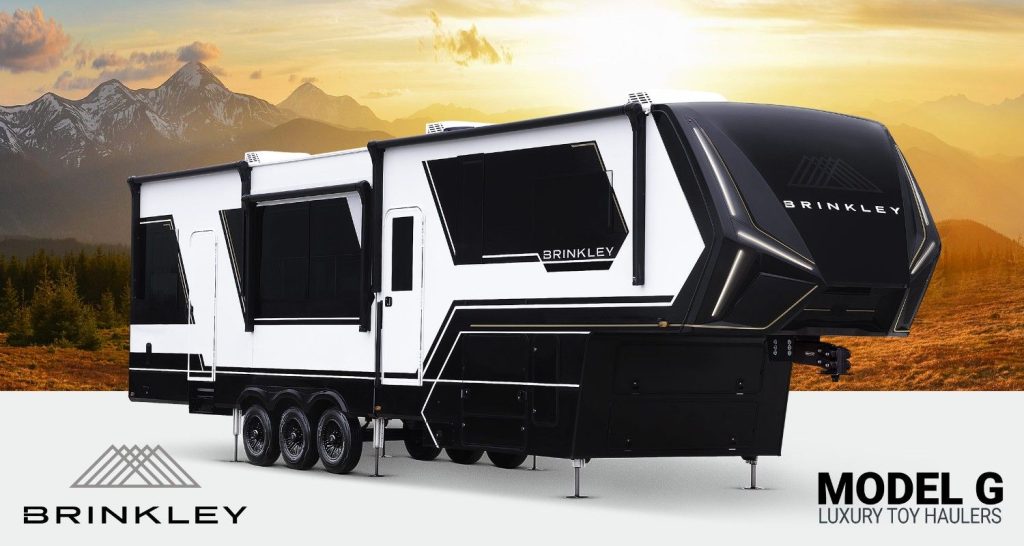
Brinkley RV built its reputation on consistency. Cabinetry uses solid construction techniques, plumbing upgrades include brass fittings, and small design choices, like the raised “bubble” bathroom ceiling, add usable space without compromising the roof.
Doors, drawers, and trim feel tight and intentional, which matters for long-term living and resale value.
Axiom RV: Strong Bones, Rough Edges
Axiom RV prioritizes structure first. Their steel-laminated walls are notably rigid and inspire confidence in long-term durability. That said, early owner feedback points to weaker interior execution, lighter drawer construction, inconsistent finishes, and lighting choices that feel less refined. The structure is impressive; the finish still needs polish.
Bottom line: Brinkley wins on craftsmanship and day-to-day quality. Axiom leads in structural strength but hasn’t yet matched Brinkley’s attention to interior detail.
Brinkley RV: Proven Engineering, Balanced Design
Brinkley RV relies on heavy-duty aluminum framing and conservative engineering. The focus is on balance, strength without excessive weight, predictable towing behavior, and fewer compromises on ground clearance.
This approach favors reliability and easier ownership, especially for full-timers who encounter uneven campsites, fuel stations, and backroads.
Axiom RV: Structural Innovation with Tradeoffs
Axiom RV pushes structural limits with steel-laminated walls claimed to be significantly stronger than aluminum. This enables massive interior height and open layouts, but it comes at a cost.
The added weight raises GVWR, often requiring a one-ton dually, and ground clearance on some models is notably low, creating real-world challenges when entering campgrounds or navigating dips and transitions.
Bottom line: Brinkley’s engineering is conservative but practical. Axiom’s is bold and forward-thinking, but introduces towing and clearance considerations that buyers need to weigh carefully.
Innovation & Features
Axiom RV: Big, Visible Innovation
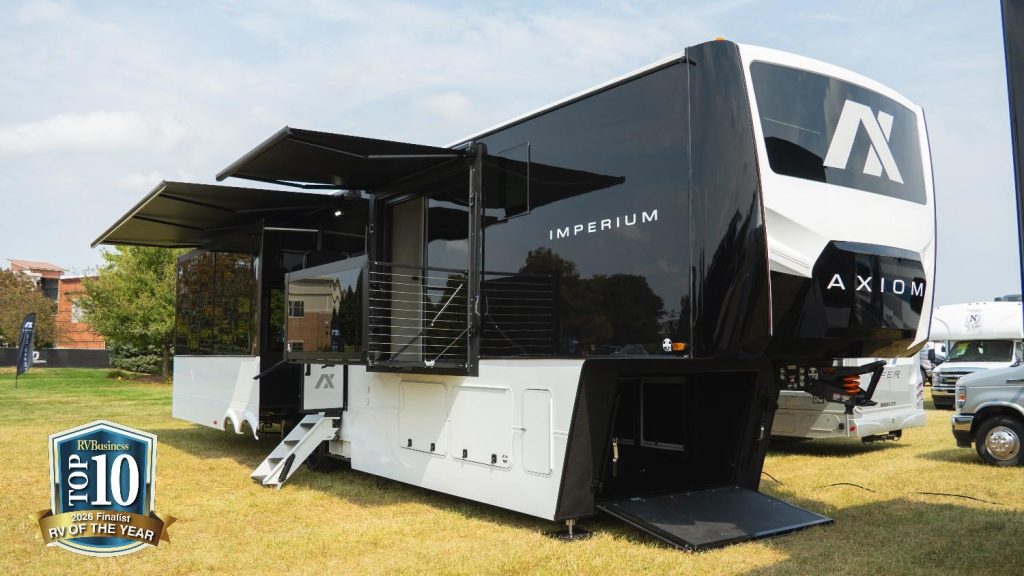
Axiom RV leads with headline features. Residential mini-split HVAC systems replace rooftop units, resulting in quieter operation and a cleaner roofline.
Powered bedroom balconies and rear-mounted generators free up massive front storage and create a true residential feel. These are high-impact innovations that immediately set Axiom apart from traditional fifth wheels.
Brinkley RV: Livability-Driven Innovation
Brinkley RV focuses on features you use every day. Integrated pet bowls, pull-out trash bins, motion-sensor lighting in key areas, and the Model Z’s under-bed “basement” storage improve daily life without adding complexity. Brinkley’s innovation isn’t flashy—but it’s thoughtful and practical.
Bottom line: Axiom innovates in big, visible ways. Brinkley innovates quietly, prioritizing function and ease of living over spectacle.
Interior Design & Livability
Brinkley RV: Comfortable, Intentional Living
Brinkley RV interiors are designed for long stays. Floor plans prioritize natural flow, usable storage, and seating that actually works for daily life. Materials feel residential without being overdone, and lighting is placed where it’s useful rather than decorative. The overall effect is calm, functional, and easy to live in.
Axiom RV: Space and Visual Impact
Axiom RV makes an immediate impression. Nearly 10-foot ceilings create an unmatched sense of openness, and large windows amplify that feeling. However, some interior choices, particularly accent lighting and trim, can feel polarizing. The space is impressive, but not always as practical or cohesive for everyday living.
Bottom line: Brinkley excels at livability and comfort over time. Axiom delivers dramatic space and visual appeal, but comes with some trade-offs in daily usability.
Climate Control & Noise Levels
Axiom RV: Residential Comfort, Quiet Operation
Axiom RV uses residential-style mini-split HVAC systems instead of rooftop units. The result is noticeably quieter operation, more even cooling, and a clean roof with no large cutouts. The tradeoff is complexity; mini-splits are less common in RV service networks and can be harder to repair on the road.
Brinkley RV: Proven and Serviceable
Brinkley RV continues to use high-efficiency rooftop AC systems. They’re louder than mini-splits, but familiar to technicians nationwide and easy to service or replace. Brinkley prioritizes redundancy and repairability over residential-style upgrades.
Bottom line: Axiom wins on quiet and comfort. Brinkley wins on reliability and ease of service, an important factor for full-time RVers.
Ownership Experience & Customer Support
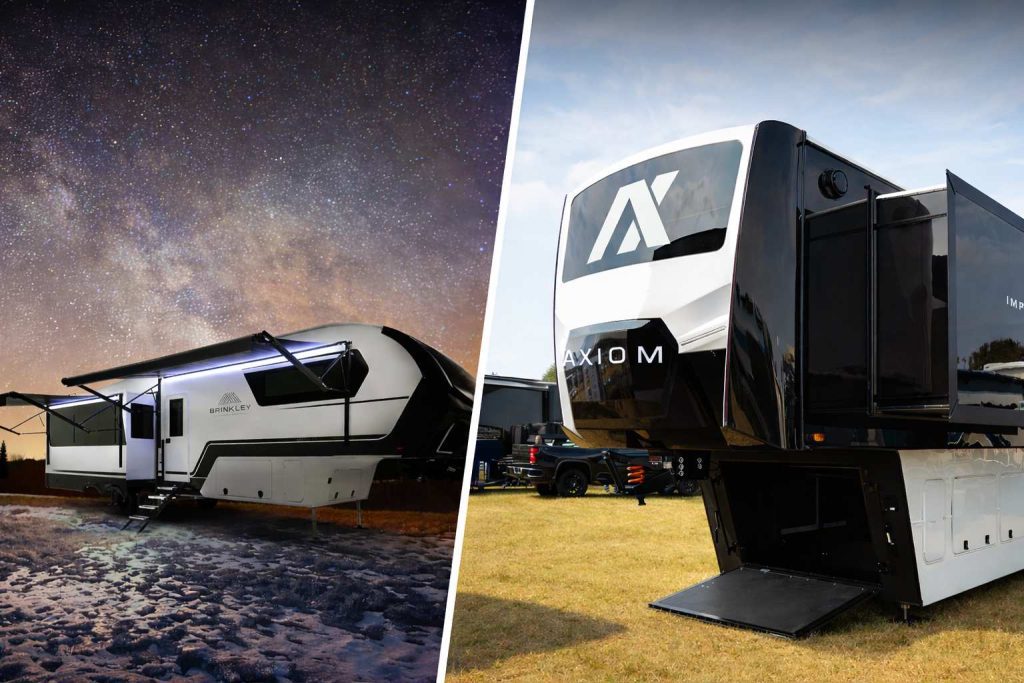
Brinkley RV: Setting the Bar
Brinkley RV is widely regarded as having some of the best post-sale support in the industry. Owners often report direct contact from the factory within the first 90 days, fast warranty responses, and quick authorization for mobile tech repairs. This level of support significantly reduces downtime, especially critical for full-time RVers.
Axiom RV: Still Proving Itself
Axiom RV is newer, and its service network is still developing. While the engineering is ambitious, there’s limited long-term data on warranty handling and turnaround times. For buyers who travel constantly, that uncertainty can be a real risk.
Bottom line: Brinkley offers proven, owner-focused support. Axiom shows potential, but long-term service consistency is still an open question.
Towing Requirements & Truck Compatibility
Both Brinkley RV and Axiom RV build large, heavy fifth wheels that demand serious tow vehicles. Neither brand is aimed at half-ton or even most three-quarter-ton trucks.
Brinkley RV: Heavy, but Manageable
Brinkley rigs are on the heavier side, but their weights tend to align more predictably with traditional fifth-wheel towing norms. Many models can be safely towed with a properly equipped one-ton truck, depending on configuration and payload. Ground clearance and hitch geometry are generally forgiving, which helps reduce stress when navigating campgrounds and fuel stations.
Axiom RV: No Room for Error
Axiom’s steel construction and massive interior height significantly raise GVWR. In most cases, a one-ton dually isn’t optional; it’s required. Low ground clearance on certain models further narrows the margin for error, making truck setup, hitch height, and suspension tuning critical.
Bottom line: Brinkley offers a more forgiving towing experience. Axiom demands precise truck matching and setup, leaving less flexibility for error.
Both brands are currently leading the RV travel trends 2026 with their focus on owner feedback.
Pros and Cons Breakdown
Brinkley RV
Pros
- Excellent build consistency and attention to detail
- Strong resale value and buyer confidence
- Industry-leading customer service and warranty support
- Well-designed for full-time and long-term living
Cons
- Heavier than average compared to legacy brands
- Higher price point
- Standard RV appliances can still be a pain point
Axiom RV
Pros
- Steel-laminated construction with exceptional rigidity
- Nearly 10-foot interior ceilings create an unmatched space
- Quiet, residential-style mini-split HVAC
- Bold, forward-thinking design
Cons
- A very high GVWR requires a one-ton dually
- Low ground clearance on some models
- Interior fit and finish are still maturing
- Polarizing exterior and interior lighting choices
Side-by-Side Comparison: Brinkley vs. Axiom
| Feature | Brinkley RV | Axiom RV |
| Primary Framing | Heavy-duty aluminum | Low-alloy steel (claimed 72% stronger) |
| Wall Construction | Aluminum framing / traditional lamination | Steel-laminated wall system |
| Interior Height | Standard luxury fifth-wheel height | Nearly 10 ft in some areas |
| HVAC System | High-efficiency rooftop units | Residential mini-split system |
| Roof Design | Alpha Ply, low-maintenance | “Clean roof” with no cutouts |
| Plumbing | Brass fittings / PEX | Standard RV PEX |
| Ground Clearance | More forgiving | Limited on some models |
| GVWR Impact | Heavy, but manageable | Very high; dually required |
| Interior Finish | Refined, consistent | Structurally first, finish evolving |
| Customer Support | Proven, industry-leading | Still maturing |
| Best For | Full-timers, long-term owners | Early adopters, tech-forward buyers |
Who Should Buy Brinkley vs. Who Should Buy Axiom
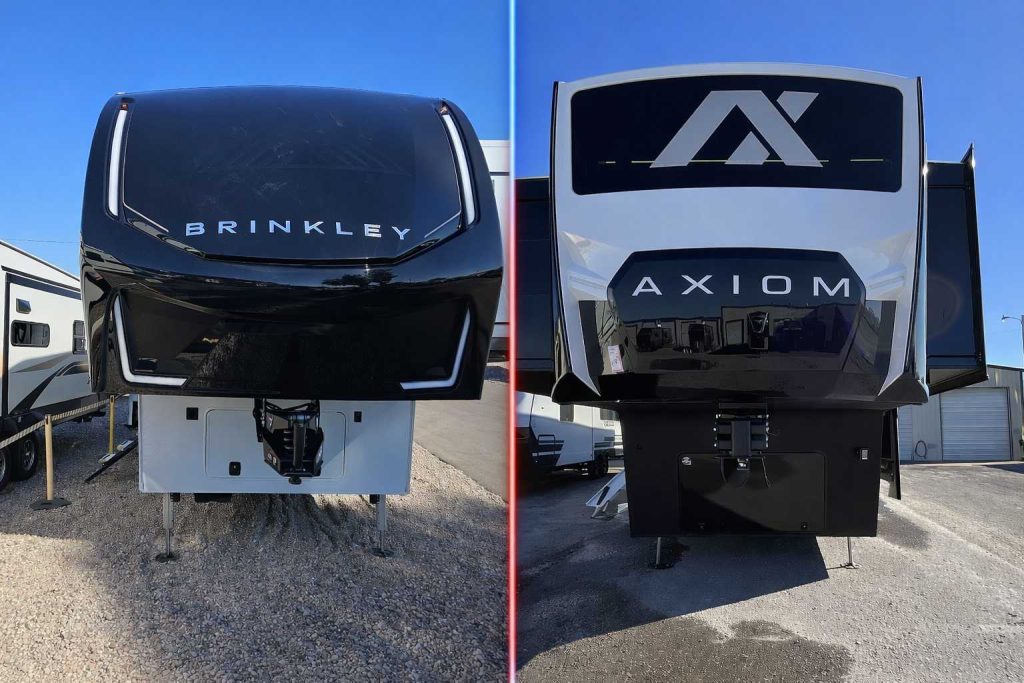
Choose Brinkley RV if:
Brinkley RV is the better fit if you plan to live in your RV full-time or travel extensively. Brinkley’s strength is consistency, build quality that holds up over time, layouts that work day in and day out, and a customer service team that minimizes downtime when issues arise.
If reliability, resale value, and stress-free ownership matter more than cutting-edge tech, Brinkley aligns well.
Choose Axiom RV if:
Axiom RV appeals to buyers who want something different and aren’t afraid of tradeoffs. The massive interior height, quiet mini-split HVAC, and steel construction create a residential feel that’s hard to match.
This brand makes the most sense for experienced RVers who are comfortable managing weight, clearance, and service considerations in exchange for bold design and innovation.
Bottom line: Brinkley favors proven ownership and livability. Axiom favors innovation and visual impact, at the cost of flexibility.
Final Verdict: Proven Excellence vs. Bold Experimentation
Both Brinkley RV and Axiom RV are pushing the RV industry forward, but in very different ways.
Axiom represents where the industry could go. Steel-laminated construction, residential mini-splits, and massive interior height challenge long-standing design limits. For buyers who prioritize innovation and are comfortable accepting tradeoffs, Axiom delivers a serious “wow” factor.
Brinkley, however, remains the safer and more complete choice today. Their focus on craftsmanship, livability, and post-sale support translates into fewer frustrations and a better ownership experience, especially for full-timers. Brinkley doesn’t chase attention; it earns trust through execution.
Verdict: Axiom has a bright future. Brinkley owns the present.
FAQ: Brinkley vs. Axiom RV
Which brand is better for full-time RV living?
Brinkley RV is generally the better choice for full-time RVers due to consistent build quality, practical layouts, and a well-established customer support system that helps minimize downtime.
Is Axiom RV really stronger than Brinkley?
Axiom RV uses steel-laminated wall construction that is structurally stronger than traditional aluminum framing. However, strength comes at the cost of weight and ground clearance.
Do Axiom’s mini-split HVAC systems work better than rooftop ACs?
Mini-splits are quieter and provide more even cooling, but they are less common in RV service networks. Rooftop units, like those used by Brinkley, are louder but easier to service nationwide.
Which brand has better customer service?
Brinkley currently sets the benchmark for post-sale support, with faster warranty responses and direct factory communication. Axiom’s service network is still developing.
Do both brands require a one-ton truck?
Most models from both brands require heavy-duty tow vehicles. Axiom rigs almost always require a one-ton dually due to higher GVWR, while some Brinkley models offer slightly more flexibility depending on configuration.
Is Axiom worth the risk for early adopters?
For experienced RVers who value innovation, space, and quiet operation, and are comfortable managing towing and service considerations, Axiom can be a compelling option.
Which brand holds resale value better?
Brinkley currently holds a stronger resale value due to its reputation for quality, consistency, and customer support.
How We Review: At Time to RV, we only recommend products and places we have personally used or visited. Our reviews are based on real-life testing during our full-time travels. We never accept payment for a positive review; our goal is to give you the honest truth so you can hit the road with confidence.