Key Takeaways
- RV roof maintenance is crucial to prevent costly water damage and extend the roof's lifespan.
- Regular inspection and maintenance, including cleaning and sealant checks, are essential, regardless of the roof type.
- Focus maintenance efforts on seams, edges, and areas around roof-mounted components like vents and AC units.
Your RV roof is one of the most overlooked parts of your rig… until there’s a problem.
And by the time there’s a problem, it’s usually not a small one.
As full-time RVers, we’ve learned quickly that roof maintenance isn’t optional. It’s one of those things that either becomes part of your routine or becomes a very expensive lesson later.
The good news is, it’s not complicated. With a simple system and a little consistency, you can avoid leaks, extend your roof’s life, and keep your RV in great shape for years.
This guide will walk you through exactly how to maintain your RV roof, what to look for, and how often to do it without overthinking it.
Why RV Roof Maintenance Matters
Your RV roof is your first line of defense against everything. Sun, rain, heat, cold, debris. It takes the hit, so the rest of your RV doesn’t have to.
The problem is, most damage doesn’t happen all at once. It starts small. A tiny crack in the sealant. A seam that begins to lift. A spot that stays wet just a little too long.
And then one day, you notice a stain on the ceiling… and realize water has already been getting in.
That’s when things get expensive.
Water damage in an RV spreads fast. It can affect your roof decking, insulation, walls, and even your floors before you catch it. What could have been a quick reseal turns into thousands of dollars in repairs or worse, long-term structural issues.
We’ve met plenty of RVers on the road dealing with this exact situation, and almost all of them say the same thing. They wish they had checked their roof sooner.
The flip side is simple. A quick inspection and basic maintenance a few times a year can prevent almost all of it.
It’s not about doing a lot. It’s about not ignoring it.
Types of RV Roofs
Not all RV roofs are the same, and this is where many people get tripped up.
What you use to clean, seal, and maintain your roof depends on its material. Using the wrong products or approach can actually cause damage rather than prevent it.
Here are the most common types you’ll see:
Rubber (EPDM)
This is one of the most common RV roof materials, especially on travel trailers and fifth wheels. It’s flexible and durable, but it does require regular cleaning and sealant checks. You’ll want to avoid harsh cleaners and stick with products made specifically for rubber roofs.
TPO (Thermoplastic Olefin)
TPO looks similar to EPDM but is a bit more resistant to dirt and UV damage. Maintenance is still important, but it tends to stay cleaner longer and doesn’t chalk as much over time.
Fiberglass
Fiberglass roofs are more common on motorhomes. They’re harder and more durable, but they’re not maintenance-free. They can oxidize over time and still rely on sealants around seams and fixtures that need to be checked regularly.
Aluminum
Less common today, but still out there. Aluminum roofs are strong but can develop seams and fastener issues over time. Maintenance is more about checking for separation and sealing than cleaning concerns.
No matter what type of roof you have, the weak points are always the same. Seams, edges, and anything mounted on the roof, like vents, skylights, or your AC unit.
That’s where you’ll want to focus your attention every time you check your roof.
RV Roof Maintenance Checklist (Monthly + Seasonal)
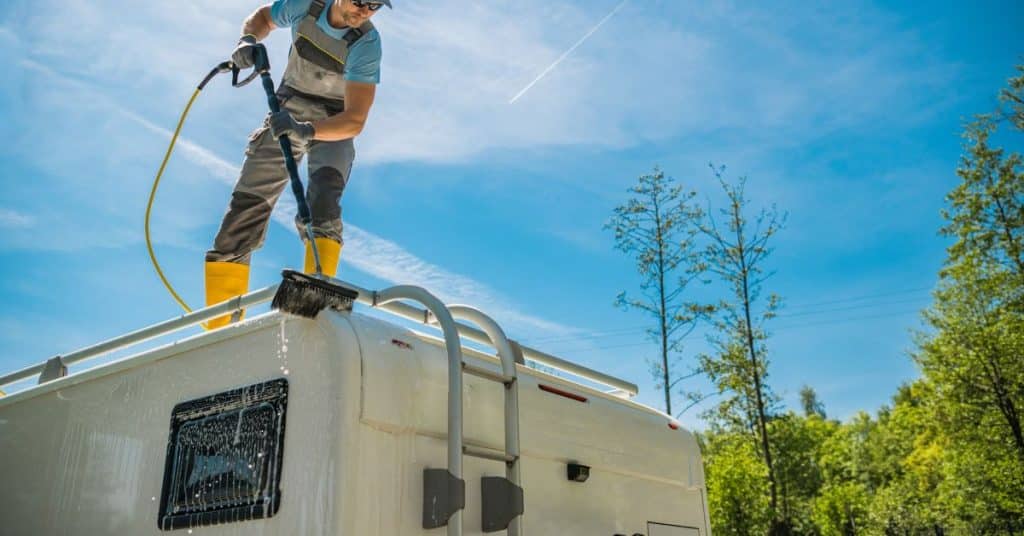
RV roof maintenance doesn’t need to be complicated. What matters is consistency.
We’ve found it’s easiest to break it into a simple routine you can stick to, especially when you’re moving often or dealing with different climates.
Monthly Quick Check
This is something we do regularly, especially when we’ve been parked for a bit or after heavy weather.
Climb up and do a quick scan of the entire roof. You’re looking for anything obvious. Cracks in the sealant, loose edges, debris buildup, or anything that just looks off.
Pay extra attention around vents, skylights, antennas, and your AC unit. Those are the most common places for issues to start.
This doesn’t take long, but it catches problems early.
Seasonal / Quarterly Maintenance
Every few months, it’s worth slowing down and taking a closer look.
This is when we’ll clean the roof, check all sealant lines more carefully, and touch up anything that looks worn or questionable.
It’s also a good time to check for soft spots when walking the roof and to make sure water is draining properly, not pooling anywhere.
If you’re traveling through different climates, such as intense sun, heavy rain, or colder temperatures, this step becomes even more important.
Annual Maintenance
At least once a year, treat this as a full reset.
Go through every seam and penetration point and decide if anything needs to be resealed or reinforced. Some RVers choose to do a full reseal, while others just address problem areas.
If you’re not comfortable doing it yourself, this is where a professional inspection can give you peace of mind.
The goal with all of this isn’t perfection. It’s staying ahead of small issues before they turn into big ones.
How to Clean Your RV Roof
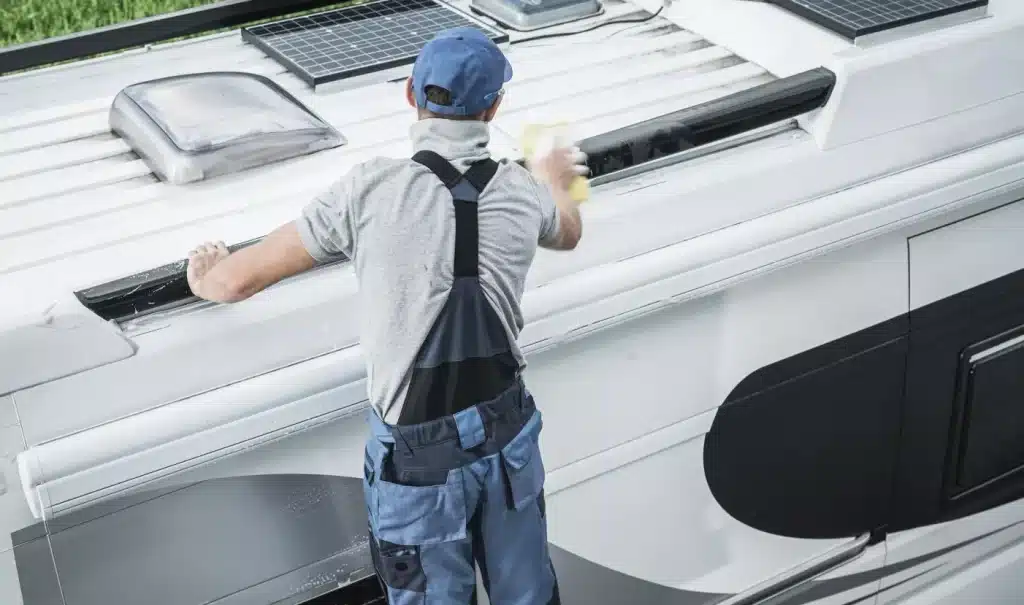
Cleaning your RV roof isn’t just about keeping it looking good. It helps you actually see what’s going on up there.
Dirt, leaves, and buildup can hide cracks or worn sealant, so this step is really part of your inspection.
Before you start, make sure you’re using a cleaner that’s safe for your specific roof type. Rubber roofs, especially, can be damaged by harsh chemicals.
Start by rinsing off loose debris with a hose. Then use a soft brush and your cleaner to gently scrub the surface, working in sections so nothing dries too quickly.
As you’re cleaning, pay attention to anything that looks off. This is usually when small issues stand out.
Once everything is scrubbed, rinse thoroughly and let it dry.
One thing we always keep in mind is where that runoff is going. Dirty water from your roof can streak down the sides of your RV, so it’s worth rinsing the exterior walls afterward to avoid stains.
Also, avoid pressure washers. It might seem like a faster option, but it can force water into seams or damage sealant.
This is a simple process, but it gives you a clear view of your roof and helps you catch problems early.
How to Inspect Your RV Roof for Damage
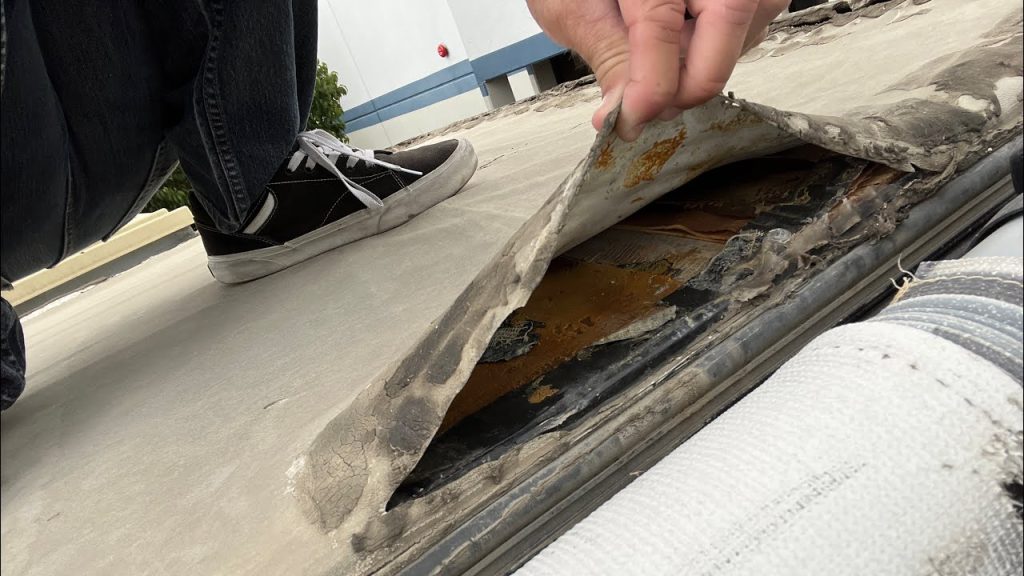
Once your roof is clean, inspection becomes a lot easier. This is where you slow down and actually look for early signs of trouble.
Start with all the usual problem areas. Seams, edges, and anything mounted on the roof, like vents, skylights, antennas, and your AC unit. These are the first places sealant starts to break down.
You’re looking for cracks, gaps, lifting, or sealant that looks dry or brittle. If it doesn’t look smooth and sealed, it’s worth addressing.
Next, scan the roof surface itself. Watch for bubbles, wrinkles, or any spots that look uneven. Those can be early signs of moisture getting underneath.
As you move around, pay attention to how the roof feels underfoot. Soft or spongy areas are a red flag and usually mean water has already made its way in.
Then check inside your RV. Look at the ceiling and around cabinets for stains, discoloration, or any signs of moisture. Sometimes the inside tells you there’s a problem before you ever see it on the roof.
This doesn’t need to take long, but it should be intentional. A few extra minutes here can save you from dealing with a much bigger issue later.
How to Reseal Your RV Roof
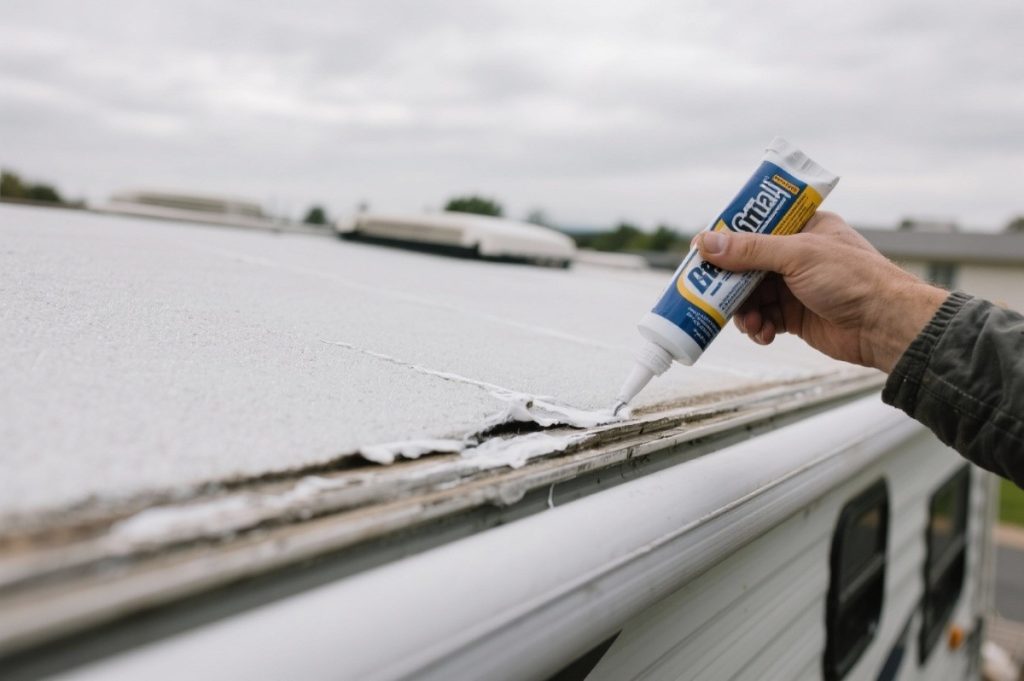
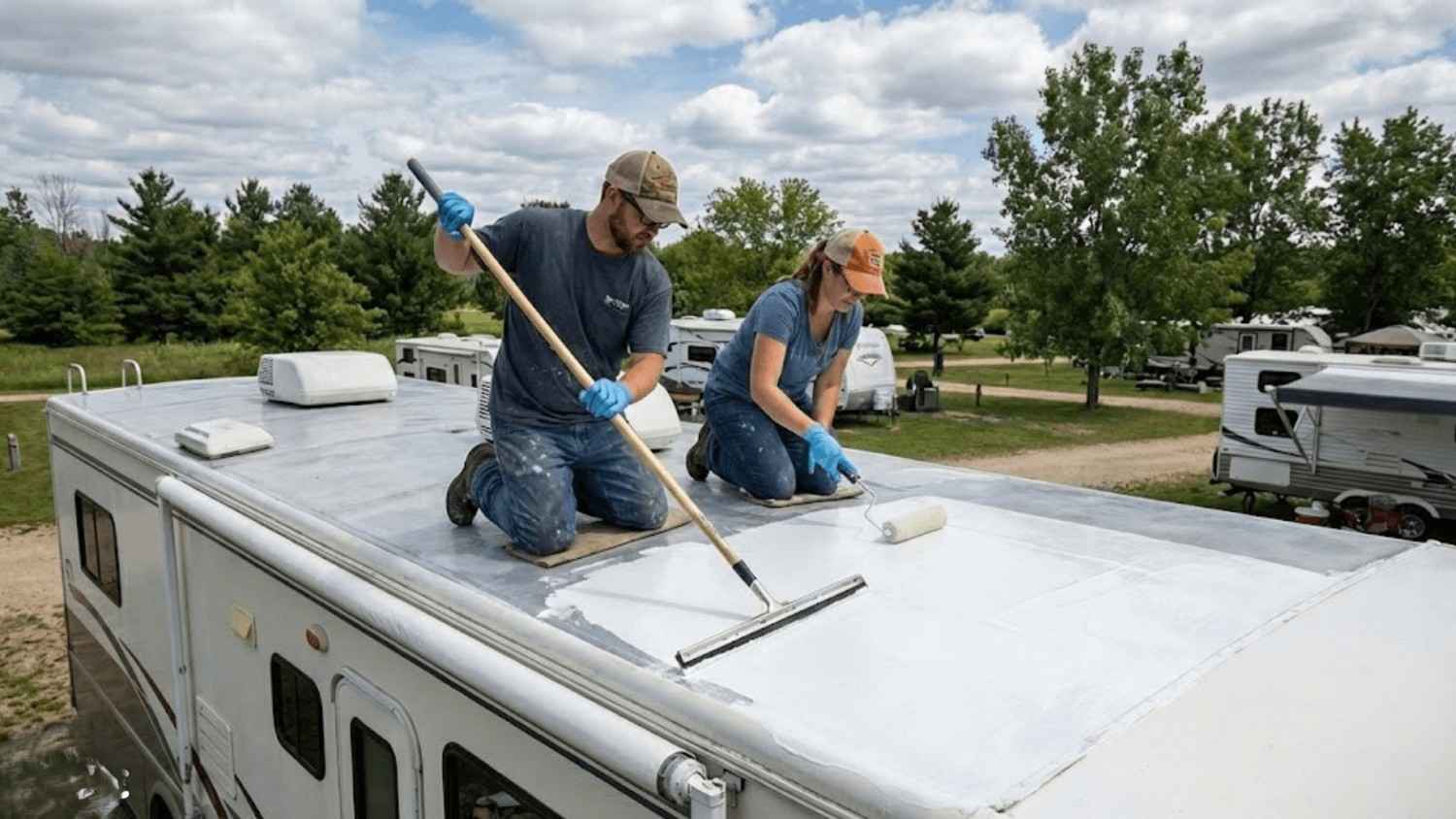
Resealing your RV roof sounds intimidating at first, but most of the time, you’re not redoing the entire roof. You’re maintaining the areas that are most likely to fail.
Focus on seams, edges, and anything mounted to the roof. That’s where sealant naturally breaks down over time.
Start by cleaning and drying the area you’re working on. New sealant won’t adhere properly if there’s dirt, moisture, or old, loose material underneath.
If the existing sealant is cracked or lifting, remove any loose or damaged sections. You don’t need to strip everything down, just make sure you’re not sealing over something that’s already failing.
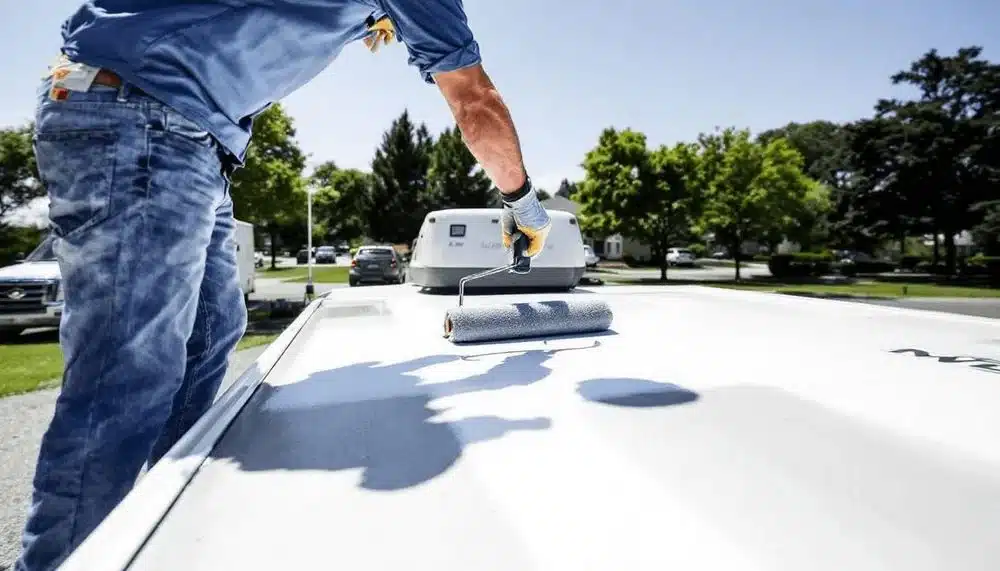
From there, apply a self-leveling lap sealant over the area. It will spread out and create a smooth, watertight barrier as it cures.
For longer seams or areas that need extra reinforcement, some RVers also use sealant tape as a backup layer.
The biggest mistake we see is waiting too long. People tend to reseal only after there’s already a leak, when this should really be preventative.
If something looks questionable, it’s worth sealing it now rather than watching it turn into a bigger issue later.
Best Products for RV Roof Maintenance
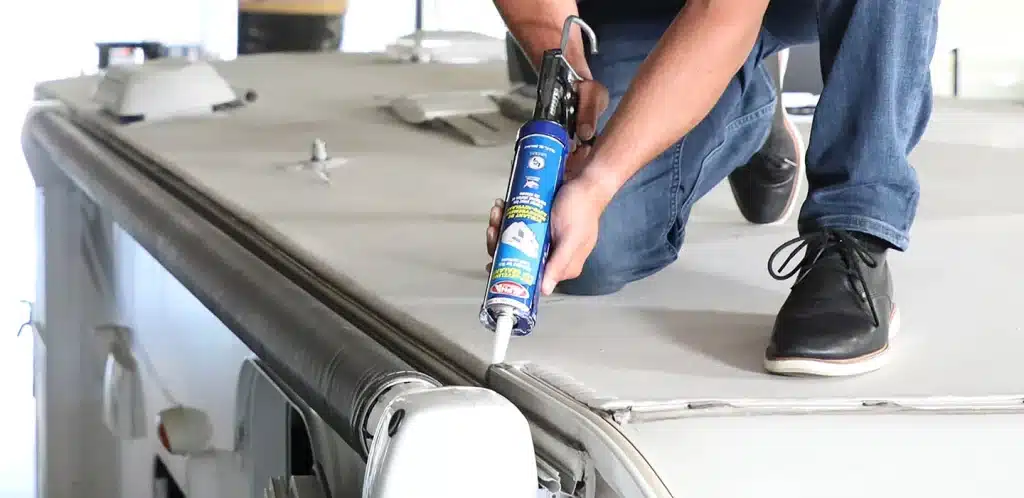
You don’t need a ton of products to maintain your RV roof, but using the right ones makes a big difference.
The goal is simple. Clean safely, seal properly, and avoid anything that can break down your roof material over time.
For cleaning, stick with products made specifically for RV roofs, especially if you have a rubber roof. Harsh household cleaners can dry it out or cause damage. A basic RV roof cleaner and a soft brush will get the job done.
When it comes to sealing, quality matters. Self-leveling lap sealant is the go-to for most RVers and works well around vents, skylights, and edges. For longer seams or areas you don’t want to revisit often, sealant tape is a solid option for added durability.
If your roof is starting to show age or you want extra protection, roof coatings can help extend its life and improve UV resistance. This isn’t something you need to do often, but it can be worth it depending on your setup and how exposed your RV is to the elements.
Beyond that, it’s just having the basics on hand. A good ladder, a hose, a soft brush, and the right sealant are ready to go when you need them.
We’ve learned it’s better to have these things before there’s a problem, not after.
How Often Should You Maintain Your RV Roof?
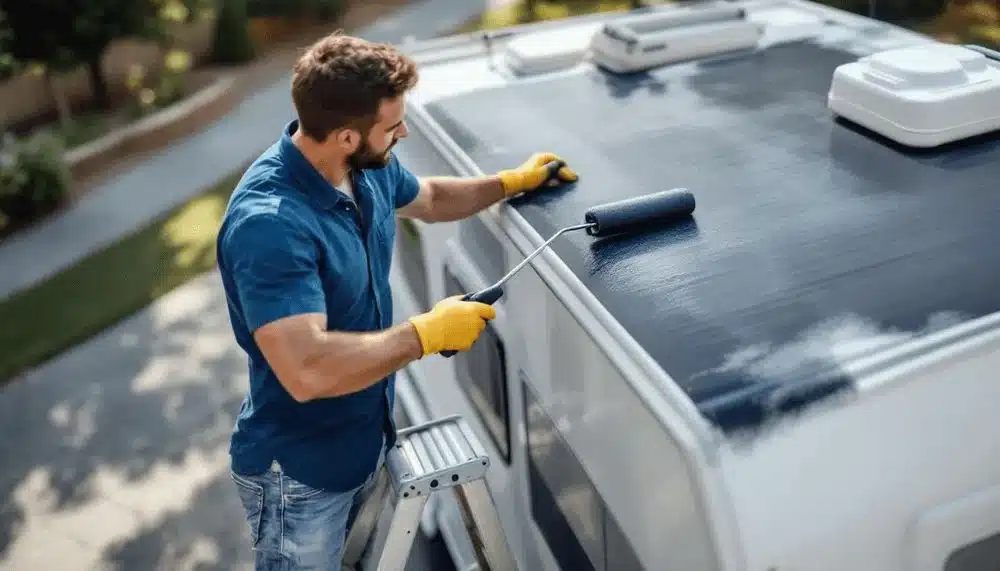
There’s no one-size answer here, but there is a simple way to think about it.
It depends on how often you use your RV and on the conditions it’s exposed to.
As full-time RVers, we’re on the roof regularly. Between sun exposure, rain, and constantly changing environments, things wear down faster. For us, a quick monthly check and a more thorough inspection every few months just makes sense.
If you’re more of a weekend camper, you can usually get away with checking your roof before and after trips, plus a deeper look a couple of times a year.
If your RV sits in storage for long periods, don’t assume it’s fine. Sitting still can actually make things worse, especially with heat, moisture, or debris buildup. It’s worth checking it periodically, even when you’re not using it.
Climate plays a big role, too. Constant sun can dry out the sealant. Heavy rain can quickly expose weak spots. Cold weather can cause materials to contract and crack.
The routine doesn’t have to be complicated. The key is not going too long without looking.
If you’re checking your roof consistently, you’ll catch most issues before they ever turn into something serious.
RV Roof Maintenance Costs (DIY vs Professional)
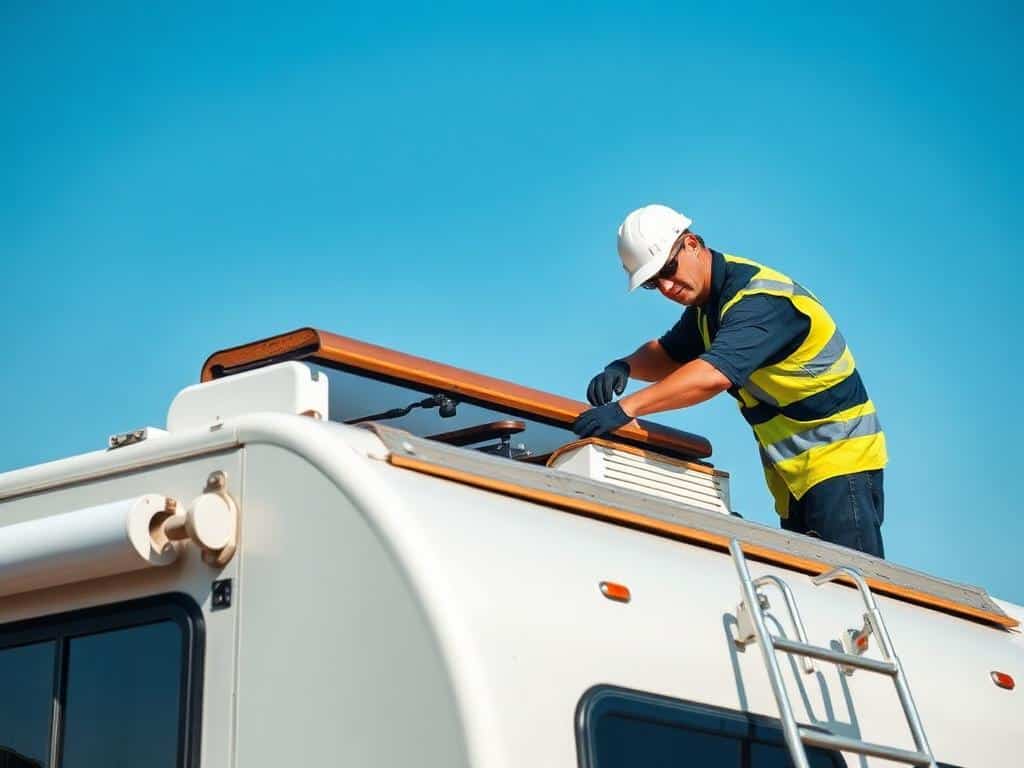
RV roof maintenance is one of those areas where a little upfront effort can save you a lot of money later.
If you’re doing it yourself, the costs stay pretty reasonable. A good roof cleaner, sealant, and a few basic tools will usually run you somewhere in the $50 to $150 range, depending on what you already have. And most of that will last you through multiple maintenance cycles.
Even adding something like sealant tape or a roof coating is still far cheaper than dealing with repairs.
If you go the professional route, inspections and resealing services can range from a couple of hundred dollars to over $1,000, depending on the amount of work needed and the size of your RV.
Where things really add up is when maintenance gets skipped.
Water damage repairs can easily run into the thousands. And in some cases, especially with long-term leaks, the damage can be extensive enough to affect the RV’s structure.
That’s why we look at roof maintenance as prevention, not an expense.
A small amount of time and money now keeps you from dealing with a much bigger problem later.
Common RV Roof Maintenance Mistakes to Avoid
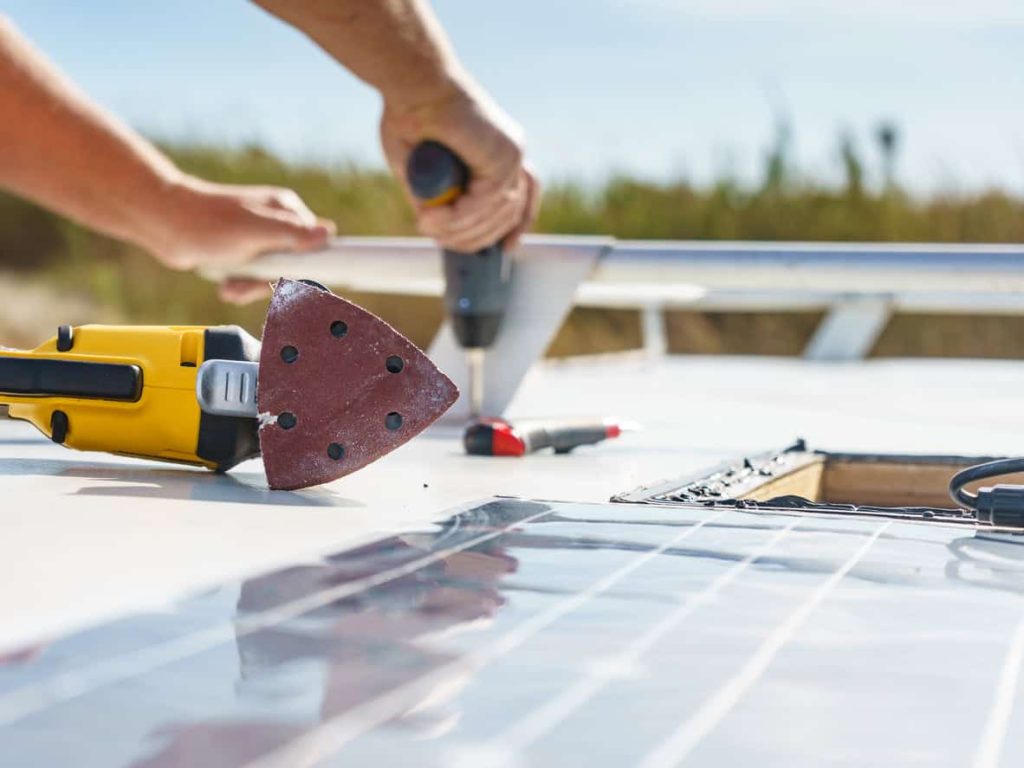
Most RV roof problems don’t come from one big mistake. They come from small things that get ignored over time.
One of the most common is using the wrong cleaner. It might seem harmless, but harsh chemicals can break down rubber roofs and shorten their lifespan. It’s always worth using products made for your specific roof type.
Another mistake is overlooking small cracks or gaps in the sealant. They don’t look like a big deal at first, but that’s exactly how leaks start. If something looks questionable, it’s better to address it early.
Walking on the roof improperly is another one. Not all RV roofs are built the same, and putting too much weight in the wrong areas can cause damage. Knowing where your roof is supported matters.
And then there’s waiting too long between checks.
This is probably the biggest issue we see. Life gets busy, travel gets in the way, and before you know it, months have gone by without looking at the roof.
By the time something is noticeable from the inside, the problem has usually been there for a while.
Avoiding these mistakes isn’t complicated. It just comes down to paying attention and staying consistent.
Pro Tips to Extend the Life of Your RV Roof
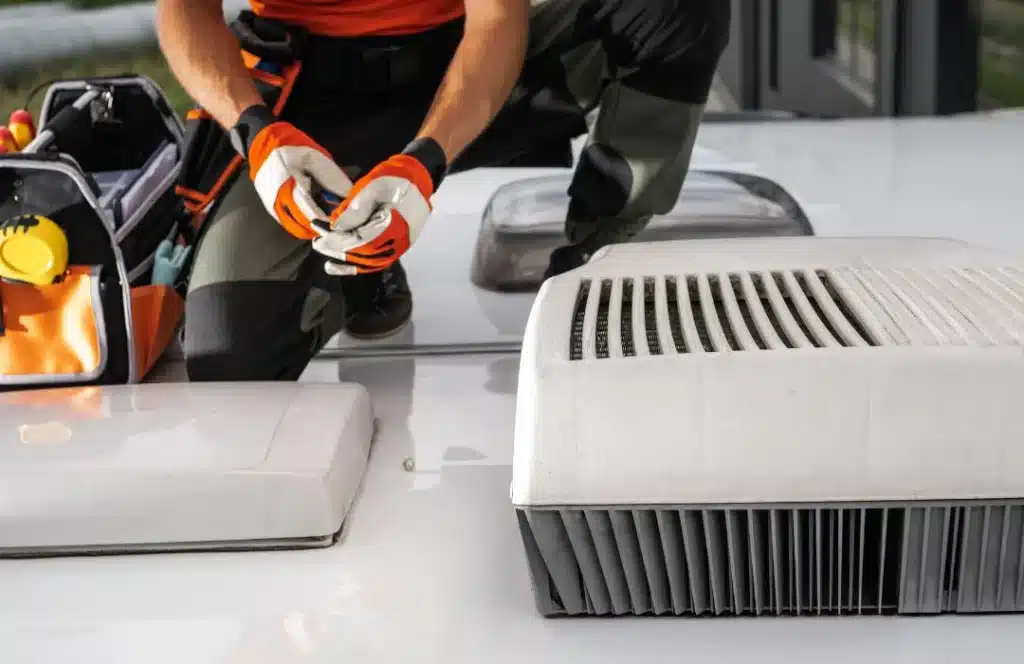
Once you have a basic maintenance routine down, a few small habits can make a big difference over time.
One of the easiest ways is to be intentional about where you park. Full sun all day, every day, will wear down the sealant faster. When we can, we look for partial shade or rotate the RV occasionally if we’re staying somewhere for the long term.
Keeping your roof clean consistently also goes further than most people think. It’s not just about appearance. Less buildup means less chance for moisture to sit and cause problems.
If your RV is going to sit for a while, using a cover can help protect it from constant exposure to the elements. It’s not always practical when you’re traveling, but it can make a difference during longer stays or storage periods.
Another simple habit is keeping a mental or written note of when you last checked or resealed certain areas. When you’re moving often, it’s easy to lose track.
For us, it comes down to this. The more proactive you are, the less you’ll have to deal with later.
Roof issues are almost always preventable if you stay ahead of them.
Stay Ahead of RV Roof Problems
RV roof maintenance isn’t something you need to overcomplicate, but it is something you don’t want to ignore.
From our experience on the road, the RVers who stay ahead of small issues rarely deal with big ones. The ones who put it off usually end up wishing they hadn’t.
A simple routine, a quick check here and there, and addressing things early go a long way.
It’s one of the easiest ways to protect your RV, your time, and your wallet so you can focus on actually enjoying the lifestyle.
FAQs About RV Roof Maintenance
How long does an RV roof last?
Most RV roofs last 10 to 20 years, depending on the material and how well they’re maintained. Regular cleaning and resealing can push it toward the higher end of that range.
Can I walk on my RV roof?
In most cases, yes, but it depends on your RV. Many roofs are designed to be walked on, but not all areas are equally supported. It’s important to move carefully and avoid putting weight near edges or weak spots.
What’s the best sealant for an RV roof?
Self-leveling lap sealant is the most commonly used for sealing around vents, skylights, and seams. For longer-term seam protection, many RVers also use sealant tape.
How do I know if my RV roof is leaking?
The most obvious signs are stains, discoloration, or soft spots on your ceiling or walls. Musty odors and bubbling surfaces can also indicate moisture getting in.
Do I need to reseal my RV roof every year?
Not necessarily. Some areas may need touch-ups yearly, but a full reseal depends on the condition of your existing sealant. Regular inspections will tell you what actually needs attention.
How We Review: At Time to RV, we only recommend products and places we have personally used or visited. Our reviews are based on real-life testing during our full-time travels. We never accept payment for a positive review; our goal is to give you the honest truth so you can hit the road with confidence.