Key Takeaways
- RV parks prioritize convenience with full hookups and are ideal for short stays, while RV resorts offer additional amenities and a more curated experience, often with longer stays.
- Boondocking offers freedom and solitude with no hookups or amenities, appealing to those seeking independence and self-sufficiency.
- National park campgrounds emphasize location and access to nature, often trading amenities for views and proximity to trails.
RV Resort or RV Park: The Great RV Debate
If you’ve spent any amount of time RVing, you’ve probably noticed this argument comes up a lot.
“Is that place an RV park or an RV resort?”
“Because this does not feel like a resort…”
“Why is it called a park when it has three pools and pickleball leagues?”
Somewhere along the way, RV Resorts and RV Parks turned into two very different expectations, even though the lines between them are often blurry. And depending on who you ask, one is either the dream or something they actively avoid.
The truth is, not all camping experiences are meant to feel the same. Some are about convenience. Some are about community. Some are about peace, quiet, and not seeing another soul for miles.
In this post, we’re settling the debate the only fair way. By breaking down what actually separates RV resorts from RV parks, where other types of camping fit in, and why none of them are “right” or “wrong.” They’re just different tools for different travel styles.
Whether you love full hookups and pool days, prefer something simple and overnight-friendly, or want to disappear into the middle of nowhere for a few days, this debate matters more than people think.
Quick Breakdown: The Main Types of RV Camping
Before we really dig into the RV resort vs RV park debate, it helps to zoom out for a second. A lot of confusion comes from lumping all camping into the same bucket, when in reality, there are several very different ways people camp in an RV.
Here’s the quick lay of the land.
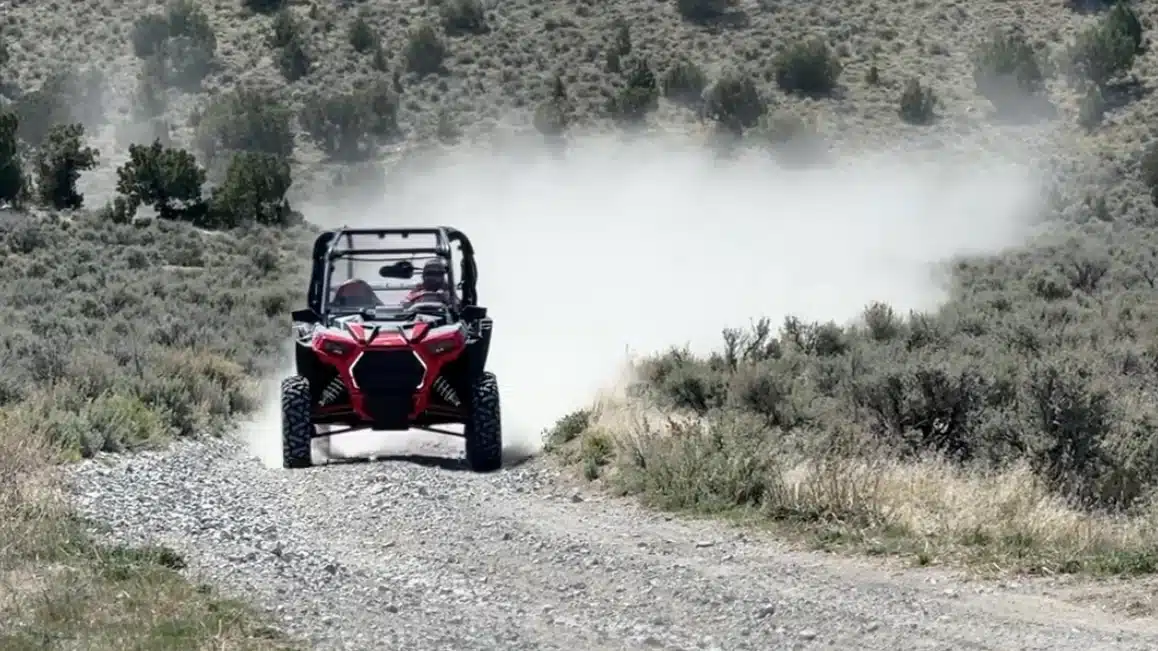
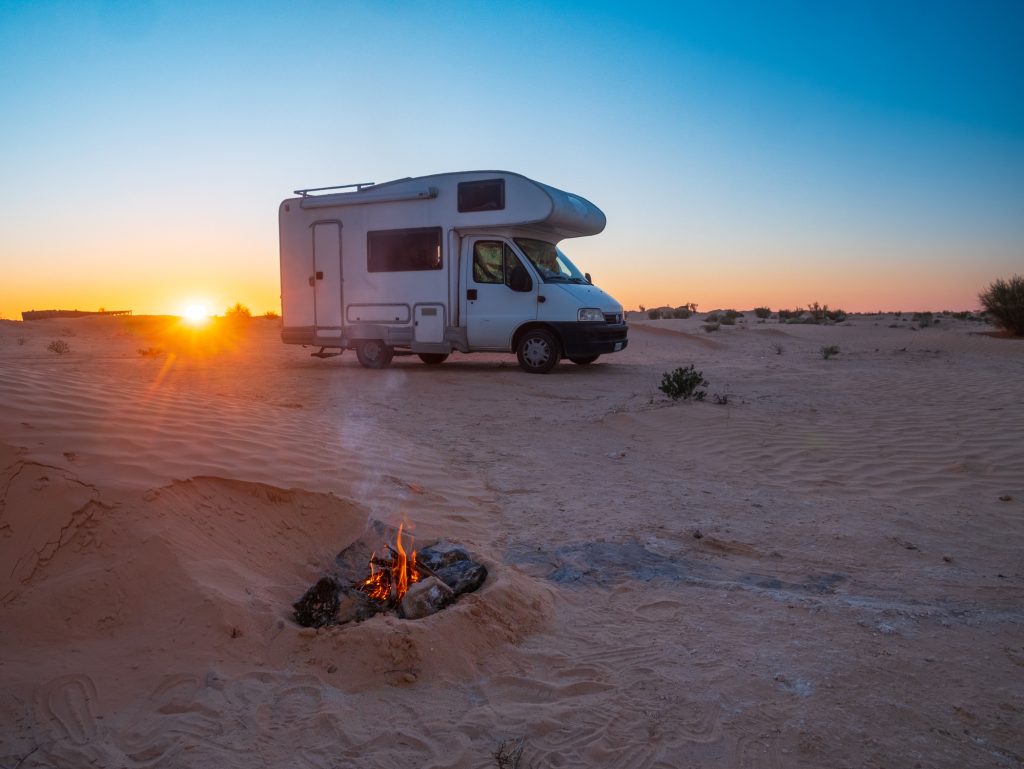
Boondocking is camping without hookups, usually on public land or dispersed areas. No reservations, no neighbors right on top of you, and no amenities beyond what you bring with you. It’s about freedom, flexibility, and self-sufficiency.
National park campgrounds sit on the opposite end of the scenery spectrum. These campgrounds prioritize location over convenience. Think incredible views, wildlife, and proximity to trails, but usually limited hookups and tighter sites.
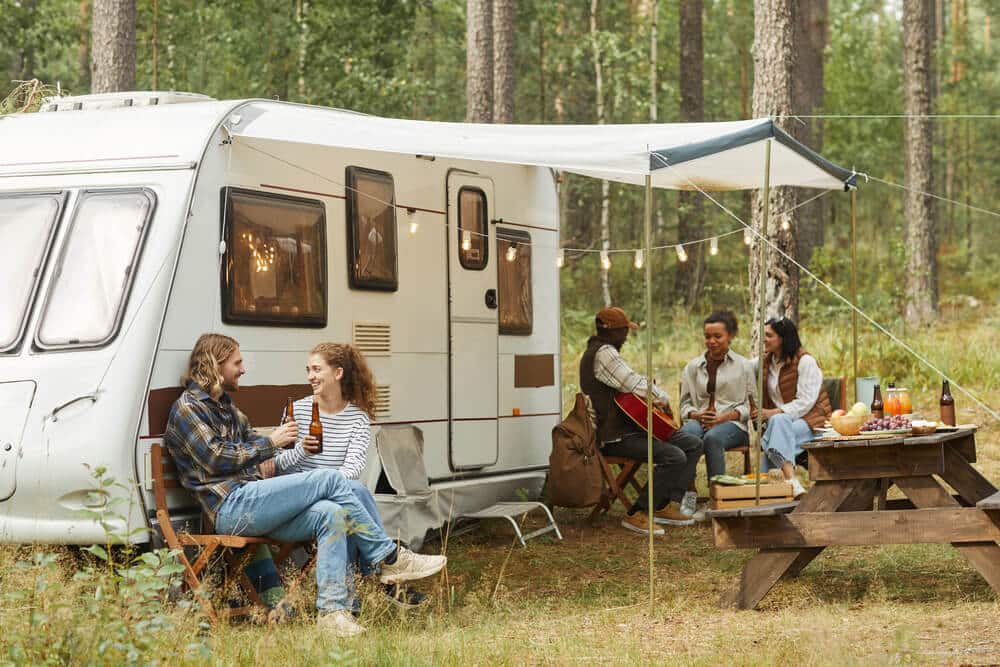
RV parks are the practical middle ground. They’re typically designed for easy access, shorter stays, and full hookups. RV parks are common along travel routes, near cities, and in places where people just need a reliable spot to plug in and reset.
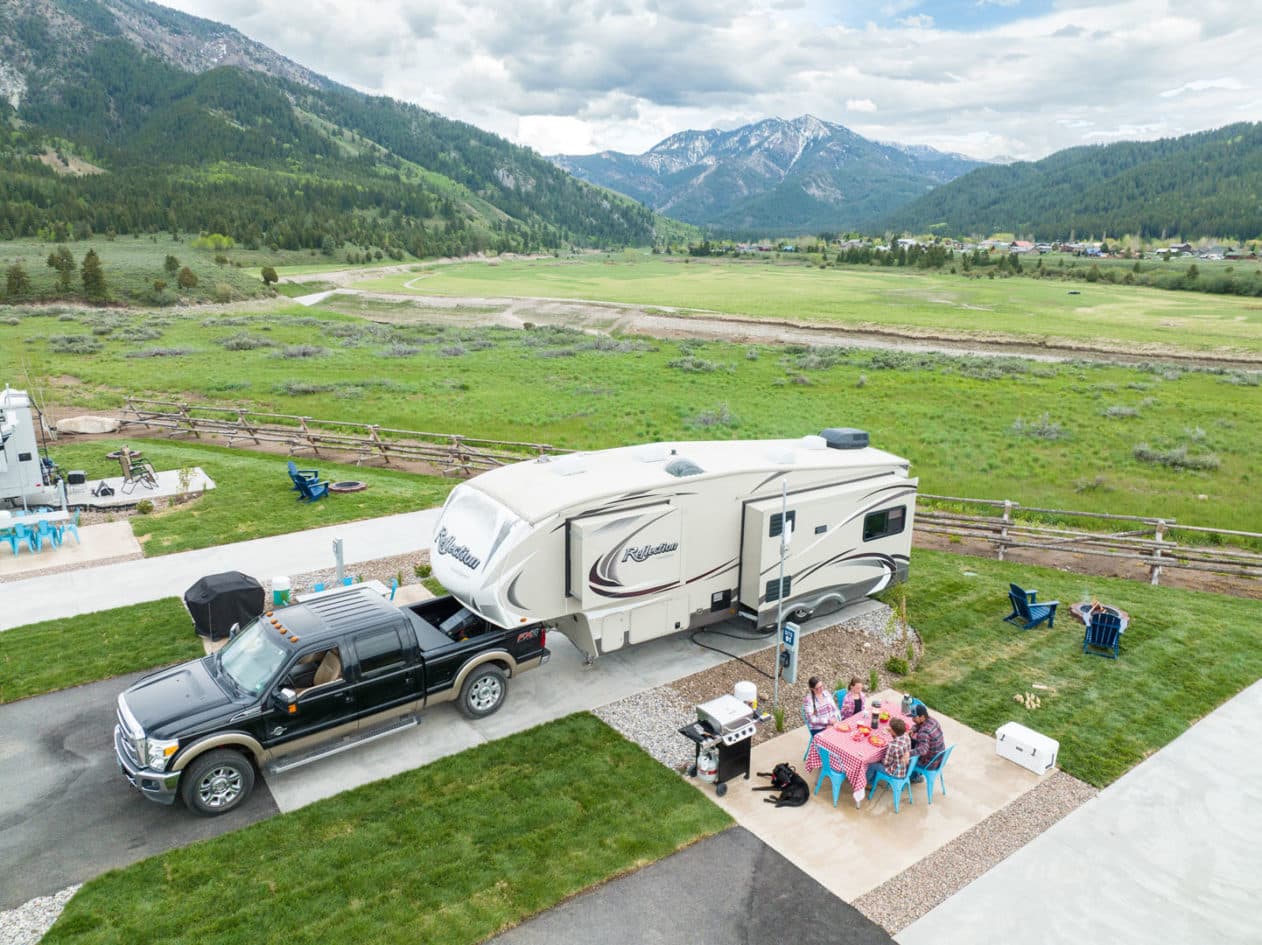
RV resorts take the RV park concept and layer on amenities and experiences. Pools, clubhouses, activities, events, landscaping, and often longer stays. Some feel like vacation destinations. Others blur the line and look suspiciously like a really nice RV park.
All four serve a purpose. And understanding what each one is meant for makes the whole “resort vs park” argument a lot clearer.
Boondocking: Freedom, Silence, and Zero Amenities
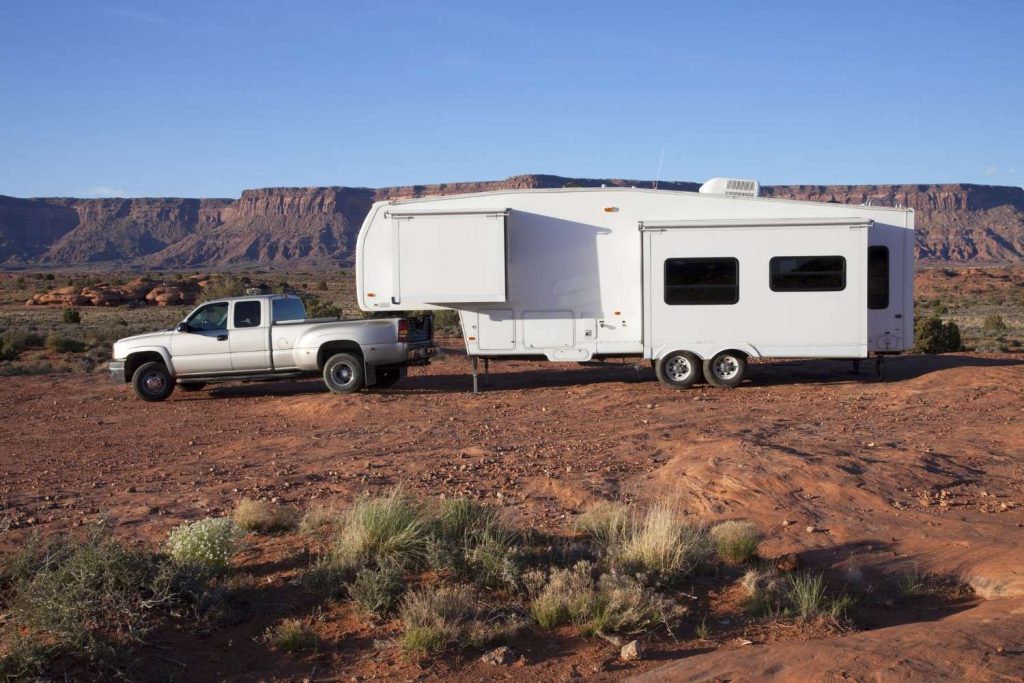
Boondocking is where the rules basically disappear.
No hookups. No office. No check-in time. No one is telling you where to park or how long your rig can be. It’s just you, your RV, and whatever stretch of land you managed to find.
For many RVers, this is the dream.
Boondocking usually happens on public land, such as BLM areas or national forests, and it’s often free or very low-cost. You’re not paying for amenities because… There aren’t any.
What you gain instead is space, quiet, and the kind of views that make you forget you even own a campground reservation app.
That said, boondocking isn’t for everyone. You’re fully responsible for your power, water, and waste. If something goes wrong, there’s no maintenance crew and no backup pedestal. And if you forget something important, you’re either improvising or packing up.
Some RVers thrive on that independence. Others last about one night before missing full hookups and a hot shower that doesn’t require mental math.
Boondocking sits at one extreme of the camping spectrum, which is why it’s such a good contrast point for RV parks and RV resorts.
It strips the experience down to its simplest form and makes one thing very clear: not every camping style is about comfort or convenience, and that’s exactly why people love it.
National Park Campgrounds: The Views Are the Amenity
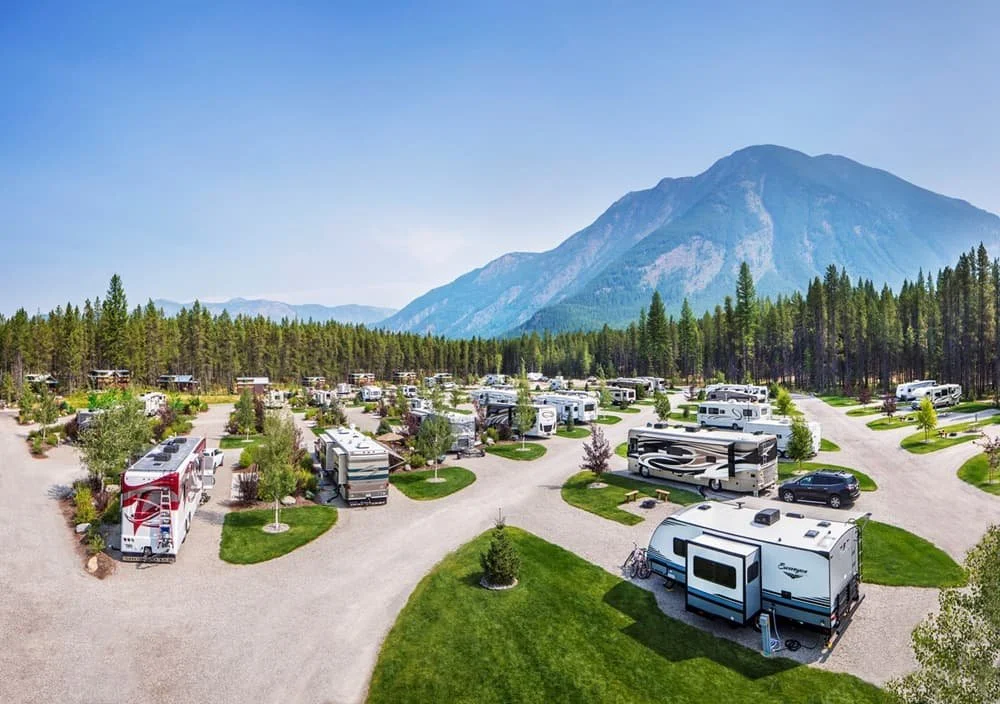
National park campgrounds are a reminder that sometimes the location is the luxury.
These campgrounds are designed to put you as close as possible to iconic landscapes, trails, wildlife, and experiences you just can’t replicate anywhere else.
Waking up steps from a trailhead or watching the sun come up over a canyon is the whole point. Everything else is secondary.
That’s why amenities are usually minimal. Many national park campgrounds have no hookups at all, or only limited electric service.
Sites can be tighter, roads narrower, and rigs longer than a certain length may not even fit. Cell service can be spotty, and reservations often require advance planning.
And yet, people plan entire trips around staying in these campgrounds.
If you’re someone who values being immersed in the environment over convenience, national park campgrounds are hard to beat. You’re trading pools, Wi-Fi, and laundry rooms for unforgettable views and direct access to places people travel across the country to see.
This style of camping isn’t trying to compete with RV parks or RV resorts. It serves a completely different purpose. It’s about proximity and experience, not comfort or community activities.
Which brings us back toward the more structured side of RV travel, where hookups return, and expectations start to shift.
RV Parks: Practical, Convenient, No-Frills (Usually)
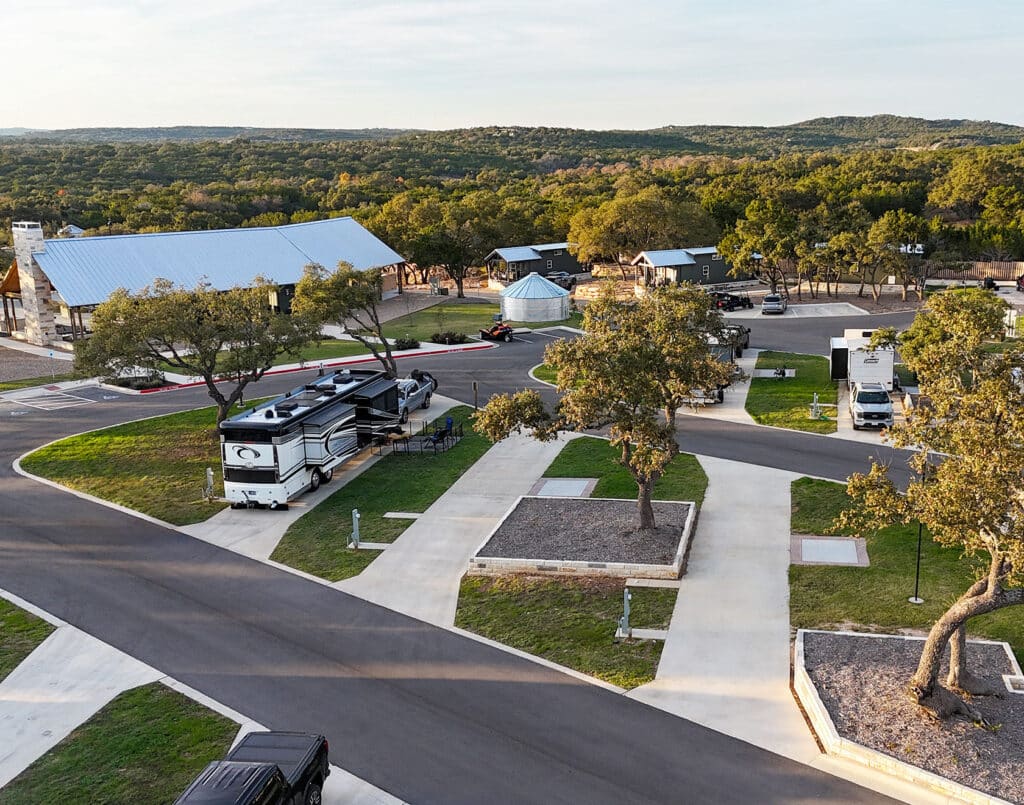
RV parks are where most people’s RV journeys intersect at some point, whether they realize it or not.
These are the places designed for functionality. Full hookups, easy pull-through sites, decent road access, and a setup that makes arriving and leaving simple.
RV parks are often located near highways, towns, attractions, or anywhere travelers need a reliable place to stop, reset, and move on.
They’re not trying to be flashy. And most of the time, they’re not trying to be a destination.
That’s also where RV parks tend to get an unfair reputation. Some people hear “RV park” and immediately picture cramped sites, little privacy, and a parking-lot feel.
And yes, those parks absolutely exist. But there are also plenty of well-run RV parks that are clean, quiet, and exactly what you want after a long travel day.
RV parks shine when convenience matters more than atmosphere. If you’re passing through an area, working remotely, or just need solid hookups without the bells and whistles, this is often the best option. You’re paying for reliability, not an experience schedule.
And this is where the debate usually starts.
Because once you add nicer landscaping, organized activities, or a pool… suddenly the question becomes, “Is this still an RV park, or does that make it an RV resort?”
That’s where things start to blur.
RV Resorts: Amenities, Activities, and Sometimes a Price Tag
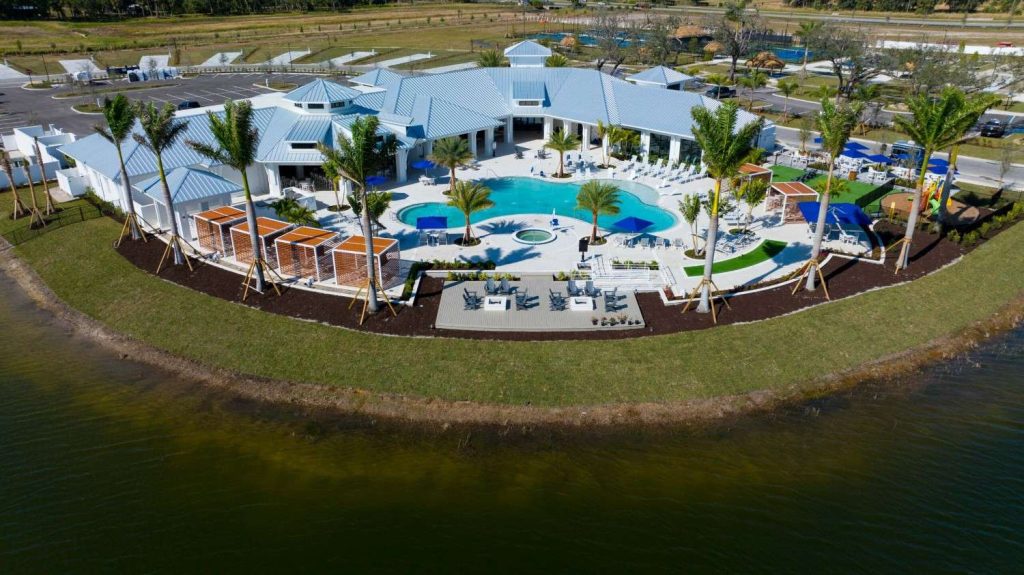
RV resorts are where expectations start to shift.
These are places that lean heavily into the idea that where you’re staying is part of the vacation. You’ll usually see upgraded amenities like pools, hot tubs, clubhouses, organized activities, fitness rooms, pickleball courts, and sometimes even on-site restaurants or bars.
Landscaping is more intentional, sites may feel more spaced out, and the overall vibe is often more curated.
For some RVers, this is the ideal setup. RV resorts can feel social, lively, and comfortable, especially for longer stays. Snowbirds, families, and people who enjoy community events tend to gravitate toward resorts because there’s always something going on.
For others, this is exactly why they avoid them.
RV resorts often come with higher nightly rates, longer minimum stays, and more rules. Quiet hours are enforced. Guest policies are tighter. And depending on the resort, you may feel like you’re living in a neighborhood rather than camping.
This is also where the term “RV resort” starts to feel subjective. Some truly feel like resorts. Others are essentially very nice RV parks with a pool and a better sign at the entrance.
And that’s where the debate really heats up.
Because when the differences aren’t clearly defined, people show up with very different expectations. One person thinks they booked a quiet overnight stop. Another expects activities, community events, and a resort-style experience.
Same label. Very different outcomes.
RV Resort vs RV Park: The Real Differences
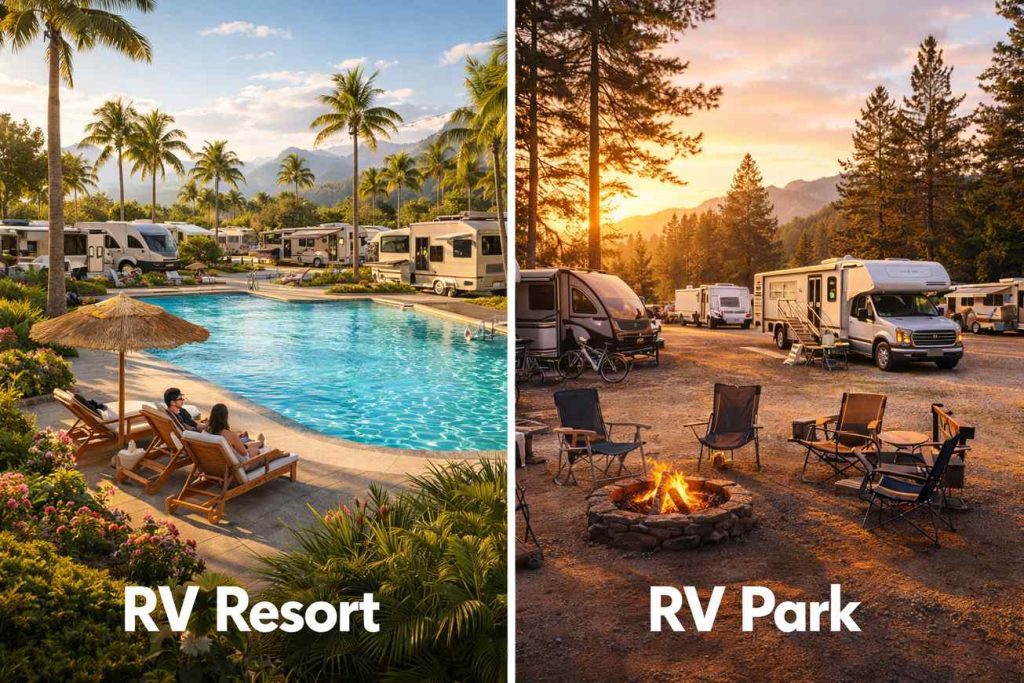
This is where the debate actually makes sense, because the difference between an RV park and an RV resort usually isn’t about hookups. It’s about expectations.
Atmosphere
RV parks tend to feel more transitional. People are coming and going, staying a night or two, and keeping to themselves. RV resorts often feel more settled. You’ll see longer stays, familiar faces, and a stronger sense of community.
Amenities
Both typically offer full hookups, but resorts layer on extras. Pools, activities, events, clubhouses, and recreation areas are part of the experience. RV parks usually focus on the essentials and keep amenities minimal or optional.
Cost
RV resorts generally cost more. You’re paying for access to amenities and the overall experience, not just a place to park. RV parks are often more budget-friendly, especially for short stays or travel days.
Length of Stay
RV parks cater well to overnight and short-term stays. RV resorts often encourage longer stays and may require minimum-stay requirements during peak seasons.
Rules and Structure
RV resorts tend to be more structured. Quiet hours, age restrictions, guest policies, and appearance rules are more common. RV parks are usually more relaxed, especially those designed for travelers rather than seasonal guests.
The biggest issue isn’t that one is better than the other. It’s that people book based on the name alone, without realizing what that label actually means for their stay.
And that’s how disappointment happens.
So… Which One Is Better?
This is usually where people expect a clear winner.
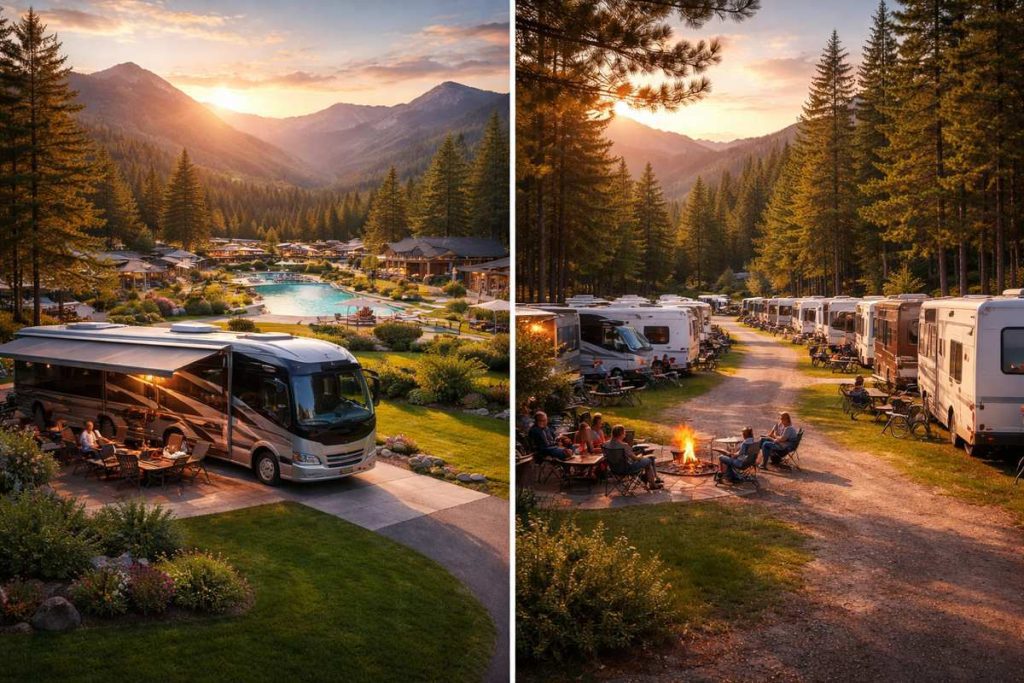
But the honest answer is that neither RV resorts nor RV parks are “better.” They’re better for different reasons.
If you’re traveling frequently, covering long distances, or just need a dependable place to plug in and move on, RV parks make a lot of sense. They’re practical, efficient, and usually easier on the budget.
If you’re slowing down, staying put for a while, or want the campground itself to be part of the experience, RV resorts can feel worth the extra cost. The amenities, activities, and social aspects are a big draw for the right traveler.
And here’s the part most people don’t talk about enough. Preferences change.
What feels perfect for a weekend trip might feel overwhelming for a month-long stay. What sounds boring on paper might end up being exactly what you want after weeks on the road.
The best RVers don’t pick sides. They mix it up.
It’s Not About the Name, It’s About the Experience
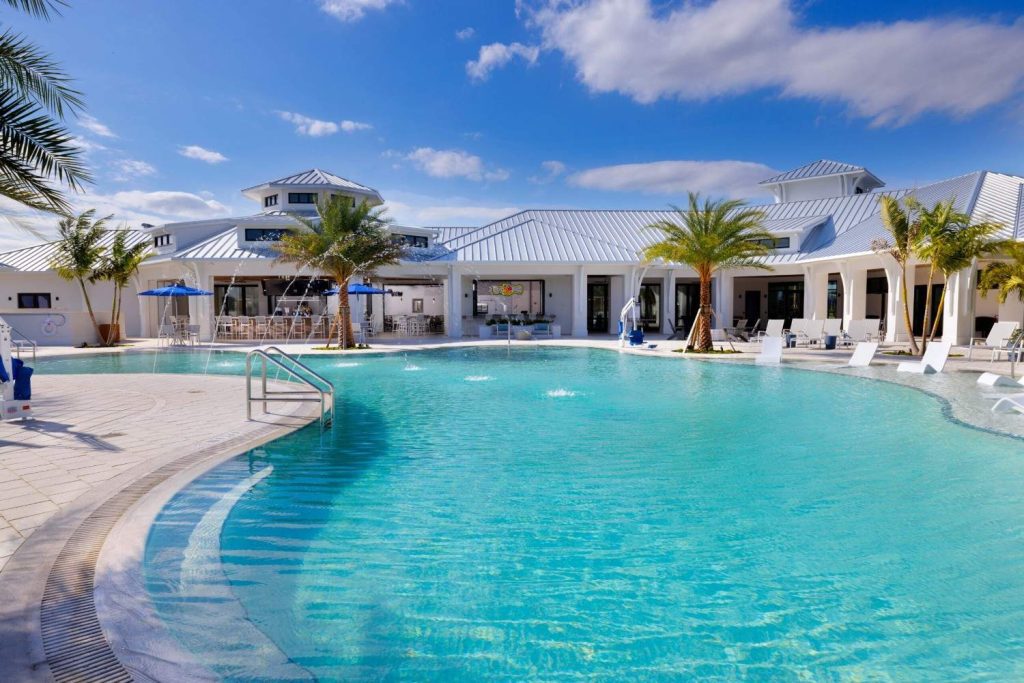
At the end of the day, the RV resort versus RV park debate isn’t really about labels. It’s about expectations.
A name doesn’t tell you how a place will feel. Two campgrounds can call themselves completely different things and offer nearly the same experience. Others might share a label and feel nothing alike.
What matters more is how you’re traveling in that season of life. Are you moving fast or staying put? Do you want quiet evenings or organized activities? Are you looking for convenience, community, scenery, or solitude?
Most RVers eventually realize that the best trips usually involve a mix. A few nights boondocking. A national park campground for the views. An RV park for an easy reset. And every once in a while, an RV resort when you want the campground itself to feel like the destination.
That flexibility is part of what makes RV travel so appealing in the first place.
Call it a park. Call it a resort. Call it whatever you want.
As long as it fits how you want to travel right now, you’re doing it right.
Frequently Asked Questions
What is the difference between an RV resort and an RV park?
The main difference comes down to atmosphere and amenities. RV parks focus on convenience and full hookups, while RV resorts add amenities like pools, activities, and community events that make the campground part of the experience.
Are RV resorts worth the extra cost?
RV resorts can be worth it if you plan to stay longer or want amenities and organized activities. If you’re traveling frequently or just need a place to reset, an RV park often makes more sense.
Is boondocking better than staying at an RV park or RV resort?
Boondocking isn’t better or worse, just different. It offers freedom and solitude without hookups, while RV parks and RV resorts provide convenience, structure, and comfort.
Do national park campgrounds have full hookups?
Most national park campgrounds offer limited hookups or none at all. The tradeoff is location, views, and direct access to trails and scenery.
Which type of RV camping is best for full-time RV living?
Many full-time RVers use a mix of boondocking, national park campgrounds, RV parks, and RV resorts, depending on how fast they’re traveling and what they need at the time.

Lauren Gamble is a wife, mother, and seasoned entrepreneur with a background in digital, affiliate marketing, and content creation. She and her husband run multiple remote businesses that give their family the freedom to live and travel full-time in their RV. As a homeschooling mom, Lauren is passionate about creating a life rich in experiences and connection. Through Time to RV, she shares her family’s journey, along with practical insights, travel tips, and resources to help others explore the road less traveled, without sacrificing stability or success. Lauren and her family have been full-time RVing since November 2024.
How We Review: At Time to RV, we only recommend products and places we have personally used or visited. Our reviews are based on real-life testing during our full-time travels. We never accept payment for a positive review; our goal is to give you the honest truth so you can hit the road with confidence.