Key Takeaways
- Upgrading to the Curt Touring Coil Suspension (TCS) and hydraulic disc brakes significantly improved ride quality, reducing chucking and harsh jolts.
- Hydraulic disc brakes offered more control, shorter stopping distances, and consistent braking performance compared to the original electric drum brakes.
- The TCS system, with its coil-and-shock design, effectively absorbs and dampens road forces, leading to less vibration and stress on the RV.
After a year of full-time RV life in our fifth wheel, we reached a point where “good enough” with our suspension and brakes no longer felt good enough. Long travel days, rough roads, and that constant low-level stress of “Can I stop fast enough if I need to?” pushed this upgrade higher and higher on our list.
Upgrading to the Curt Touring Coil Suspension (TCS) with hydraulic disc brakes was not a cosmetic or comfort-only decision. It was about control, safety, and protecting the RV that we actually live in. This review is from that perspective.
I am not looking at this as a weekend camper. I am looking at it as a full-time RVer who tows a lot and feels every bump and every braking moment in real life, not just on paper.
Table of Contents
Why We Upgraded Our Fifth Wheel Suspension After a Year of Full-Time RVing
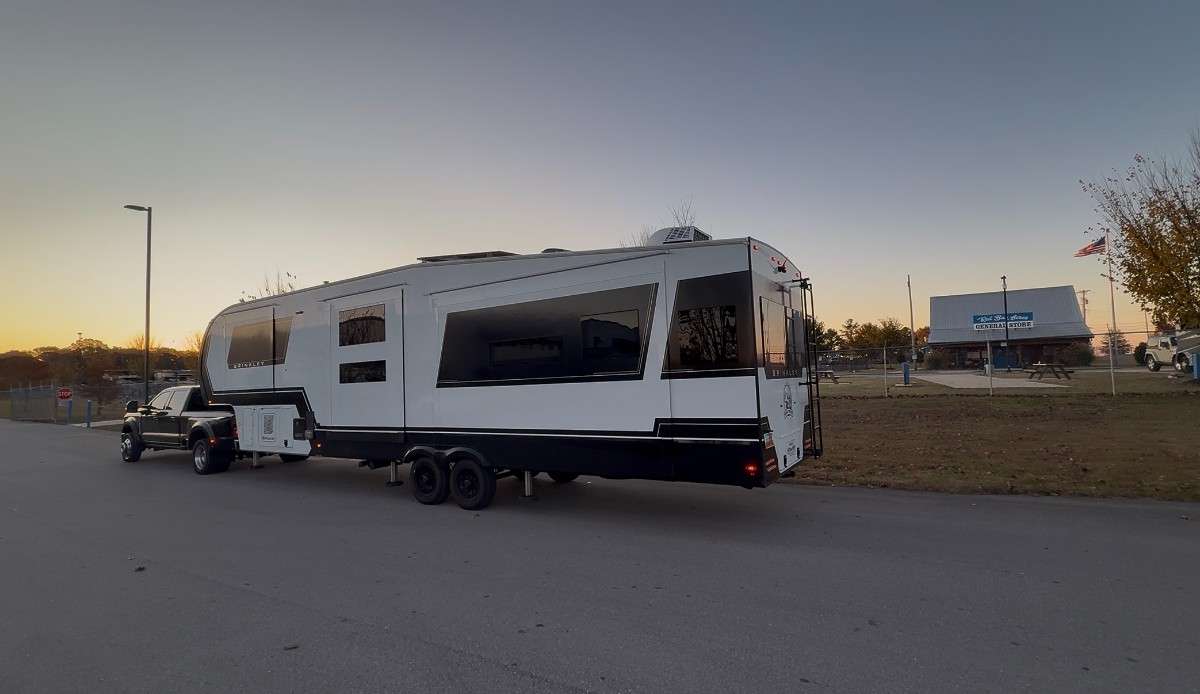
Our Setup and How We Travel
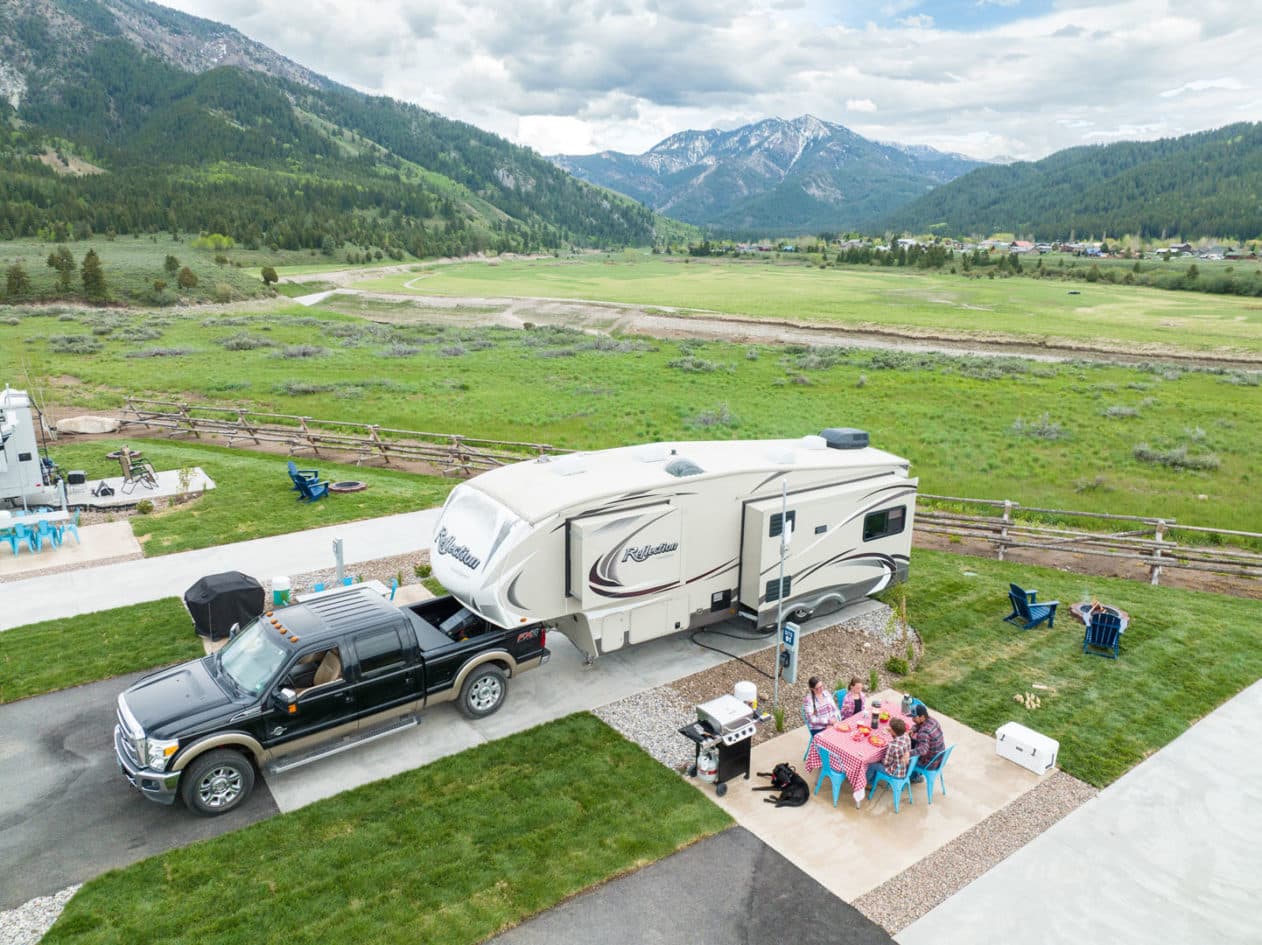
We travel full-time with our fifth wheel, which means our RV is not just a camper; it is our home. We tow often enough to notice patterns.
Our typical travel days include:
- Long stretches of highway with constant construction zones
- Bridge expansion joints that love to introduce chucking
- Rough patches of road that feel like someone is shaking the entire coach
Between the weight of a modern fifth wheel and the miles we put on it, it became clear that the stock leaf-spring suspension and drum brakes were the weak links in the whole setup. The truck was capable. The hitch setup was solid. The RV itself is excellent. The way it rode and stopped was not.
What We Didn’t Love About Stock Leaf Springs and Drum Brakes
With the original leaf springs and drum brakes, a few things kept bothering me over and over:
- Chucking in the cab over bridges and rough transitions
Every time we hit certain bridges or rough joints in the road, you could feel the trailer tug and push on the truck. It was that annoying fore and aft motion that you brace for because you know it is coming. - Brakes that felt “squishy” and not as responsive as I wanted
The braking never felt truly confident. It worked, but it often felt like I had to lean on the brake controller gain or plan further ahead than I would like. There was a little delay and softness that did not inspire trust, especially when you are fully loaded. - Harsh jolts are transferred into the coach
On certain roads, you could feel the whole rig shudder. You know the feeling where you are imagining every cabinet hinge and every dish in the rig getting hammered at the same time. Over time, that is not just uncomfortable; it is hard on the RV itself.
After enough miles, you start to feel like you are “fighting” the setup instead of working with it. That is what pushed us to start seriously considering a fifth-wheel suspension upgrade and better braking.
What We Wanted From an Upgrade
When we started researching the Curt TCS suspension and hydraulic disc brakes for RVs, we were very clear about what we hoped to solve. We were looking for:
- More control when braking
I wanted the brakes to feel firm and predictable, not squishy or vague. I wanted to feel like the trailer was actually helping stop the combination, not just along for the ride. - Less chucking and a smoother ride for the truck and trailer
Anything that could reduce that fore and aft motion and the sharp hits over bridges and rough pavement was a big win in my book. - Better protection for the RV over the long term
If the suspension could truly cut down vibration and harsh impacts, that should mean less stress on the frame, cabinetry, and everything we store inside. For full-time RVers, that is not a minor perk. That is long-term peace of mind. - A setup that actually matches how we use our rig
Weekend camping and full-time towing are two very different use cases. We needed a suspension and brake system that felt like it was designed for people who rack up real miles.
All of that led us to the Curt Touring Coil Suspension with hydraulic disc brakes. On paper, it promised reduced vibration, better ride quality, and stronger braking. After living with it, the real-world difference is noticeable, and in some situations, it feels enormous.
What Is the Curt Touring Coil Suspension (TCS)?
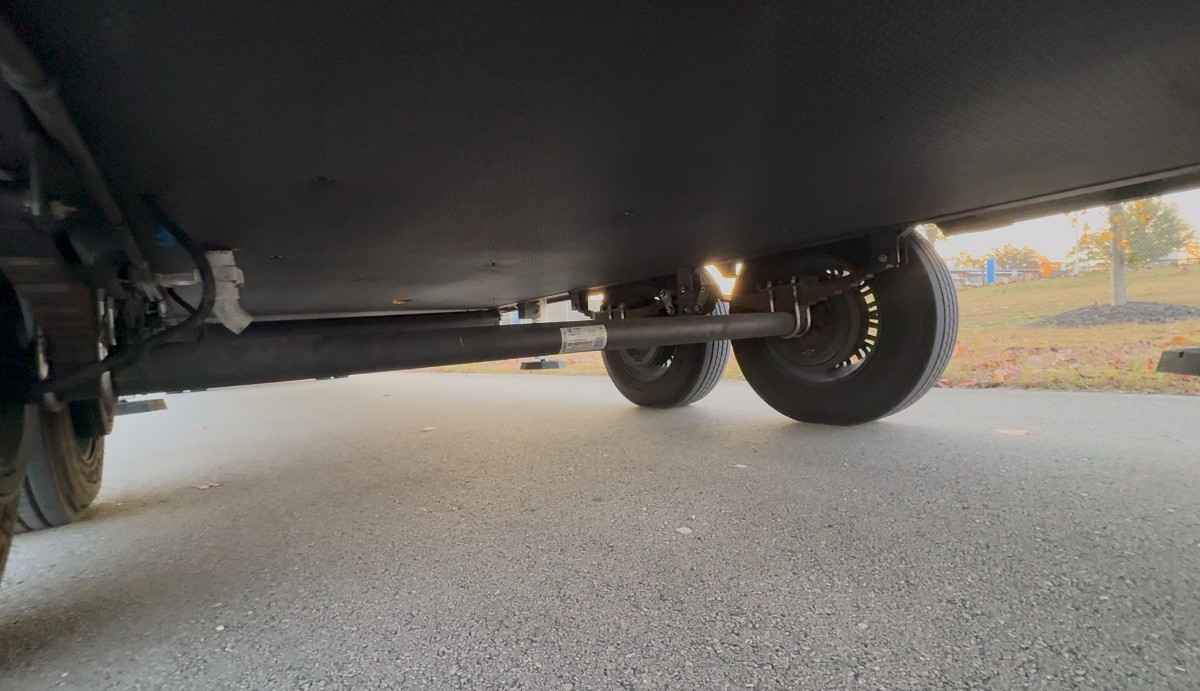
When we started researching suspension upgrades, the Curt Touring Coil Suspension kept coming up because it promises something fundamentally different from the typical leaf spring setup most fifth wheels still use.
After digging into the engineering (and now living with it), it’s clear this isn’t just a “nicer ride” upgrade. It’s a complete redesign of how a trailer absorbs and manages road forces.
How the Curt TCS Works in Simple Terms
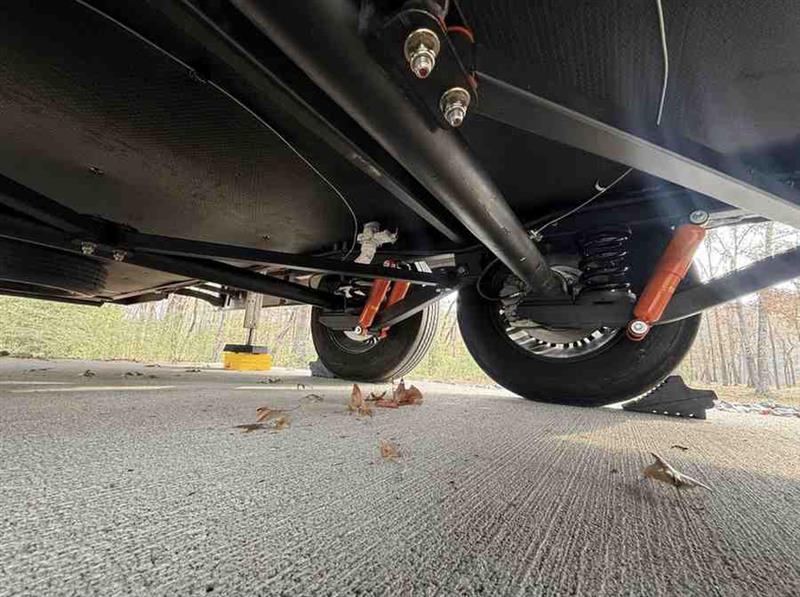
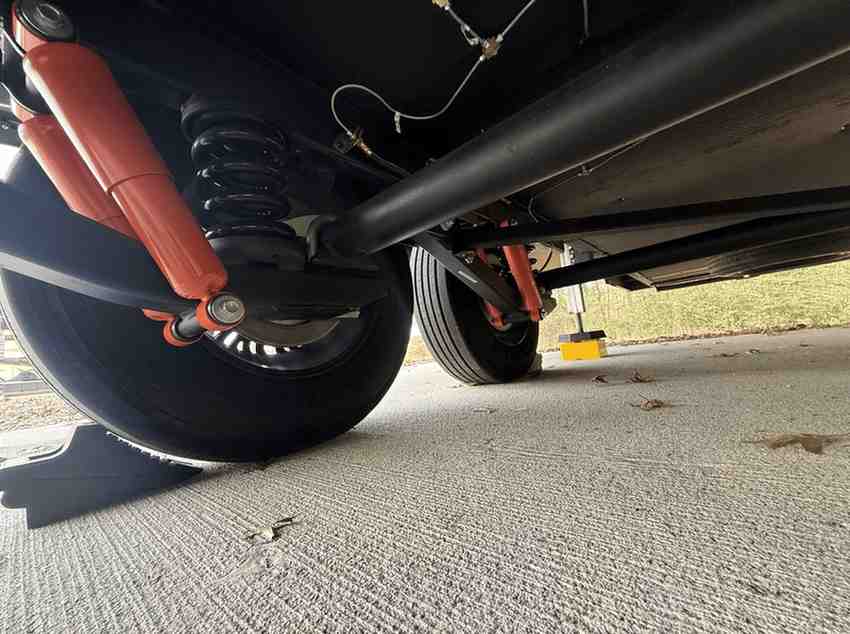
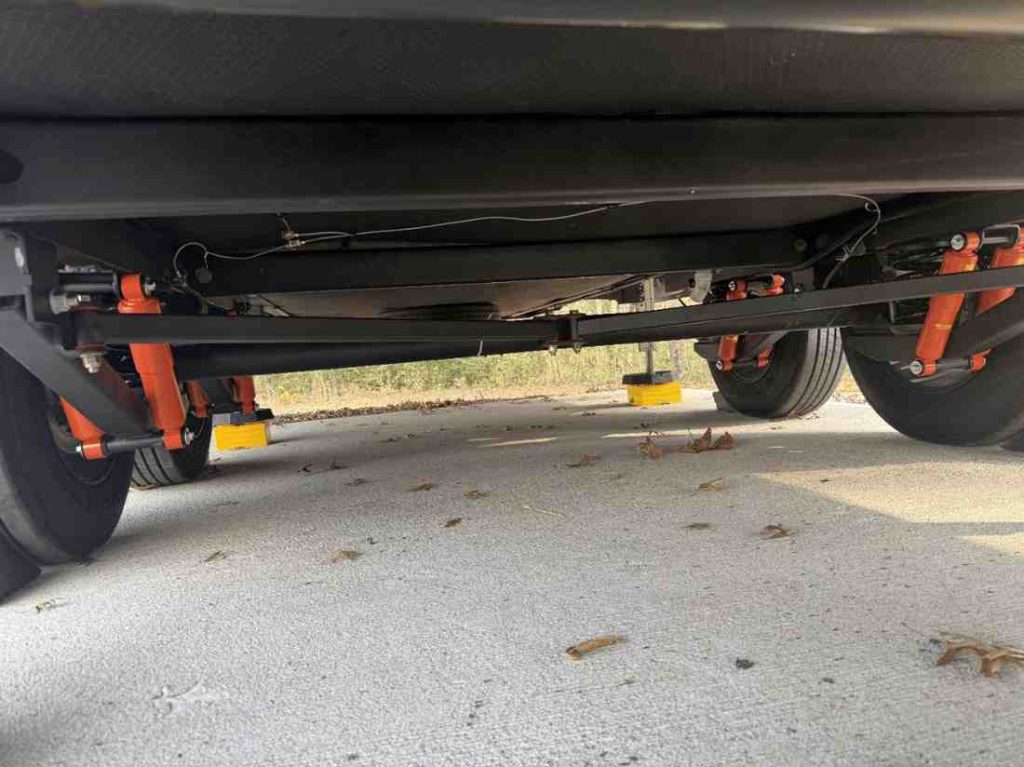
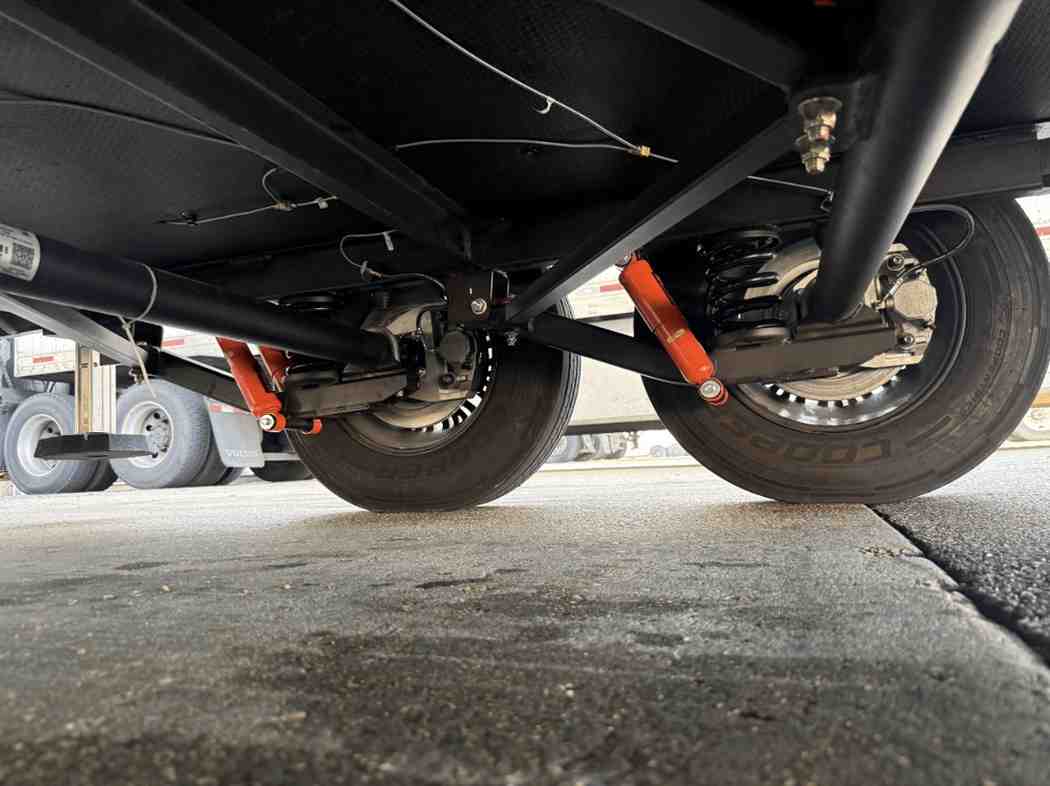
The Curt Touring Coil Suspension replaces the entire leaf spring/equalizer system with a modern coil-and-shock design more like what you’d see in an automotive application. Each wheel station includes:
- A large coil spring – the main component responsible for absorbing vertical impacts
- Two hydraulic shock absorbers per wheel– designed to control rebound and prevent continuous bouncing
- A trailing arm design – keeping the axle centered and stable under the frame
- Massive boxed mounting brackets– much stronger than standard leaf-spring hangers
That combination creates a system that absorbs and dampens movement rather than simply transferring it from axle to axle, as traditional leaf springs do.
The marketing claims that the TCS can reduce vibration by up to 50%. While I don’t have an accelerometer strapped to my frame, I can tell you first-hand: the difference is noticeable.
There’s less jarring, less banging around inside the coach, and definitely less of that “snap” you feel when the trailer hits something uneven.
TCS vs Traditional Leaf Springs
To understand why the Curt TCS feels different, it helps to understand how leaf springs behave.
With leaf springs:
- Road forces are spread across multiple metal leaves
- Movement is transferred between axles through an equalizer
- A hard impact on one side often sends the opposite side reacting
- The system is stiff, simple, and durable, but also harsh.
Leaf springs essentially shift vibration rather than reduce it.
With the Touring Coil Suspension:
- Each wheel absorbs and manages its own movement
- Shocks slow and control the motion instead of letting it rebound
- Coils take the brunt of vertical impact and soften it
- The trailing-arm setup keeps the axle correctly positioned without flex or sway.
Instead of “bouncing and transferring,” the TCS system absorbs and dampens, which makes it feel smoother in the truck and results in less shaking inside the RV.
Why This Matters for Full-Time RVers
For weekend camping, a slightly harsher ride is an inconvenience.
For full-timers, vibration becomes a genuine concern:
- Constant jarring loosens screws
- Cabinet doors shift out of alignment
- Trim and fixtures begin to squeak
- Electronics inside the RV take more abuse
- Road fatigue becomes a daily battle.
A suspension that genuinely cuts vibration matters financially, physically, and mentally. After a year of full-time travel on leaf springs, we had reached the point where we were tired of feeling every ripple in the road and tired of worrying about what those ripples were doing to the inside of the coach.
The Curt TCS felt like an immediate step toward prolonging the rig’s lifespan rather than wearing it out faster.
Compatibility and Installation (Our Experience)
We worked with Lippert/Curt’s service team, and the installation experience was straightforward:
- The trailer was in the shop for installation and alignment
- The upgrade replaced the entire leaf spring assembly.
- There was no cutting into the frame; everything mounts onto a seriously beefy boxed structure.
- The system included new hangers, arms, springs, and hardware.
Depending on your rig, existing axle ratings, and brake system, your install may look slightly different. If you’re considering disc brakes too (like we did), this is the perfect time to get both done at once.
Why We Paired the Curt Touring Coil Suspension With Hydraulic Disc Brakes
Upgrading the suspension alone was already a significant improvement on paper, but after a year of full-time RVing, we knew we didn’t only want a smoother ride; we wanted better stopping power and control.
The decision to install hydraulic disc brakes at the same time as the Curt TCS wasn’t about convenience. It was about safety, confidence, and eliminating that uneasy feeling we used to get with traditional electric drum brakes.
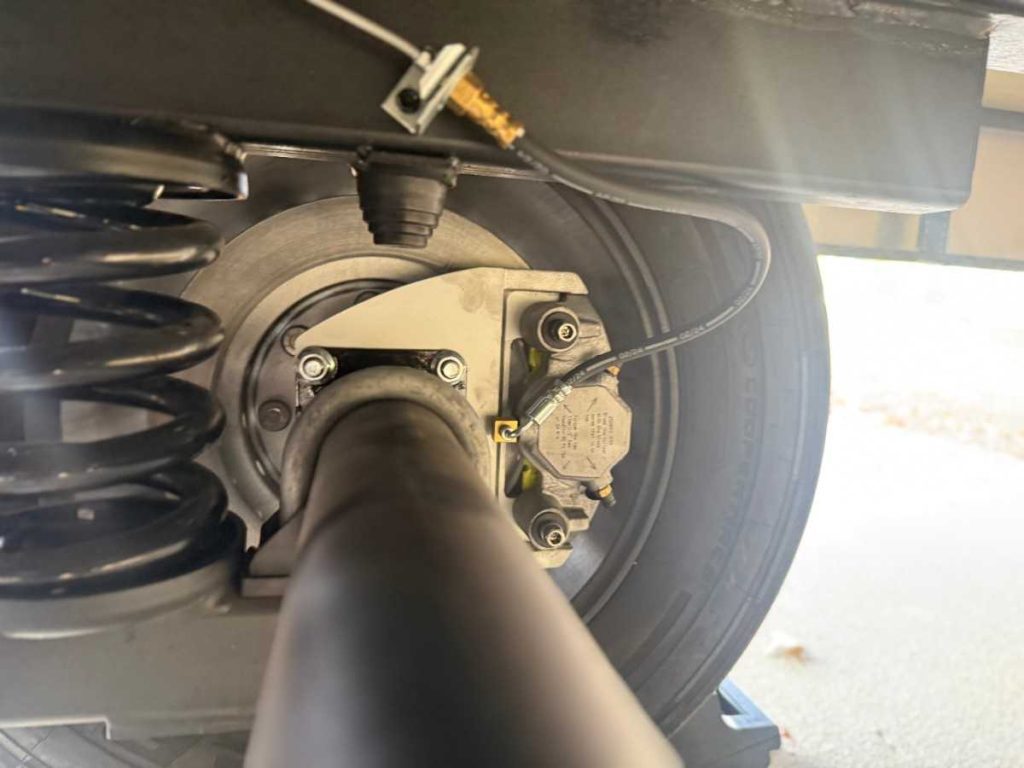
Drum Brakes vs Hydraulic Disc Brakes on a Fifth Wheel
Most fifth wheels still come standard with electric drum brakes. They “work,” but when you tow thousands of miles, the limitations become very obvious:
Electric Drum Brakes (stock):
- They respond more slowly because they rely on magnets and internal expansion
- They have a softer, sometimes mushy, stopping feel
- Brake fade is every day on long downgrades.
- They grab inconsistently depending on temperature, load, and adjustment.
- They don’t always track perfectly with the truck’s braking effort.
The best way to describe drum brakes after a year of full-time RVing?
They stop you… eventually.
And sometimes “eventually” isn’t good enough.
Hydraulic Disc Brakes:
- Engage instantly with a firm pedal feel
- Offer significantly shorter stopping distances
- Resist heat fade far better.
- Provide smooth, consistent braking in all conditions
- Give you absolute control in emergency situations.
If drum brakes feel like a delayed reaction, disc brakes feel like the trailer is finally doing its share of the work.
What Changed Immediately With Disc Brakes
Right after the upgrade, on the very first stop, we felt it.
The brakes no longer felt squishy or lazy. Instead of the truck doing 95% of the work, the trailer suddenly felt like a partner in the stopping process.
Here’s exactly what stood out:
- More linear, predictable braking: No guessing, no “is it grabbing?”
- Firmer pedal feel in the truck: It feels like the brakes respond exactly when your foot moves.
- More stability during heavy braking: The rig stays planted and straight, even in quick stops.
- Less brake controller adjustment: Once set, we didn’t have to tweak the gain like we did with drums constantly.
- Better stopping power at lower speeds and in traffic: Daily towing feels more manageable and less stressful.
Combined with the smoother ride from the TCS suspension, towing feels dramatically more stable, more controlled, and far safer.
Why the Suspension + Disc Brake Combo Matters
Upgrading only one system would have helped, but upgrading both created a noticeable transformation in how the entire rig behaves.
Together, they solve two different problems:
- TCS reduces the harshness and vibration hitting the truck and trailer.
- Disc brakes improve the responsiveness and control when slowing down or stopping.
The result is a towing experience that feels:
- More predictable
- More stable
- Less fatiguing
- Safer in sudden or emergency situations
When you’re full-time and tow often, even minor improvements add up. This wasn’t a slight improvement. It changed how we feel behind the wheel.
Real-World Towing Impressions With the Curt TCS Suspension and Hydraulic Disc Brakes
Specs and engineering claims are great, but none of it matters until you’re actually towing your home down the highway.
After installing both the Curt Touring Coil Suspension and hydraulic disc brakes, the real-world difference was immediate, and in some cases, dramatic. Here’s precisely how it felt once we hit the road.

First Drive After the Upgrade
The very first mile told us everything we needed to know.
Pulling out of the service center, the trailer felt calmer behind the truck. Where we were used to feeling a constant transfer of motion — the slight tugging forward and backward — the rig suddenly felt more settled. Not disconnected or floaty, but planted.
Then we hit our first stoplight.
When I pressed the brake pedal, instead of the usual soft, delayed response from the trailer, the disc brakes grabbed with the truck. Firm, controlled, and without hesitation. That alone made me think, “Okay… this is already worth it.”
But the real test came as soon as we got onto the highway.
Ride Quality on Bridges, Rough Roads, and Construction Zones
This is where we noticed the most significant improvement.
If you tow a fifth wheel long enough, you can practically predict which bridges, overpasses, and patched sections of pavement are going to create chucking. Before upgrading, those moments would send a hard jolt through the truck and a wave through the cab.
With the Curt TCS?
- The sharp jolt became a muted dip
- The back-and-forth chucking was significantly reduced
- The trailer settled quickly after each impact
- The truck stayed straighter and didn’t feel like it was being pulled.
We still feel the bumps; it’s a heavy fifth wheel, not a luxury car, but the impact doesn’t feel violent anymore. The force is absorbed and controlled rather than transferred directly into the truck or the trailer frame.
And those annoying bridge joints that used to slam the truck bed?
They now feel more like a firm “thump,” and then it’s over.
Inside the Coach: Vibration, Noise, and What Stays Put
Before upgrading, we used to open the RV door after a travel day and… brace ourselves.
Loose items would shift. Drawers might creep open. Cabinet latches that were fine at rest would pop during constant vibration. It wasn’t every time, but it was enough to always be on our minds.
After switching to TCS:
- There’s noticeably less rattling in the truck and in the trailer
- Items inside stay in place more consistently.
- We hear fewer squeaks and interior noises.
- The rig feels like it’s taking less abuse mile after mile.
It doesn’t eliminate movement entirely, nothing will, but the difference is enough that we don’t have that pit-in-the-stomach feeling at the end of a rough highway stretch.
For full-timers, that’s huge. It doesn’t just save wear and tear. It reduces stress.
Braking Performance and Control While Towing
The disc brakes are, honestly, a game-changer.
Here’s what stood out the most:
1. More controlled braking
No more guessing. No more “soft” trailer brakes.
You push the pedal, and you get an immediate response.
2. Better tracking under hard braking
Drum brakes sometimes grab unevenly, especially when hot or after long descents. The disc brakes feel balanced and steady. When you brake hard, the rig stays in line, not wandering.
3. No more excessive gain adjustments
With drums, every day felt like a small guessing game:
“Do I need more gain? Less? Is it grabbing too soon?”
With discs, we set it once and haven’t had to touch it.
4. Better performance in bad conditions
Wet roads, downhill grades, sudden stops in traffic, everything feels more predictable.
Paired with the Curt TCS, it makes the entire towing experience feel safer, smoother, and significantly more controlled.
Overall Driving Feel
The combination of smoother suspension feel and stronger braking has changed how we approach long travel days. Instead of fighting the truck and bracing for impacts, towing feels:
- More relaxed
- More stable
- Easier on the driver
- Less physically tiring
- Less stressful for both the truck and trailer
Simply put, the truck and trailer are working together instead of against each other.
Pros and Cons of the Curt Touring Coil Suspension for Full-Time RVers
Every upgrade has trade-offs, and I think it’s important to be just as transparent about the downsides as I am about the benefits. After living with the Curt Touring Coil Suspension and disc brakes, here’s what we genuinely feel are the biggest pros and the few cons to consider.
What We Love (Pros)
1. Dramatically Reduced Chucking in the Cab
This was one of the most significant improvements we felt immediately. The back-and-forth tugging that used to hit every time we crossed a bridge or rough seam in the pavement is now significantly reduced. The truck feels more stable and less like it’s reacting to every little movement of the trailer.
2. A Noticeably Smoother Ride, for Both Truck and Fifth Wheel
The TCS system absorbs impacts extremely well.
Instead of the trailer sending energy back into the truck, the suspension takes the hit and settles quickly. Inside the RV, you can tell the difference in how much quieter and more “contained” everything feels.
3. Better Braking Performance with Hydraulic Discs
This is the upgrade that changes how confident you feel on the road.
The brakes respond instantly, stop smoothly, and don’t fade the way drum brakes do. It feels less like you’re trying to stop a heavy house and more like the truck and trailer are braking as one unit.
4. Reduced Long-Term Stress on the RV
Over time, harsh suspension jolts add up. They loosen cabinets, shift trim, fatigue fasteners, and stress the frame. A smoother suspension is not just about comfort; it’s about protecting the home you’re towing.
5. Less Driver Fatigue on Long Travel Days
A smoother, more controlled towing experience makes a surprising difference in how you feel after 200–400 miles on the road. Not fighting the truck–trailer combo constantly means far less mental and physical fatigue.
6. Modern Engineering With Real Benefits
Coil springs, dual shocks, and the trailing arm design simply behave better than metal leaf stacks. This system is closer to automotive suspension than anything typically installed on RVs.
What We Don’t Love (Cons)
1. The Upfront Cost
This is the big one.
The TCS suspension plus disc brakes are not a cheap upgrade. For many RVers, especially those not full-timing, it may be more of a “want” than a “need.”
2. Downtime While Your Rig Is in the Shop
Depending on where you go, the install may take a couple of days and require welding, alignment, and brake bleeding. If you live full-time in your RV, the downtime needs to be planned and coordinated.
3. Slight Weight Increase
The system is more substantial than basic leaf springs. The boxed hangers, shocks, and coils are heavy-duty components, so you may end up adding a little weight. Not enough to cause issues, but still worth noting.
4. Potential Rig-Specific Adjustments (e.g., fender clearance)
Some fifth wheels have tighter wheel wells than others.
We’ve seen other owners mention they needed to trim plastic fender skirts due to the increased suspension travel. We haven’t personally experienced that issue, but specific rigs may require minor modifications.
5. Not All Shops Fully Understand the System Yet
The TCS is still new in the RV world, and not every service center has experience installing it. Disc brakes are also a more advanced installation than drum setups. Choosing the right installer matters.
Things to Know Before You Upgrade
Even though we absolutely recommend the setup, here are a few things full-time RVers should keep in mind before booking the upgrade:
1. Verify Axle Ratings and Compatibility
Some RVs may stick with 7K axles, others may need 8K.
Your GVWR, cargo habits, and manufacturer recommendations all matter.
2. Plan Your Install Around Travel
Full-timers should expect to be without the RV for at least part of a day or longer, depending on the shop’s schedule. This isn’t a quick bolt-on upgrade like shocks or a pin box.
3. You’ll Feel the Difference Most If You Tow Often
Weekend warriors might not notice enough difference to justify the cost.
But if you tow long distances or through mixed terrain, this upgrade pays you back every single mile.
4. Disc Brakes Require a Hydraulic Actuator
This is part of the install, but worth mentioning, you’re adding a major braking component. Thankfully, it’s quiet, fast, and low-maintenance.
Maintenance, Warranty, and Long-Term Ownership Thoughts
One of the biggest questions we had before committing to the Curt Touring Coil Suspension and disc brakes was: “What does maintenance look like once everything is installed?”
As full-time RVers, we try to avoid upgrades that create more work or constant upkeep. Thankfully, this system hasn’t added complexity; if anything, it’s reduced it.
Below is an honest look at what day-to-day ownership has been like.
Day-to-Day Maintenance Differences
If you’ve ever dealt with leaf springs, equalizers, and shackles, you know the routine: grease zerks, check for worn bushings, inspect bolt stretch, and constantly make sure everything is still aligned and torqued correctly.
With the Curt TCS, that whole routine changes.
Here’s what maintenance looks like now:
- No more wet bolts or bushing replacements
There are no equalizers or traditional leaf-spring wear points.
That alone removes a massive chunk of yearly maintenance. - Visual inspections instead of constant lubrication
We check:
- shock absorber mounts
- trailing arms
- coil springs
- hardware torque marks
- brake lines & pads
- It’s straightforward visual work, not messy hands-and-grease work.
- Disc brake pads are easier to inspect
With drums, you can’t visually check pad thickness without removing everything.
With discs, you can inspect the pads in seconds. - A hydraulic actuator requires little to no attention.
The pump, reservoir, and lines should be checked occasionally, but we haven’t experienced anything that required adjustment.
The biggest surprise for us has been how “set it and forget it” the system feels, especially compared to leaf springs that seem to require constant babysitting when you tow as many miles as we do.
How the System Has Held Up So Far
Since installing the Curt TCS suspension and disc brakes, here’s what we’ve experienced:
No sagging or coil compression issues
Unlike leaf springs that flatten over time, especially when you live close to the GVWR, the coils have maintained their height and performance.
No uneven tire wear
With leaf springs, especially as they age, it’s common to see tires wear unevenly due to shifting geometry or hanging leaf packs.
So far, tire wear has been even and more consistent.
Shocks are holding up well.
With dual shocks per wheel, the load is shared. We’ve seen no signs of leaking, fading, or early wear.
Disc brakes have stayed consisten.t
We haven’t experienced brake fade, pulling, soft pedal feel, or inconsistent engagement.
They still feel as strong and responsive as the day we installed them.
No creaking, clunking, or unwanted movement
This was an issue we sometimes encountered with leaf-spring hardware loosening over time.
The TCS system has remained tight and quiet.
Long-Term Thoughts So Far
While it’s still early in the lifespan of the upgrade, here’s what we can say confidently:
1. The system feels built for real mileage
The boxed hangers, trailing arms, heavy-duty coils, and dual shocks look and feel significantly more robust than the stock parts. Nothing about it feels “RV-grade.”
It feels automotive-grade.
2. The ride improvements haven’t faded over time
Some upgrades feel amazing at first, then level off.
This hasn’t. The ride quality is still significantly smoother than on leaf springs.
3. The braking improvements changed how we tow permanently
Disc brakes are one of those upgrades that ruin you for anything else.
If we ever buy another RV, we already know we’ll be budgeting for discs from day one.
4. We spend less time worrying about the RV
Fewer vibrations, fewer jolts, fewer interior issues, and fewer brake concerns mean fewer travel-day anxieties.
When you tow full-time, peace of mind is everything. This upgrade gave us more of that than we expected.
Is the Curt Touring Coil Suspension Worth It? Our Verdict
After living with the Curt Touring Coil Suspension and hydraulic disc brakes, towing thousands of miles as full-time RVers, we can confidently say this: yes, the upgrade is absolutely worth it if you tow often, tow long distances, or rely on your fifth wheel as your full-time home.
But “worth it” depends on who you are and how you travel.
Here’s our honest breakdown.

Who This Upgrade Makes the Most Sense For
Full-Time RVers
If your fifth wheel moves regularly, the TCS suspension solves real problems you feel every single travel day, such as chucking, vibration, and interior wear. The disc brakes add another layer of safety and control that’s hard to overstate.
Long-Distance Travelers
If you tow through rough roads, interstates, bridges, construction zones, mountain passes, or a mix of everything… You will feel the difference every mile.
Anyone Towing Near GVWR
The TCS’s stronger construction and better shock absorption help protect the RV’s frame and contents.
People Who Prioritize Stability and Safety
The combination of smoother suspension and stronger braking simply makes the whole rig feel more planted, predictable, and safe.
RV Owners Planning to Keep Their Rig for Years
If you want to preserve your RV rather than slowly shake it apart, this upgrade pays for itself through reduced long-term wear.
Who Might Not Need It (Yet)
Weekend Campers or Short-Trip Travelers
If you only tow a few weekends a year and stick to shorter distances, the cost may outweigh the benefit.
Lighter Travel Trailers or Rigs with Plenty of Suspension Margin
Heavier fifth wheels feel the benefit the most.
People Planning to Change RVs Soon
If this is not your long-term rig, it may make more sense to wait or choose an upgrade on your next RV.
Would We Do It Again?
Without hesitation, yes.
This was one of the most impactful upgrades we’ve made to our fifth wheel, right up there with switching to a better pin box or improving our truck setup.
What would we miss the most if we had to go back to stock components?
- The smoother ride across rough highways
- The massive reduction in chucking
- The quiet interior after long travel days
- The firm, confident braking
- The overall stability at highway speeds
The difference isn’t subtle.
It’s not one of those upgrades where you think, “Maybe it’s slightly better.”
It’s an upgrade where you immediately ask yourself:
“Why didn’t we do this sooner?”
Common Questions About the Curt Touring Coil Suspension (TCS) and Disc Brakes
Upgrading a fifth wheel suspension system isn’t a small decision, and the Curt TCS is still relatively new in the RV world. Below are the most common questions people ask, and the answers based on our research, conversations with other owners, installer insights, and our own experience.
Can You Add the Curt Touring Coil Suspension After the RV Is Built?
Yes, the TCS can be installed as an aftermarket upgrade.
Does the Extra Suspension Travel Cause Fender or Skirt Rubbing?
It depends on the RV model.
Should You Stay With 7K Axles or Upgrade to 8K Axles?
This comes down to:
Your RV’s GVWR
How much cargo do you carry
your long-term travel plans
Is the TCS Available for Triple-Axle Fifth Wheels?
Yes, Curt/Lippert has triple-axle versions, but availability varies.
How Does the Curt TCS Compare to MORryde Independent Suspension?
These are two very different systems, but both will typically improve your ride. They use various designs, so it is essential to do your own research and make the decision that’s best for you.
Do You Lose ABS or Safety Features If You Switch to Disc Brakes?
Factory TCS setups sometimes include ABS-equipped drum brakes.
If you replace them with disc brakes:
You lose ABS
But you gain significantly stronger braking performance.
And discs are more consistent in real-world towing.
How Long Does Installation Take?
Suspension only: 1–2 days
Suspension + disc brakes: 2–3 days
Is the Upgrade Worth It for Weekend Warriors?
Not necessarily.
The people who feel the biggest difference are:
full-time RVers
long-distance travelers
those towing heavier fifth wheels
owners driving rough roads or mountain passes
Will Upgrading to Disc Brakes Change My Brake Controller Settings?
Yes, but in a good way.
With disc brakes:
Gain settings often go down
Braking becomes more linear
You won’t constantly adjust the controller
Emergency stops become smoother and shorter
Does the TCS Affect Interior Movement or Noise Inside the Coach?
Absolutely.
There is noticeably less:
rattling
cabinet shaking
banging from contents
“settling noise” after rough stretches

Lauren Gamble is a wife, mother, and seasoned entrepreneur with a background in digital, affiliate marketing, and content creation. She and her husband run multiple remote businesses that give their family the freedom to live and travel full-time in their RV. As a homeschooling mom, Lauren is passionate about creating a life rich in experiences and connection. Through Time to RV, she shares her family’s journey, along with practical insights, travel tips, and resources to help others explore the road less traveled, without sacrificing stability or success. Lauren and her family have been full-time RVing since November 2024.
How We Review: At Time to RV, we only recommend products and places we have personally used or visited. Our reviews are based on real-life testing during our full-time travels. We never accept payment for a positive review; our goal is to give you the honest truth so you can hit the road with confidence.