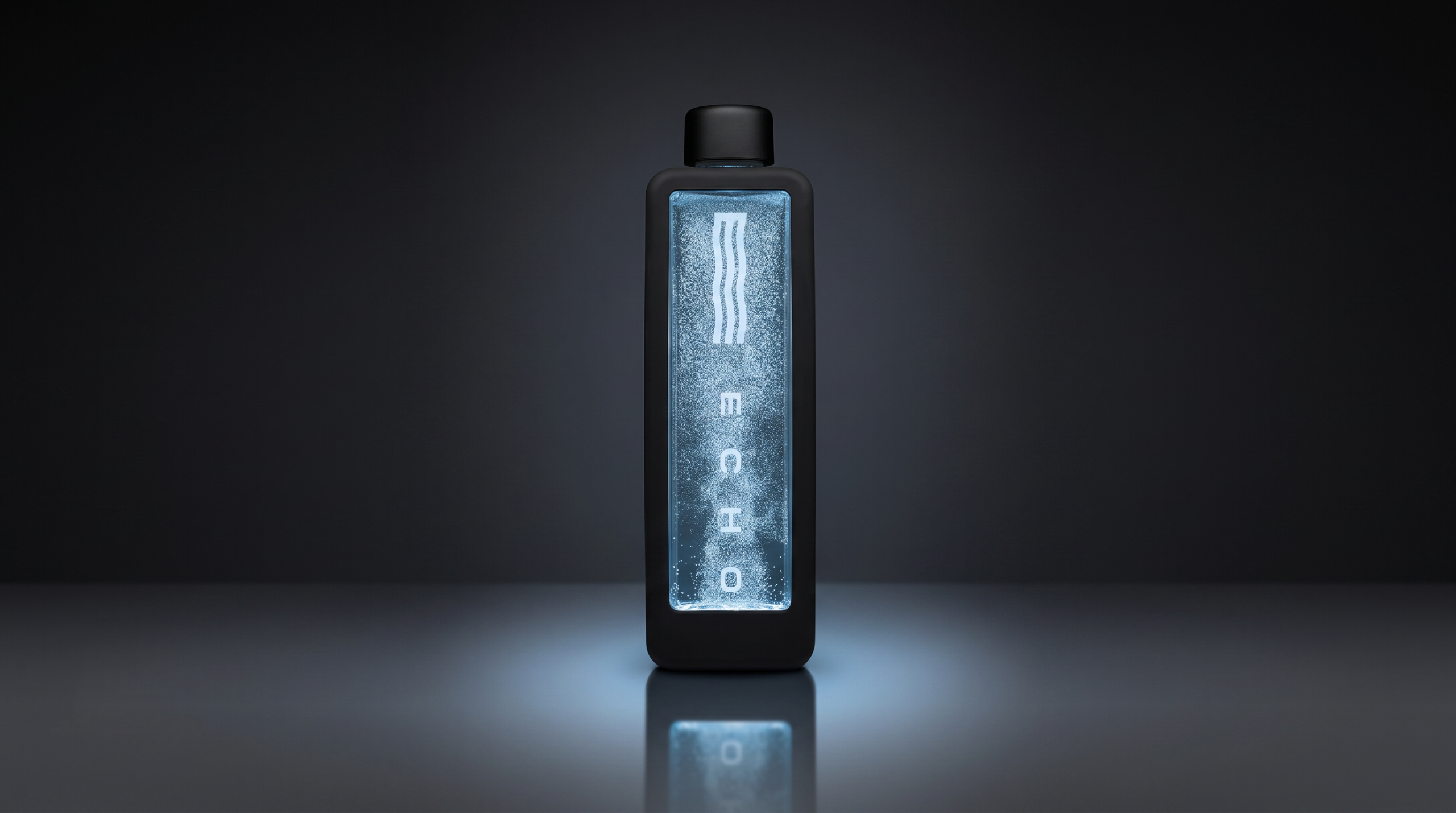
If you’ve been researching hydrogen water bottles, you’ve probably landed on the Echo Flask and its $299.99 price tag, and you want to know if it actually does anything or just looks good on a countertop.
After more than a year of using mine every single day, my short answer is yes, it works as described, and it’s held up better than I expected for a battery-powered gadget that gets used daily.
The Echo Flask is a rechargeable stainless and PPSU-bodied bottle that uses electrolysis to add molecular hydrogen to plain water. It’s built for people who already believe in hydrogen water and want a portable, on-the-go option instead of a countertop machine or tablets.
This article walks through what the bottle actually does, how it held up for me over a year of regular use, the recent controversy around safety claims, and whether it’s worth the price compared to cheaper alternatives like the EVOLV H2GO or Echo’s own Go+.
Quick Review Summary
- Best For: Daily hydrogen water users who want a portable bottle with real electrolysis output, not tablets or a countertop unit.
- Not Ideal For: Casual users who drink hydrogen water occasionally, or anyone unwilling to spend over $200 on a water bottle.
- Main Benefit: Consistently delivers meaningful hydrogen concentration (up to 8 ppm claimed) with a portable, USB-C rechargeable design.
- Biggest Limitation: Battery drains faster with heavy daily use, and the touchscreen can be overly sensitive.
- Current Price: $299.99 on the official Echo Water site, with a 10% discount available through the link below.
- Overall Verdict: A legitimate, well-engineered hydrogen bottle that justifies its price for daily users, though it’s a real investment.
Check the Echo Flask price with 10% off
What Is the Echo Flask?
The Echo Flask is a portable hydrogen water generator made by Echo Water, a company that also sells larger countertop hydrogen systems. Instead of dropping a tablet into your water or buying a bulky home unit, you fill the Flask, tap the touchscreen, and let it run an electrolysis cycle.
Inside, it uses Solid Polymer Electrolysis (SPE) paired with a Proton Exchange Membrane (PEM), the same core technology used in larger hydrogen generators, shrunk into a bottle form factor.
Echo’s own testing, done with gas chromatography on distilled water, reports 6.07 mg/L of dissolved hydrogen after a 10-minute cycle and up to 8.25 mg/L after 20 minutes, which lines up with the brand’s “up to 8 ppm” marketing claim.
The bottle ships with a small amount of distilled water already inside. That’s intentional, not a defect, and it’s meant to help the membrane perform properly right out of the box.
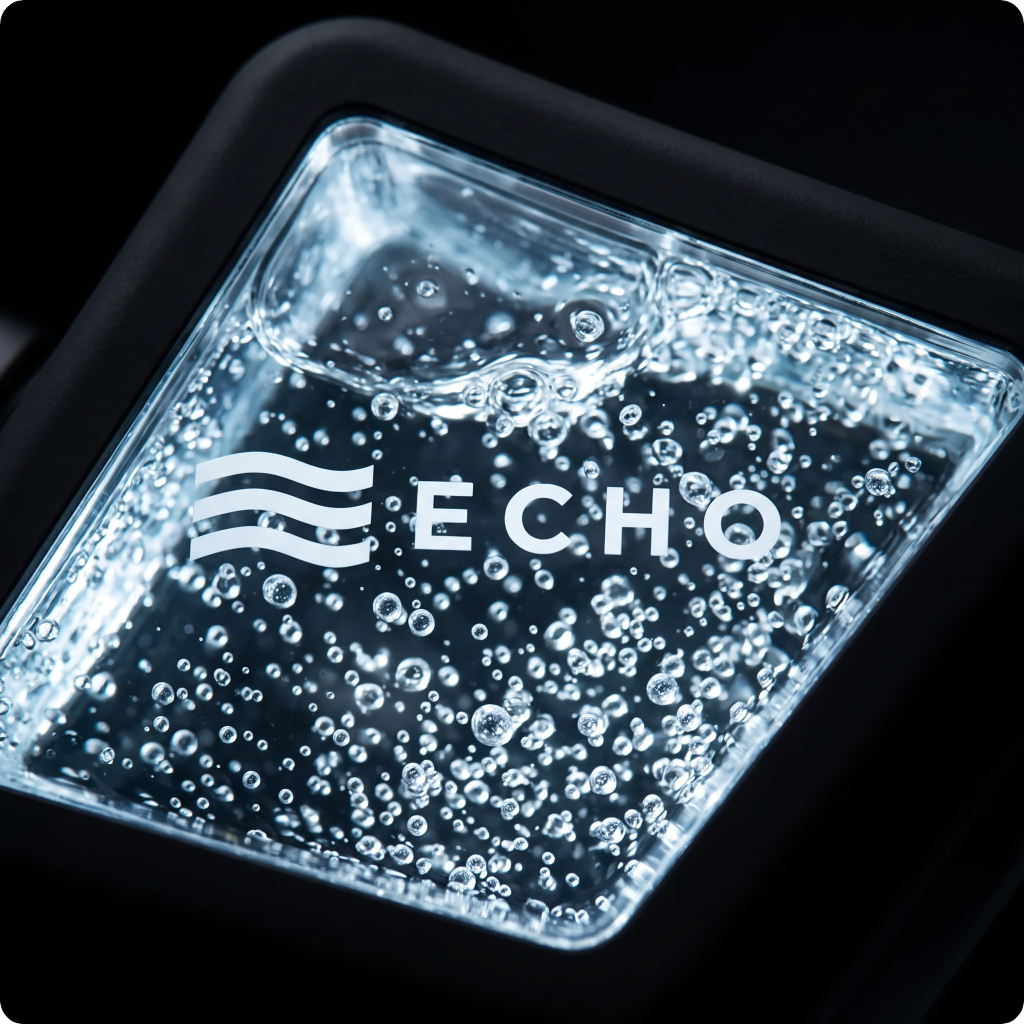
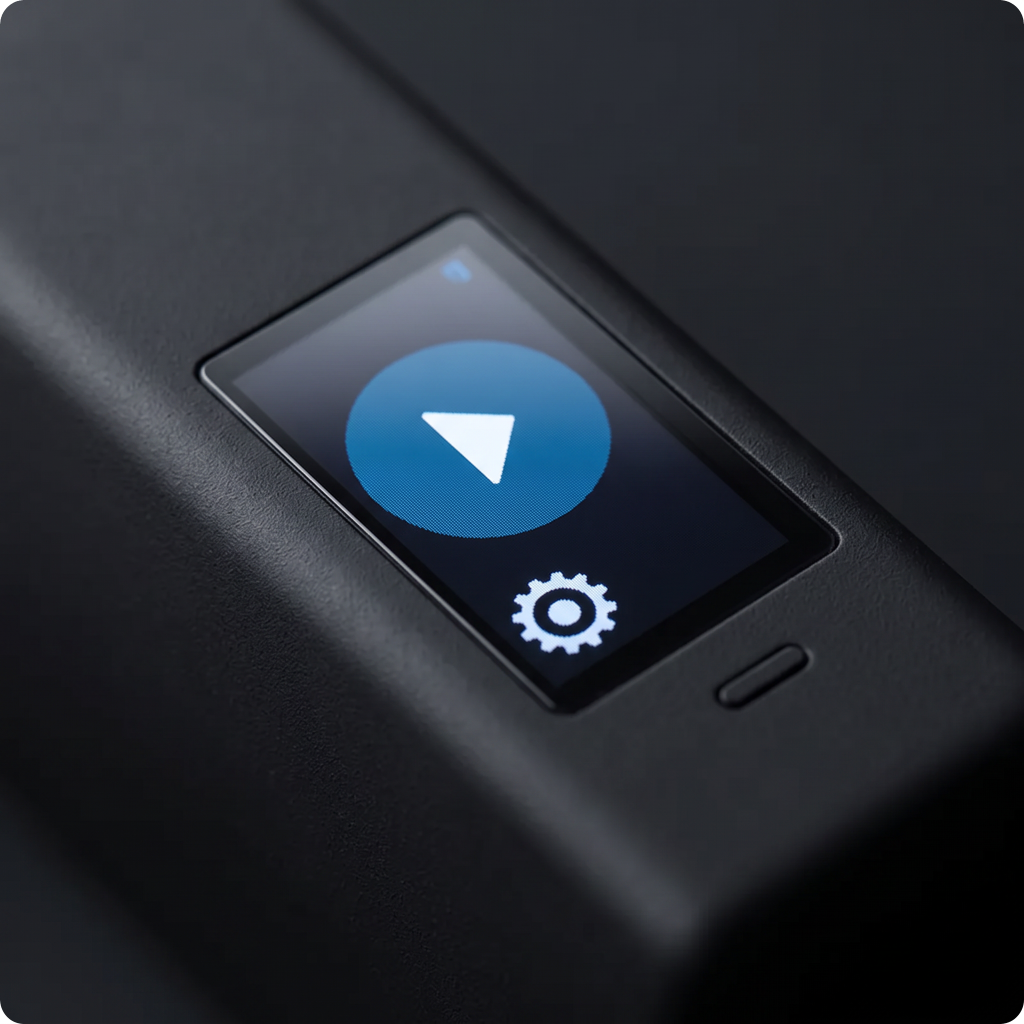
It includes an LCD touchscreen, a USB-C charging cable, and Bluetooth connectivity to the Echo App, which tracks water intake and cycle history.
Echo backs the Flask with a 5-year limited warranty on manufacturing defects, though the battery itself is excluded from that coverage, and included accessories like the charging cord only carry a 30-day warranty. Returns are accepted within 60 days of delivery if you’re not satisfied.
The Heavy-Metal and Six-Month Failure Rumors: What’s True
In July 2025, viral posts claimed the Echo Flask leaches heavy metals and stops generating hydrogen after about six months. Echo’s leadership publicly disputed both claims, calling them “categorically false, unsupported by any lab data, and contradicted by third-party testing,” according to statements the company issued that month.
Echo says the Flask uses platinum-coated electrodes and a self-cleaning system rated for over 10,000 uses, backed by that same 5-year warranty. It’s worth being clear-eyed here: this rebuttal comes from Echo itself, not an independent lab, so treat it as the company’s official position rather than neutral third-party proof.
What I can add is real-world context. My unit is well past a year of daily use, and it still produces hydrogen and holds a charge the way it did when new. That’s one data point, not a scientific study, but it does contradict the “dead in six months” claim in at least this case.
Why We Tried the Echo Flask
I started looking at hydrogen water bottles after reading about molecular hydrogen’s potential as an antioxidant for recovery and inflammation. Tablets felt inconvenient for daily use, and countertop machines didn’t fit a routine that involves a lot of time away from a fixed kitchen.
The Echo Flask stood out because setup looked genuinely simple, and the ppm claims were backed by lab data rather than vague marketing language. Setup really was easy: charge it, fill it, tap the screen, and the first cycle finishes in about 10 minutes.
Over more than a year of daily use, I’ve noticed more consistent energy levels and less general inflammation and stiffness, particularly on higher-activity days. I can’t isolate hydrogen water as the single cause, since diet and activity also shifted during that time, but the timing lines up with when I started using it daily.
If you already travel often for work or life on the road, a durable, rechargeable hydration gadget matters more than it would for someone stationary at home. Our guide to hydration gear for life on the road.
Who Is the Echo Flask Best For?
- People who already drink hydrogen water regularly and want a portable option instead of tablets or a countertop unit.
- Athletes or active adults focused on recovery, who want a device with lab-tested ppm output rather than a vague wellness gadget.
- Frequent travelers or remote workers who need a rechargeable, on-the-go device rather than a plug-in home system.
- Buyers comfortable spending close to $300 on a long-term hydration tool they’ll use daily for years.
Who Should Probably Skip It?
- Anyone who only drinks hydrogen water occasionally; a bottle of tablets or the cheaper Piurify Hydrogenator covers that use case for far less money.
- Budget-conscious buyers who haven’t tried hydrogen water yet and want to test the concept before committing $300.
- Households that prepare water in batches for multiple people, where a pitcher-style unit fits better than a single-serving bottle.
- Anyone bothered by a touchscreen interface; the sensitivity has tripped up more than one reviewer during regular use.
Key Features and Real-World Benefits
SPE/PEM Electrolysis and Real Hydrogen Concentration
The Flask uses Solid Polymer Electrolysis with a Proton Exchange Membrane to split water molecules and infuse hydrogen gas into the liquid. Echo’s lab data shows 6.07 mg/L after 10 minutes and up to 8.25 mg/L after a full 20-minute cycle, which supports the “up to 8 ppm” claim on the box.
For comparison, therapeutic hydrogen water research generally points to concentrations above 1 ppm as meaningfully bioactive, so 6 to 8 ppm sits well above that threshold. The limitation is that this testing comes from Echo, not an independent lab report published alongside the article, so it’s brand-reported data rather than third-party verified.
This feature matters most to buyers who’ve researched hydrogen water science and specifically want higher concentrations than cheaper bottles typically deliver.
Battery Life and Charging
A full charge supports roughly 5 to 7 cycles at 10 minutes each, or 3 to 4 cycles at 20 minutes, and a full USB-C recharge takes about two hours. In practice, this means the bottle lasts a few days of normal single-cycle use before needing a charge.
Heavier daily use, like multiple 20-minute cycles in one day, drains the battery faster than casual users might expect, a pattern echoed in other independent reviews. It hasn’t been a dealbreaker for me, but it does mean planning around a charging routine if you use it more than once a day.
Touchscreen and Echo App
The LCD touchscreen controls cycle length and syncs with the Echo App to log water intake over time. Some reviewers, and my own experience early on, found the screen a bit too sensitive, where a light tap sometimes registers as a full press.
It’s a minor annoyance you adjust to within the first week or two, not something that affects the actual hydrogen output. Buyers who want a simple, no-frills bottle might find the smart features unnecessary, while data-driven users will appreciate the tracking.
Build Quality and Long-Term Durability
The bottle uses a stainless and BPA-free PPSU body, which feels solid but runs heavier than a standard water bottle of the same size. After more than a year of daily use, mine shows no cracks, no leaks, and no drop in build integrity despite regular travel and handling.
This matters because durability complaints, real and unverified, follow this category closely. My own longevity so far directly counters the viral “stops working after six months” claim, at least for this unit.
Self-Cleaning System and Maintenance
Echo built in a self-cleaning system rated to support over 10,000 uses without a separate cleaning kit. Occasional bubbling, hissing sounds, or small drips from the oxygen port are normal and expected, according to Echo’s own documentation, not signs of a defect.
Cleaning still takes a bit more attention than a standard bottle, since you’re maintaining an electronic membrane, not just rinsing plastic. Buyers who dislike any extra maintenance step should factor this in before buying.
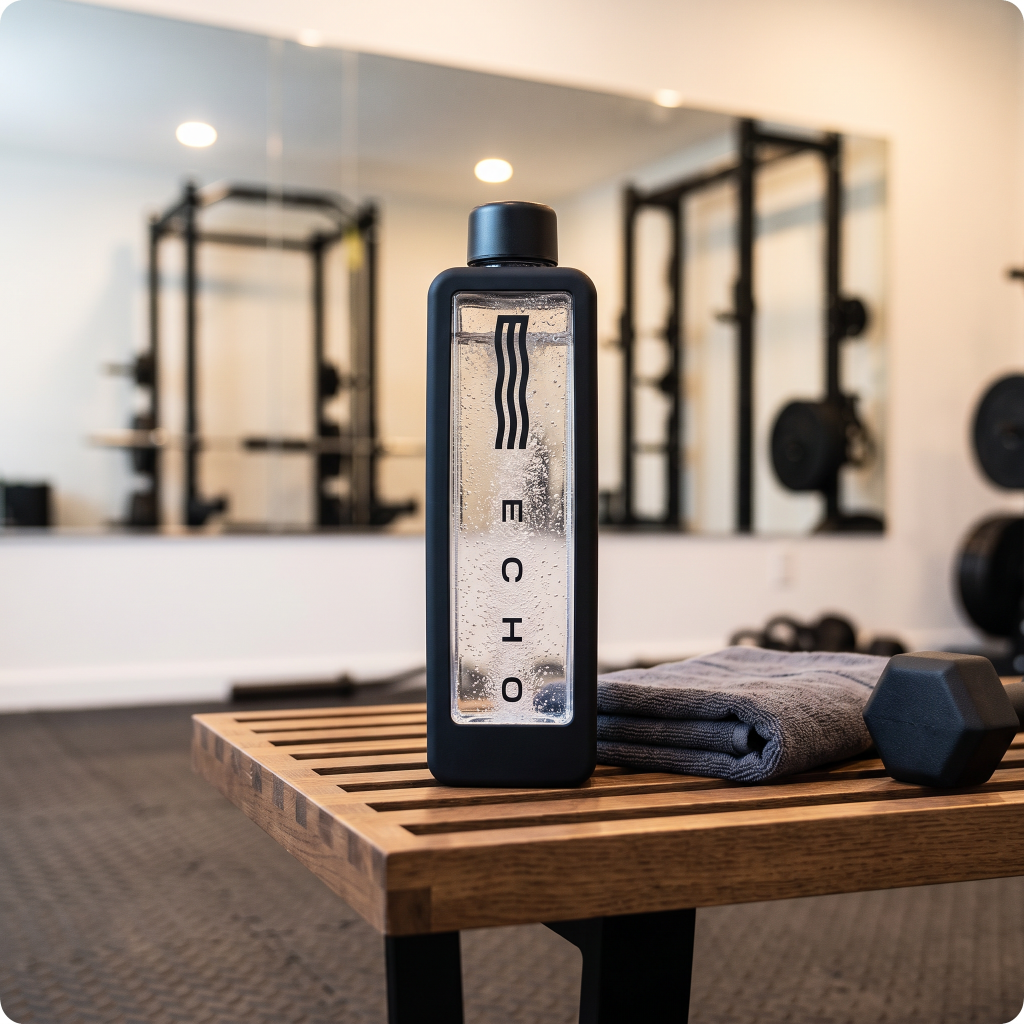
Echo Flask Performance and Available Evidence
Effectiveness for Energy and Inflammation
Based on my year-plus of daily use, I’ve noticed steadier energy and reduced general stiffness, especially after physical activity. This lines up with existing research on molecular hydrogen as an antioxidant, though my experience is personal, not a controlled study, and results will vary by individual.
Ease of Use and Setup
Setup is genuinely simple: charge the bottle, fill with water, choose a cycle length on the touchscreen, and wait. I had it running within minutes of unboxing, with no manual required beyond the quick-start card.
Durability Over Time
My unit has held up through more than a year of daily handling, travel, and regular charging cycles without any drop in hydrogen output or battery performance. That’s a longer real-use track record than most published reviews currently offer, since most only cover the first few weeks.
Ongoing Costs
Beyond the upfront price, there are no tablets, filters, or subscriptions to buy, which keeps the ongoing cost close to zero. The one real future cost is battery replacement, since it’s excluded from the standard warranty beyond the first 30 days.
Customer Support and Warranty Service
Echo offers a 60-day return window and a 5-year limited warranty on manufacturing defects, which is generous for this price category. I haven’t personally needed to contact support for a repair or replacement, so I can’t speak to response times firsthand.
Pros and Cons
- Pro: Lab-reported hydrogen output (6 to 8+ ppm) that’s meaningfully higher than budget alternatives.
- Pro: Held up through more than a year of daily use with no drop in performance in my experience.
- Pro: Simple setup and USB-C charging, with a 5-year limited warranty and 60-day return window.
- Pro: Self-cleaning system reduces routine maintenance compared to tablet-based systems.
- Con: $299.99 is a significant premium over tablets and cheaper bottles like the Piurify Hydrogenator.
- Con: Battery drains faster with heavy daily use, requiring more frequent charging.
- Con: Touchscreen sensitivity can make navigation frustrating until you get used to it.
- Con: Battery itself isn’t covered by the standard warranty beyond 30 days.
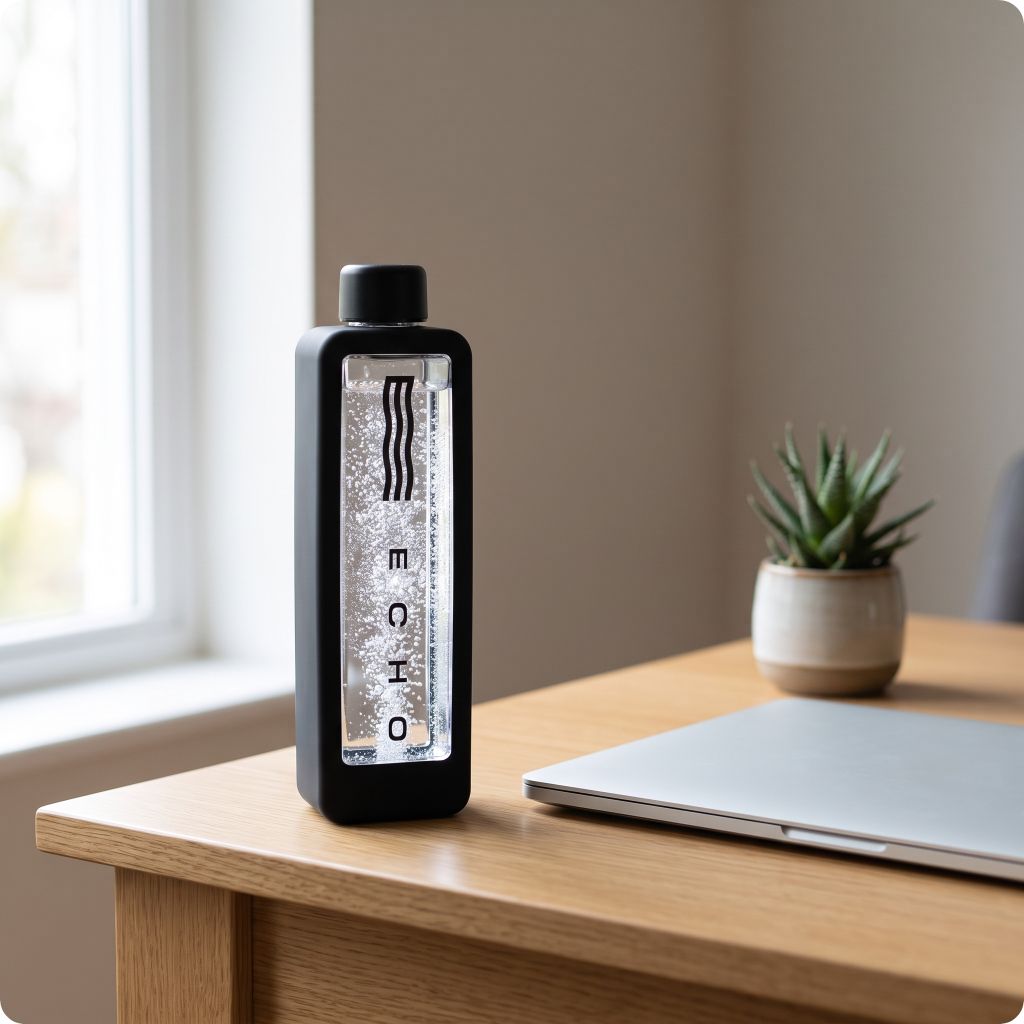
Echo Flask Price and Overall Value
The Echo Flask lists for $299.99 on Echo’s official site, and a 10% discount is currently available through the link in this article. Some third-party retailers advertise lower prices with discount codes, but verify any third-party seller’s legitimacy and current terms before buying from them instead of the official site.
There are no recurring costs after purchase, no tablets, no filters, and no subscription fees, which helps offset the high upfront price over a few years of use. The main long-term cost to plan for is battery replacement, since it falls outside standard warranty coverage after the first 30 days.
Compared to the roughly $149 to $199 EVOLV H2GO or the $99.99 Piurify Hydrogenator, the Flask costs noticeably more but delivers higher lab-reported ppm and a portable, single-bottle format the Piurify’s pitcher design doesn’t match. If you’re new to hydrogen water and unsure you’ll use it daily, a cheaper option makes more sense to start.
For someone who already knows they’ll use it every day, the Flask’s durability and output make the price gap easier to justify. Check the FSA/HSA eligibility listing on the official product page, since wellness devices like this sometimes qualify for pre-tax spending.
See the current Echo Flask price and discount
| Product | Best For | Price | Advantage | Limitation |
|---|---|---|---|---|
| Echo Flask | Daily users wanting top hydrogen output | $299.99 | Highest reported ppm (up to 8), 5-year warranty | Highest price in category |
| Echo Go+ | Buyers wanting a smaller, cheaper Echo option | Lower than Flask (check official site) | More compact and portable | Users report faster hydrogen-output decline, around 18 months |
| EVOLV H2GO | Budget buyers wanting lab-verified output | ~$149–$199 | Independent lab testing, lower cost | Lower ppm (~4.55 verified) vs. Flask’s claimed 8 |
| Piurify Hydrogenator | Households or casual users on a budget | ~$99.99 | Most affordable option | Pitcher-style batch prep, not portable single-bottle use |
If portability and top hydrogen concentration matter most, the Flask is the strongest pick despite the price. If you want to test the hydrogen water concept before committing $300, the EVOLV or Piurify let you do that for less, though you’ll trade off some ppm or convenience.
Echo’s own Go+ makes sense if size and pocketability matter more than long-term output, but be aware of the reported faster decline around the 18-month mark based on independent comparison coverage.
Compare Echo Flask pricing and current offers
Customer Complaints and Important Limitations
The most consistent, credible complaint across independent reviews is faster-than-expected battery drain during heavy daily use, which matches what I’ve experienced on higher-cycle days. Touchscreen oversensitivity is the second most repeated issue, and it showed up in my own early days with the bottle before I adjusted.
One early, pre-launch style review mentioned unconfirmed user complaints about a defective pressure valve and app connectivity problems, but that source explicitly noted it hadn’t done hands-on testing, so treat that as an early, unverified pattern rather than a confirmed issue. The viral heavy-metal and six-month-failure claims remain disputed by Echo directly, without independent lab confirmation on either side as of this writing.
Occasional bubbling, hissing, or small drips from the oxygen port are documented by Echo as normal operation, not a defect, so don’t mistake that for a malfunction.
Frequently Asked Questions
Does the Echo Flask actually work, or is hydrogen water hype?
Based on Echo’s lab-reported ppm data and more than a year of my own daily use, the bottle does generate hydrogen consistently, and I’ve noticed steadier energy and less inflammation and stiffness. It’s worth noting that broader hydrogen water research is still developing, so individual results will vary and this isn’t a substitute for medical treatment.
How much hydrogen does the Echo Flask really produce?
Echo’s gas chromatography testing reports 6.07 mg/L after a 10-minute cycle and up to 8.25 mg/L after 20 minutes, supporting the “up to 8 ppm” marketing claim. That figure comes from Echo’s own testing rather than an independently published third-party lab report, so it should be read as brand-reported data.
How long does the battery last, and does it degrade over time?
A full charge supports 5 to 7 cycles at 10 minutes, or 3 to 4 cycles at 20 minutes, recharging in about two hours via USB-C. My battery hasn’t shown noticeable degradation after more than a year of daily charging, though heavier daily use does drain it faster within any given charge.
Are the heavy-metal leaching and six-month failure claims true?
Echo has publicly and directly disputed both claims, calling them “categorically false” and unsupported by lab data in statements issued in July 2025. My own unit is well past a year of daily use with no output or safety issues, which supports Echo’s position, though this remains the company’s own rebuttal rather than independent verification.
Is the Echo Flask worth $299.99 compared to cheaper alternatives?
For daily hydrogen water users, yes, based on its higher reported ppm output and demonstrated durability over more than a year of use. If you’re just testing the concept or use it occasionally, the EVOLV H2GO or Piurify Hydrogenator deliver most of the core benefit for significantly less money.
What’s Echo’s return and warranty policy?
Echo offers a 60-day return window from delivery and a 5-year limited warranty covering manufacturing defects. The battery is excluded from that standard coverage after the first 30 days, so factor eventual battery replacement into your long-term cost expectations.
Final Verdict
The Echo Flask does what it claims: it generates a meaningful concentration of molecular hydrogen in a genuinely portable, rechargeable bottle. After more than a year of daily use, mine still performs as it did on day one, which directly counters the viral claims Echo has publicly disputed.
It’s best for people who already drink hydrogen water regularly and want higher output and better durability than budget alternatives offer. The biggest limitations are the $299.99 price, faster battery drain under heavy use, and a touchscreen that takes some getting used to.
Against the EVOLV H2GO and Piurify Hydrogenator, the Flask wins on output and portability but loses on price, so your decision comes down to how often you’ll actually use it. If daily hydrogen water is part of your routine already, the evidence here supports buying it.
How We Review: At Time to RV, we only recommend products and places we have personally used or visited. Our reviews are based on real-life testing during our full-time travels. We never accept payment for a positive review; our goal is to give you the honest truth so you can hit the road with confidence.