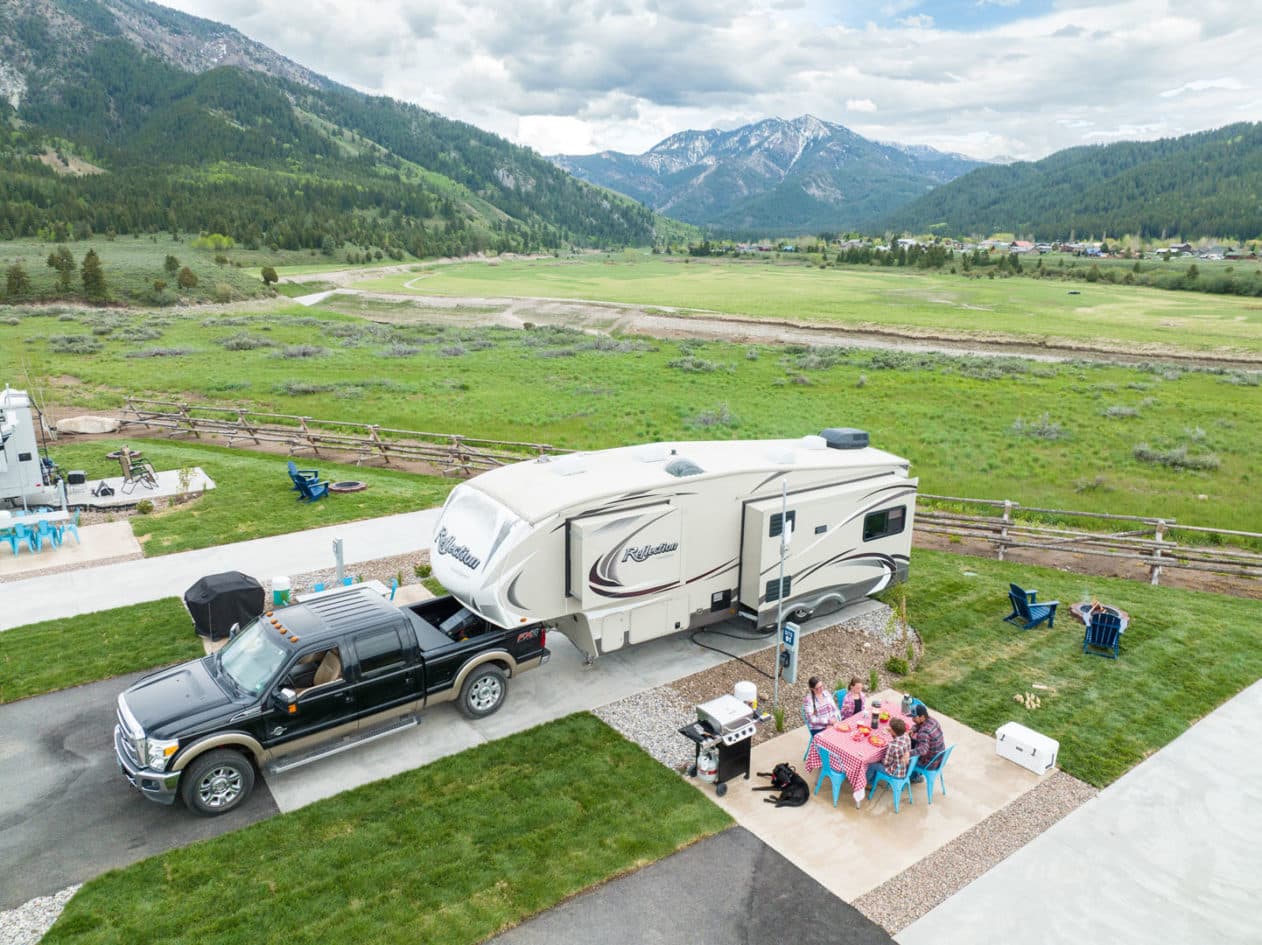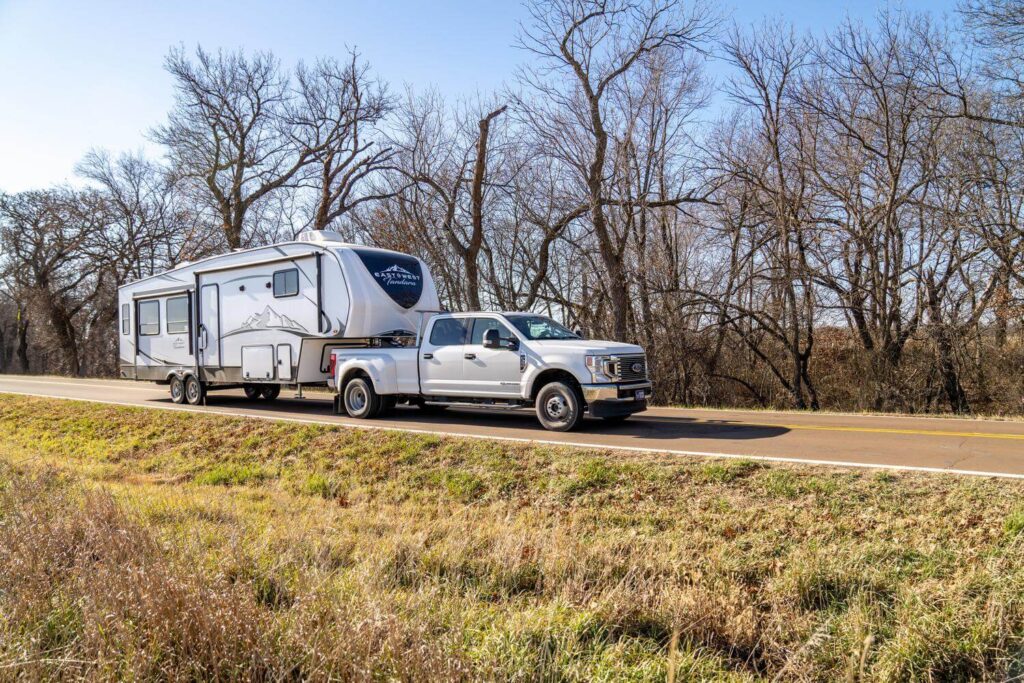
Key Takeaways
- Payload capacity, indicated on the yellow sticker in the driver-side door jamb, is the critical factor for safe towing, especially with luxury fifth wheels, often being reached before the truck's towing capacity.
- Luxury fifth wheels and toy haulers tend to have high pin weight percentages due to their design, with components like front bedrooms and storage bays located ahead of the axles, leading to increased pin weight and reduced payload.
- Upgrading to lithium batteries, while lighter individually, can lead to increased pin weight if more batteries are added and placed in front compartments, effectively shifting weight forward and reducing payload capacity.
It Tows 30,000 Pounds… So, Why Does It Feel Wrong?
If you’ve spent any time in the comments of luxury fifth-wheel videos or RV forums lately, you’ve probably seen the same quiet realization happening in real time.
“I’m under my max tow rating… but my truck still feels maxed out.”
On paper, the numbers look fine. The brochure says your one-ton truck can tow well over 20,000 pounds. The dealer nodded. The sales sheet backed it up. Yet once the trailer is loaded with full water, upgraded lithium batteries, gear, and the way you actually travel, something doesn’t add up.
That uneasy feeling usually isn’t about towing capacity at all.
It’s about the payload, specifically the yellow sticker on your truck’s door jamb that most owners never review until afterpurchase. For luxury fifth wheels and toy haulers, that sticker quietly becomes the limiting factor long before you ever reach a truck’s advertised towing number.
This article isn’t about calling anyone out or telling you your setup is “wrong.” It’s about explaining why so many well-intentioned, well-researched RV owners are discovering that their perfectly legal-looking combination may not be as compliant, or as safe, as they were led to believe.
And why luxury RVs, more than any other category, make this problem easy to miss.
The Yellow Sticker vs. the Brochure (The Number That Actually Matters)
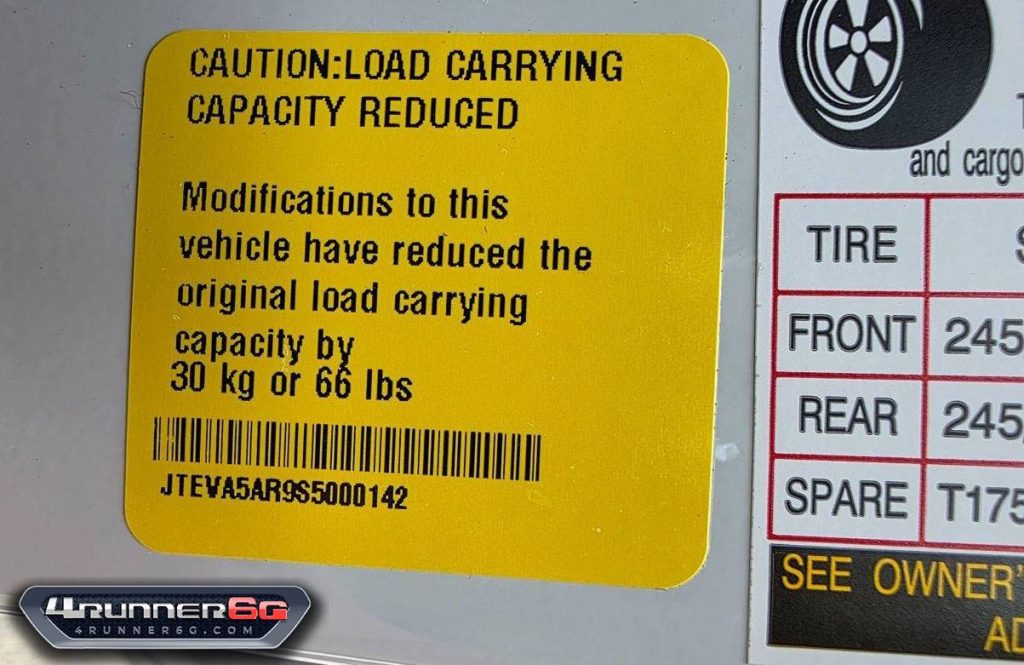
When truck commercials brag about massive towing numbers, they’re talking about best-case scenarios. One driver. No passengers. No cargo. No hitch. No real-world variables.
That number is almost meaningless for fifth wheels.
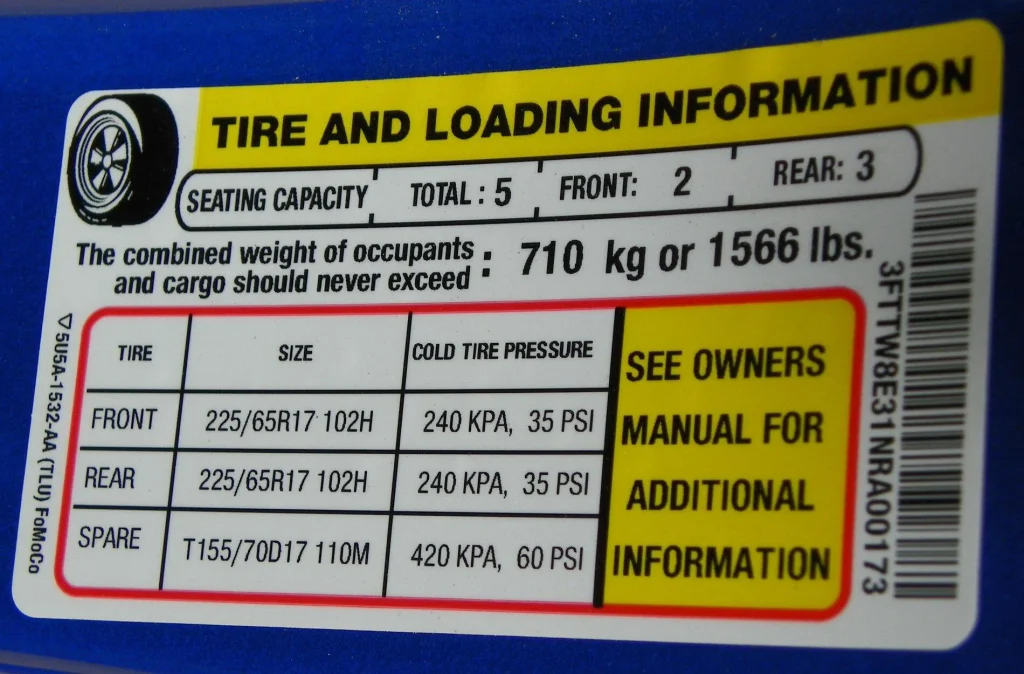
What actually matters is the payload capacity, printed on the yellow sticker inside your driver-side door jamb. This is the maximum weight your truck can safely carry. And unlike marketing numbers, this one is specific to your exact truck as it left the factory.
Payload includes:
- Fifth-wheel pin (hitch) weight
- Passengers
- Fuel
- Hitch hardware
- Anything in the cab or truck bed
For luxury fifth wheels, the pin weight alone often consumes most of that number before you even climb into the driver’s seat.
This is where many owners get caught. They’re under their advertised “max tow rating,” but the moment the trailer is hitched, the truck’s payload is already exceeded. There’s no warning light for this. The truck still drives. Nothing looks obviously wrong.
But on paper, and legally, that yellow sticker has already been ignored.
Pin Weight Creep: How Luxury Rigs Break the Math Fast
Most luxury fifth wheels don’t dramatically fail payload calculations. They fail it quietly.
On spec sheets, pin weight often looks reasonable. The problem is that those numbers are almost always dry, no water, no batteries beyond the bare minimum, no gear, and no real-world use. Once the trailer is loaded the way owners actually travel, pin weight climbs fast.
Luxury fifth wheels and toy haulers tend to push higher pin weight percentages because of how they’re designed.
Front bedrooms, large closets, generators, front storage bays, and battery compartments all sit ahead of the axles. Every pound added there is transferred directly to the truck.
A common real-world outcome:
- Dry pin weight looks manageable
- Loaded pin weight jumps by several hundred pounds
- Payload disappears long before towing capacity is approached
This is why two rigs with the same gross trailer weight can feel completely different behind the wheel. It’s not just how heavy the trailer is; it’s where that weight sits.
By the time full propane, standard equipment, and factory options are accounted for, many luxury owners are already at the limit of their payload without realizing it. And that’s before popular upgrades enter the conversation.
The Lithium Weight Displacement Paradox
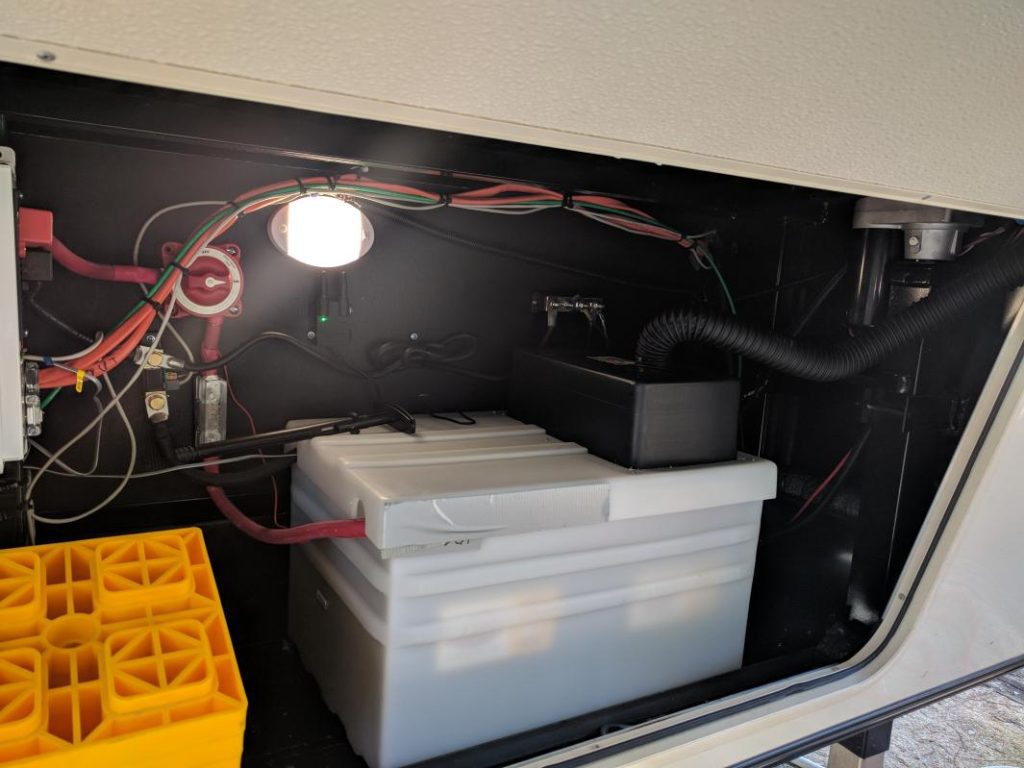
You’ll hear it everywhere: “Lithium batteries are lighter than lead-acid.”
That’s true, but it’s also where many owners get misled.
The real-world issue isn’t the weight of a single battery. It’s what happens after the upgrade.
Because lithium batteries weigh less, owners feel comfortable adding more of them. Two becomes four. Four becomes a full bank. In many luxury fifth wheels, the battery bank is located in a front compartment, directly over or ahead of the pin.
What started as a weight-saving upgrade quietly becomes a weight relocation problem.
Instead of reducing overall load, the weight is shifted forward, increasing pin weight and reducing payload even faster. The truck doesn’t care that the batteries are “lighter tech.” It only feels where the mass ends up.
This is why forum threads are full of owners who swear their rig got heavier after upgrading to lithium, even though the math says it shouldn’t have. The batteries didn’t just add weight; they changed the trailer’s balance point.
And once pin weight moves up, there’s no easy way to undo it.
Full Water, Full Gear, Full Payload
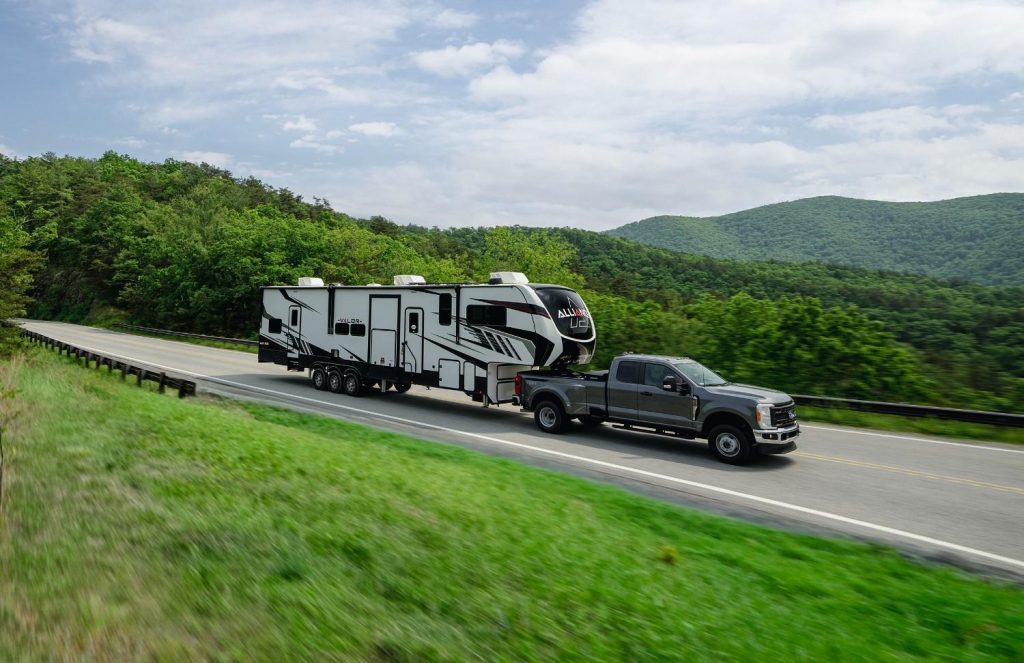
Toy haulers and luxury fifth wheels aren’t built to travel empty. They’re built to be used. And that’s where payload math starts to unravel.
Fresh water alone can add hundreds of pounds. Fuel stations, tools, outdoor gear, generators, upgraded mattresses, and personal items all stack weight fast.
Even when toys are loaded toward the rear, much of the supporting weight still transfers forward through the frame.
This is where many owners fall into a false sense of security. They’ll point to being under the trailer’s GVWR and assume everything is fine. But GVWR doesn’t protect your truck from overload; the yellow payload sticker still rules.
The result is a setup that looks normal, drives acceptably, and matches what many others are doing, yet quietly exceeds the truck’s rated carrying capacity.
Nothing dramatic happens. Until something does.
And that’s why recent conversations are shifting away from “what can I get away with?” toward a more uncomfortable question: what happens if there’s an accident?
The 2026 Insurance Audit Scare: Speculation or Warning Sign?

In RV forums and comment sections, a new concern keeps surfacing: what happens after an accident if your rig is overweight?
The discussion centers around accident reconstruction, a process insurers already use in serious claims to understand speed, impact, and fault. Some RV owners are now questioning whether weight verification will become part of the process, especially as luxury rigs grow heavier and claims costs rise.
To be clear, there’s no public announcement that insurers are routinely weighing RVs after crashes. But the concern isn’t coming out of nowhere. Payload ratings are federally regulated. They’re printed on the truck. They establish a clear legal limit on the vehicle’s maximum load.
That’s why the idea of being “just 200 pounds over” gives some owners pause. In a major claim, those numbers aren’t opinions; they’re documented specifications. If an investigation shows a vehicle was operating outside of its rated capacity, it introduces questions no one wants to answer after the fact.
Most RVers will never face this scenario. But as rigs get heavier and margins narrow, the gap between common and compliant setups isharder to ignore.
Which brings us to the most emotionally charged part of this entire debate: choosing the right truck, not based on image or convenience, but on margin and stability.
The “Dually” Social Stigma vs. Safety
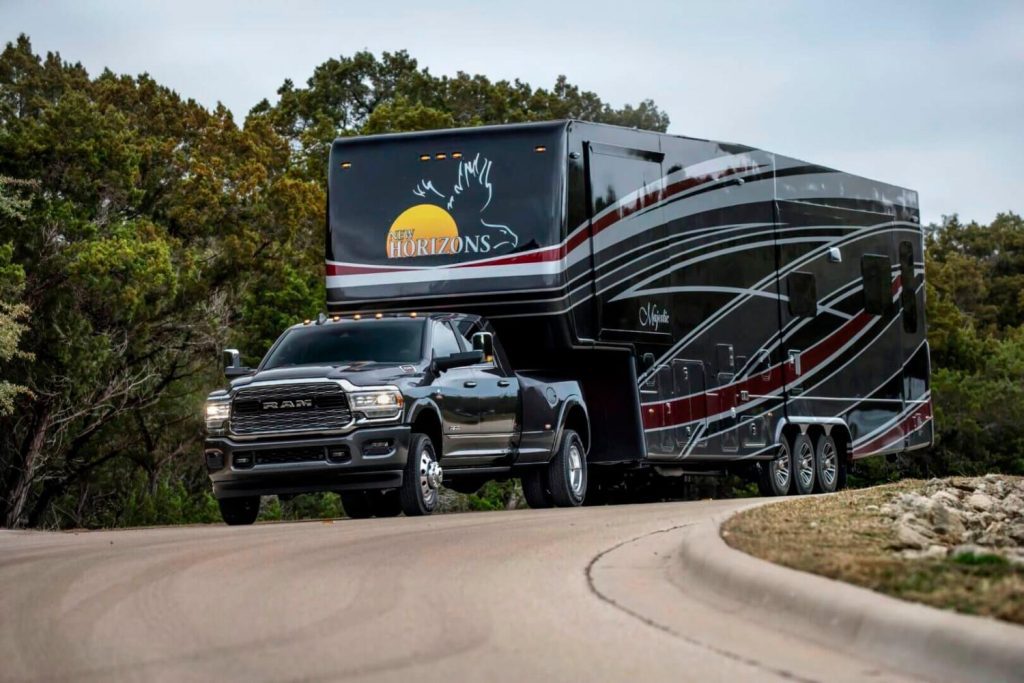
Few RV topics spark more debate than the dually conversation.
On forums, you’ll see owners working hard to justify a single-rear-wheel one-ton for a luxury fifth wheel. The reasons are understandable. A dually is wider. Harder to park. Less convenient as a daily driver. For many, it feels like “too much truck.”
So the math gets bent to make the SRW work.
But the numbers don’t care how the truck is used during the week. What matters is rear axle capacity, tire loading, and payload margin. A dually doesn’t just add two extra tires, it dramatically increases stability and gives you room for real-world variables instead of perfect conditions.
With a luxury fifth wheel, that margin disappears quickly on an SRW. Pin weight climbs. Upgrades stack. Water gets filled. And suddenly the setup relies on everything going right, all the time.
A dually isn’t about excess. It’s about headroom.
That extra capacity isn’t there for bragging rights. It’s there for uneven roads, emergency maneuvers, crosswinds, tire failures, and the unknowns you don’t plan for on travel days.
The hesitation to drive a dually is understandable. But using comfort or image to justify a tighter safety margin is a compromise many owners don’t realize they’re making, until they sit down with the actual numbers.
The Quiet Legal Line Most People Cross Without Knowing
Most RV owners don’t decide to run overweight. They simply follow common advice, match what others are towing, and assume that if it feels fine, it must be fine.
That’s where the line gets crossed.
Payload ratings aren’t suggestions. They’re part of the vehicle’s certified limits. Exceeding them doesn’t automatically mean you’ll be pulled over or ticketed, but it does mean the vehicle is operating outside of its documented specifications.
This is why phrases like “lots of people tow this way” or “the truck can handle it” don’t carry much weight if something goes wrong. Common setups aren’t the same as compliant ones, and popularity doesn’t override engineering limits.
The tricky part is that nothing obvious happens when the payload is exceeded. The truck still starts. The trip still happens. Until a scale, an inspection, or an accident forces the numbers into the open.
That’s what makes payload overages so common, and so easy to overlook.
Next, we’ll walk through how to verify your setup in practice, without guesswork, assumptions, or relying on brochure math.
How to Actually Know If Your Setup Is Safe (and Legal)
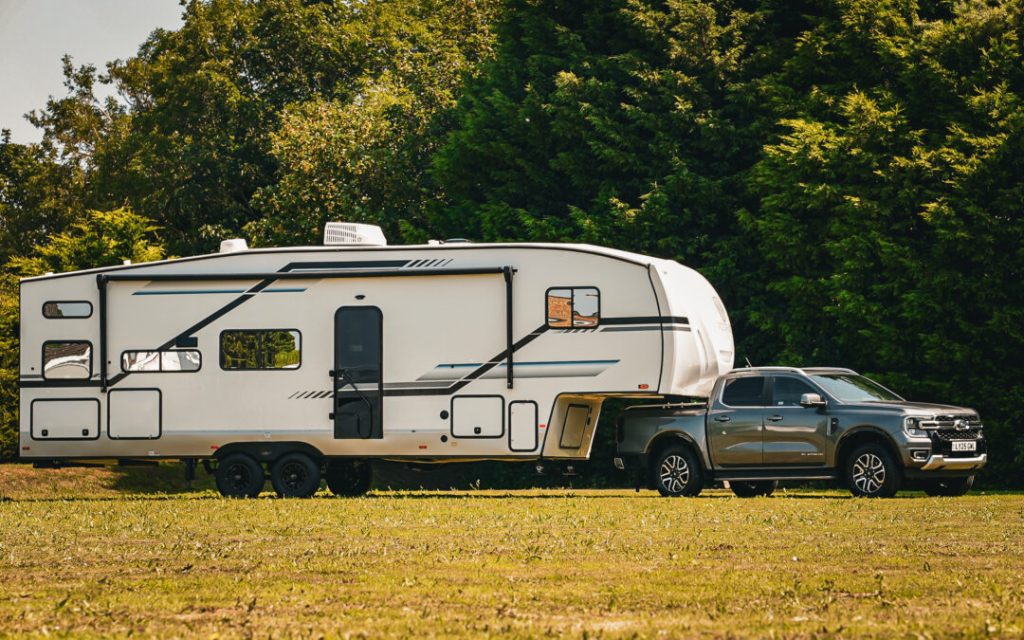
You don’t need spreadsheets or dealer estimates to know where you stand. You need real numbers.
Start with the yellow payload sticker on your truck. That number is your ceiling. Everything added to the truck, including pin weight, passengers, fuel, hitch, and cargo, counts against it.
Next, weigh the rig the way you actually travel. Full water if that’s how you move. Normal gear. Real fuel levels. This is where assumptions fall apart and clarity emerges.
A certified scale will tell you:
- Actual truck weight with the trailer hitched
- Actual pin weight
- How close (or far) you are from your rated limits
For many owners, this is the moment things finally make sense. The math explains why the truck feels “fine” but still sits at the edge. Or why a setup that looks identical to others quietly carries more risk than expected.
This isn’t about forcing upgrades or pushing anyone into a different truck. It’s about replacing guesswork with certainty, so decisions are made before the road, not after something goes wrong.
Final Thoughts: Luxury RVs Demand Luxury Margin
Luxury fifth wheels offer space, comfort, and capability, but they also shrink margins faster than most owners expect.
The issue isn’t that people are careless. It’s that modern RVs evolve faster than the assumptions we’ve carried for years. More batteries. More water. More gear. More front-loaded weight. All stacked onto trucks that look capable on paper but run out of room in the real world.
Payload margin isn’t about fear or perfection. It’s about breathing room. It’s the difference between a setup that works only when everything goes right and one that still works when it doesn’t.
Understanding pin weight, payload, and balance doesn’t mean you’ve made a bad choice. It means you’re informed enough to make the next choice wisely, whether that’s adjusting how you load, how you travel, or what you tow with.
Because with luxury rigs, comfort shouldn’t come at the expense of clarity.
FAQ: Luxury Fifth Wheels, Payload, and Pin Weight
Why does my pin weight increase after upgrades?
Most upgrades add weight forward of the axles. Batteries, generators, storage items, and even heavier mattresses shift mass toward the front of the trailer, increasing the load on the truck.
Is it illegal to exceed the payload but remain under the towing capacity?
Towing capacity and payload are separate limits. Payload is a certified rating tied to the specific truck; exceeding it means the vehicle is operating outside its documented specifications, even if towing capacity isn’t.
Can lithium batteries actually make my setup heavier?
Lithium batteries are lighter individually, but many owners install larger battery banks because they can. When those batteries are mounted in front compartments, the result is often a higher pin weight, not a lower overall load.
Does being under GVWR mean my setup is safe?
Not necessarily. Trailer GVWR applies to the trailer itself. Your truck’s payload rating still determines how much weight it can legally and safely carry, including pin weight.
Do insurance companies weigh RVs after accidents?
There’s no universal policy requiring that RVs be weighed after accidents. However, in serious claims, accident reconstruction may examine vehicle specifications, and payload ratings are documented limits.
Why do so many people tow luxury fifth wheels with SRW trucks?
Single rear wheel trucks are more comfortable to drive daily, and many setups appear to work. The trade-off is a reduced payload margin, leaving less room for upgrades, cargo, and unforeseen variables.
How do I know my real PIN weight?
The only accurate way is to weigh the truck and trailer together on a certified scale, loaded exactly how you travel. Spec sheets and estimates won’t reflect real-world conditions.

Lauren Gamble is a wife, mother, and seasoned entrepreneur with a background in digital, affiliate marketing, and content creation. She and her husband run multiple remote businesses that give their family the freedom to live and travel full-time in their RV. As a homeschooling mom, Lauren is passionate about creating a life rich in experiences and connection. Through Time to RV, she shares her family’s journey, along with practical insights, travel tips, and resources to help others explore the road less traveled, without sacrificing stability or success. Lauren and her family have been full-time RVing since November 2024.
How We Review: At Time to RV, we only recommend products and places we have personally used or visited. Our reviews are based on real-life testing during our full-time travels. We never accept payment for a positive review; our goal is to give you the honest truth so you can hit the road with confidence.