Key Takeaways
- Utilize electric and solar heat sources before relying on propane.
- Maximize heat retention within the RV through insulation, window coverings, and draft reduction.
- Optimize furnace usage by implementing smart thermostat strategies and zone heating.
- Protect the propane supply from cold-weather pressure issues by using heated tank blankets and refilling tanks instead of exchanging them.
- Employ RV skirting to trap heat, protect plumbing, and significantly reduce propane consumption.
If you have ever woken up at 3 a.m. to a cold RV and a silent furnace, you already know one thing about winter camping: propane disappears fast.
Between the furnace cycling all night, hot showers, cooking, and trying to keep pipes from freezing, it can feel like you are constantly unhooking tanks and driving to get them refilled. It is not just annoying; it gets expensive pretty quickly.
The tricky part is that winter does not just make your RV colder. It also makes your propane less efficient. When temperatures drop, the pressure in your tanks drops too, and your furnace has to work longer and harder to keep up. In really cold weather, it can even feel like your tanks are “empty” when they’re not.
The good news is you do not have to freeze to save propane. With a few creative strategies, you can stay comfortable, protect your rig, and stretch every drop in your tanks much further.
In this guide, we are going to walk through practical, real-life ways how to save propane in an RV in the winter, including:
- Using electric and solar heat before you burn propane
- When to open blinds and when to shut everything tight
- How insulation, skirting, and minor tweaks keep heat inside
- Simple changes that make your furnace run less
- How to protect your propane from cold-weather pressure problems
Let’s start with the easiest wins: using the heat you already have.
Table of Contents
Use the Heat You Already Have Before Burning Propane
Before you ask your propane furnace to do all the work, it helps to look at all the other heat sources you already have available. A lot of RVers skip this step and go straight to cranking the thermostat, then wonder why they are blowing through tanks so fast.

Electric fireplaces and space heaters
If you are plugged into shore power, your campground electricity can do a lot of the heavy lifting for daytime heating.
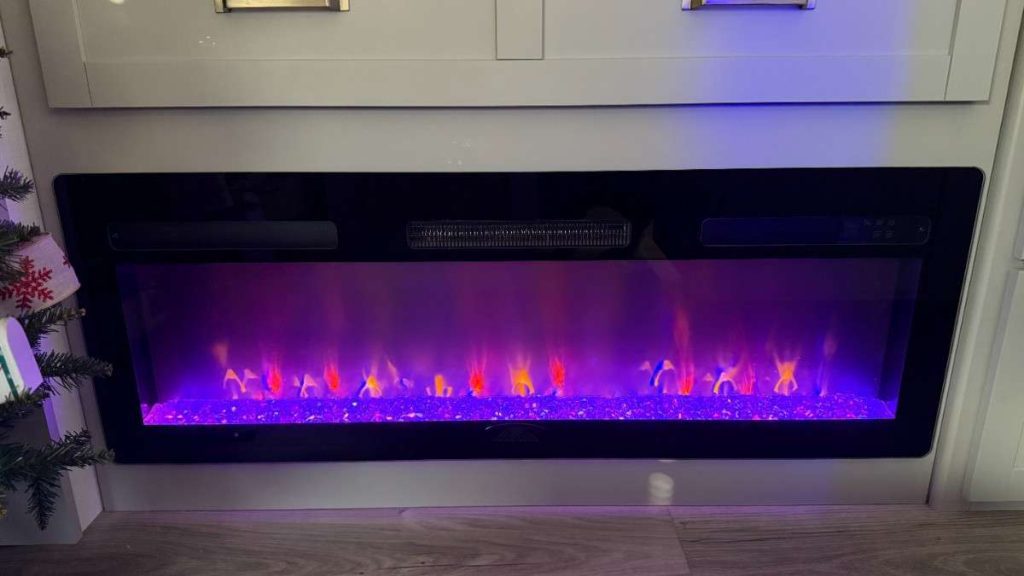
Many fifth wheels and motorhomes now come with an electric fireplace built in. It is basically a space heater with pretty flames, and it can make a huge difference in how often your propane furnace kicks on.
A few tips:
- Use electric heat during the day.
Run your fireplace or a small ceramic space heater while you are awake and moving around. This takes the chill off the air and keeps the furnace from short-cycling every few minutes. - Watch your amps.
Most portable heaters draw around 1,500 watts on a 30-amp rig, which adds up fast. Plug them directly into a dedicated outlet, not into a power strip, and avoid running a bunch of other heavy-draw appliances on the same circuit. - Skip overnight use unless you are comfortable with it.
Many people prefer to turn off space heaters while sleeping and let the furnace handle the night heat, since the furnace also helps protect the underbelly, tanks, and plumbing in many RVs.
Used correctly, electric heat lets you save your propane for when you really need it, like overnight freezes and those extra cold mornings.
Heat pumps and mini splits (if you have them)
If your RV has a heat pump setting on the air conditioner or you have installed a mini split, that is another handy tool for propane savings.
They can:
- Take care of most of your heating needs on mild winter days.
- Keep the living area comfortable while the furnace kicks on only when needed.
The catch:
- Most heat pumps struggle once outside temps get down around the mid-30s or lower.
- They usually do not heat your underbelly or plumbing bays, so they are better as a supplement, not a total replacement for the propane furnace in freezing weather.
A good strategy is:
- Use the heat pump or mini split during the day whenever temps allow.
- Let the propane furnace handle nighttime and hard freezes so your tanks and lines stay protected.
Use cooking heat wisely.
You are already running your stove and oven, so be intentional about the warmth they create.
You can:
- Cook or bake in the colder part of the day.
Baking a casserole, roasting veggies, or doing a tray of cookies in the late afternoon will gently warm your rig right before evening temps drop. - Leave the oven door open after you are done (if safe).
Turn the oven off first, then crack the door while it cools down to let that residual heat into the room.
A couple of important notes:
- Never use the oven or stove as your primary heat source. They are for cooking, not continuous heating.
- Make sure you have working propane and carbon monoxide detectors in the RV.
Cooking heat will not replace your furnace, but it can absolutely help you feel warmer without asking the furnace to do all the work.
Harness Free Solar Heat (One of the Most Overlooked RV Heating Tricks)

One of the cheapest, most reliable heat sources in winter isn’t your furnace, it’s the sun.
If you’ve ever walked into your RV mid-day and thought, “Wow, it’s warm in here,” that’s solar gain at work.
Used intentionally, sunlight can dramatically reduce your propane usage.
Park your RV so the sun hits your biggest windows
This is the first move, and it makes a huge difference.
If possible, park your RV with your largest windows facing south.
In winter, south-facing windows receive sunlight the longest throughout the day.
This does two things:
- Your living area naturally warms up during daylight hours.
- Your furnace runs less and doesn’t have to work as hard to recover after sunset.
Even a small amount of solar heat inside an RV can raise the temperature by 5–15 degrees, depending on your windows and insulation.
If you’re boondocking:
You’ve got total control, so use it. Park with the sun in mind.
If you’re in a campground:
You may have to work with site limitations, but even a slight angle toward the sun is better than none.
Open blinds and shades when the sun is strongest
Many RVers accidentally insulate themselves against free heat by leaving blinds closed during the day.
Here’s the ideal routine:
- Morning → Open the blinds and let the sun flood in.
Light = heat, and it warms your surfaces, furniture, and floors, not just the air. - Afternoon → Keep windows exposed as long as the sun hits them.
Even indirect light helps raise and maintain indoor temps.
This simple habit alone can reduce how often your furnace cycles.
Close everything up before the sun sets
Once the sun dips behind the horizon, the temperature inside an RV drops fast.
Right before that happens:
- Close blinds
- Close curtains
- Pull thermal curtains if you have them
This traps the heat your RV collected all day and slows down heat loss.
Think of it like closing a cooler.
You warmed it up; now you’re sealing the warmth inside.
Choose your blinds & curtain strategy based on your goals
Here’s where things get fun and creative.
Light curtains:
- Best for letting in sun while still reducing some nighttime heat loss.
- Great for RVers who want a “solar gain” strategy.
Blackout curtains:
- Excellent at keeping cold air out at night.
- Bad for daytime solar heat because they block too much light.
- Best for extremely cold climates where nights are brutal and days offer limited sun.
Reflectix:
- Fantastic insulation at night
- Terrible for daytime heating because it blocks ALL sunlight
- Works well if used selectively (only on windows that don’t get sun)
The perfect combo:
- Daytime: windows uncovered or lightly covered
- Night: heavy curtains, Reflectix, or insulated shades pulled tight
This maxes out your free heat during the day and traps it at night.
Create a “sun cycle” routine
Winter RVing is all about making do with what you have.
Adopting a simple daily rhythm can save large amounts of propane:
Morning:
Open blinds → Let the sun warm the rig naturally
Afternoon:
Keep windows exposed → Reduce furnace cycles
Evening:
Close blinds + curtains → Trap daytime heat
Night:
The furnace runs less because the RV starts the night warmer
I’ve seen full-time RVers cut their propane usage in half just by doing this one routine consistently.
Keep the Heat In Your RV (Insulate Like a Pro)
If you want to make your propane last longer, the real goal isn’t “make more heat”… it’s stop losing the heat you already paid for.
RVs are notorious for leaking heat in every direction: windows, slides, vents, floors, doors, you name it. The more warm air that escapes, the more your furnace has to kick on, and the faster your propane disappears.
Here’s how to keep that precious warm air inside where it belongs.
Insulate Your Windows (Your RV’s Biggest Heat-Loss Point)
Single-pane RV windows are basically cold-air magnets. Even double-pane windows struggle in freezing temps.
These three options help more than almost anything else you can do:
1. Shrink-film insulation kits (best balance of warmth + sunlight)
These clear window film kits add an extra layer of insulation without blocking the sun.
Benefits:
- Keeps cold drafts out
- Let sunlight in (so you still get solar heat)
- Cheap, easy, fast
- Works on almost every RV window
This is the method we used when full-timing in New England winters, a total game-changer.
2. Reflectix (use it strategically)
Reflectix is excellent, BUT it blocks all sunlight.
So here’s the trick:
- Use Reflectix ONLY on windows that don’t get sun.
- Skip it on south-facing windows you rely on for solar heat.
This gives you the best of both worlds.
3. Thermal or blackout curtains (nighttime insulation champs)
These help seal in heat as soon as the sun goes down.
Tip:
- Use light curtains during the day
- Pull thermal curtains tight at night
This traps the warmth your RV collected during the afternoon.
Insulate Roof Vents & Skylights (Heat Rises, Don’t Let It Escape)
Warm air rises, which means your vent covers are basically open chimneys unless you block them.
Use:
- RV vent pillows
- Reflective vent covers
- Skylight insulator cushions
Just pop them in, and the heat immediately stops leaking upward.
An easy win that makes a big difference.
Use Rugs, Runners, and Floor Insulation
If your feet are cold, your whole body feels cold, and you end up cranking the heat more than you need to.
Add:
- Thick area rugs
- Carpet runners in hallways
- Small rugs in front of doors and under slides
RVs lose tons of heat through floors, especially over uninsulated underbellies.
A layer of rug adds insulation and keeps the living space more comfortable without touching the thermostat.
Seal Up Drafts (Small Gaps = Huge Heat Loss)
This is the least glamorous job… but one of the most important.
Look for drafts around:
- Slide-out corners
- Entry doors
- Cabinet plumbing holes
- Under the fridge
- Around the shower
- Any spot where cold air “feels” like it’s seeping in
Use cheap fixes like:
- Rolled towels or draft stoppers
- Weatherstripping
- Foam blocks
- Pool noodles (RVers swear by these for slide gaps)
- Caulking around problem spots
One cold draft can make your furnace work 2–3 times harder.
Add Insulation to Slide-Out Floors & Corners
Slide-outs are the thinnest-insulated parts of any RV.
If you’ve ever walked barefoot over a slide, you know it gets icy fast.
Improve them with:
- Rugs on slide floors
- Foam blocks in slide gaps
- Insulating blankets hung on slide walls at night
Even minor improvements can dramatically reduce heat loss.
Block the Door Draft (One of the Biggest Heat Leaks)
RV entry doors let in a shocking amount of cold air.
Fixes that actually work:
- Stick-on weatherstripping
- A door snake or a rolled towel along the bottom
- A heavy curtain hung behind the door (nighttime only)
- Magnetic “RV door insulation blankets.”
A tighter door seal = fewer furnace cycles.
Summary: Insulation = Less Furnace Time (and Way Less Propane)
If you insulate your RV’s:
- Windows
- Vents
- Floors
- Slides
- Doors
- Random draft points
…your furnace won’t have to run nearly as often.
That alone can reduce propane usage by 30–50% depending on your rig.
Reduce Furnace Run Time Without Freezing Your Tanks
In winter, your furnace becomes the biggest propane hog in your entire rig. The key isn’t shutting it off, it’s making it run smarter, not harder, while still keeping your underbelly and plumbing safe.
Here are the strategies full-timers rely on to stretch propane without sacrificing comfort.

Use a Smart Thermostat Strategy
Your furnace doesn’t need to maintain the same temperature 24/7. Minor adjustments throughout the day make a big difference.
Daytime: Keep temps lower
During the day, you’re moving around more, cooking, and using electric heat.
A good daytime range:
62–66°F
This alone cuts furnace cycles dramatically.
Evening: Let electric heat carry the load
Run your:
- Electric fireplace
- Ceramic space heater
- Mini split (if temps allow)
These heat the living area so the furnace barely has to kick on until bedtime.
Night: Drop temps slightly
A nighttime range of:
58–62°F
…is warm enough for comfort, but low enough that you’re not burning through tanks.
This is where the next strategy comes into play.
Use Heated Blankets or Heated Mattress Pads
This is one of the easiest, coziest ways to save propane.
Electric heated bedding lets you stay warm without heating the entire rig to 70+ degrees.
- Heated mattress pads are safest and most efficient.
- They warm you, not the air
- They use very little electricity
- You feel comfortable at lower thermostat settings
This alone can reduce nighttime furnace cycles by 30–40%.
Focus Heat Where You Actually Are (Zone Heating)
Your furnace blows warm air throughout the whole rig… even if you only need one room warm.
The trick?
Direct heat only where you need it.
Ways to zone-heat your RV:
- Close bedroom doors during the day
→ Push heat toward the living/kitchen area. - Cover furnace vents in unused rooms
→ Not permanently, just temporarily while awake. - Run a small space heater in the area you’re spending time
→ The furnace then only heats the rest of the RV minimally.
Reducing the square footage you’re actively heating = significant propane savings.
Dress Warmer Indoors (Simple, but massively effective)
This one sounds obvious… but RVs are not houses.
If you wear shorts and a t-shirt inside your rig all winter, your propane bill will reflect it.
Wearing:
- Wool socks
- A hoodie
- Cozy lounge pants
- House slippers
- A warm hat on really cold days
…can easily let you keep the thermostat 3–6 degrees lower without feeling cold.
That difference can save half a tank of propane a week in extreme temps.
Winter camping is a major topic in recent RV lifestyle trends update articles.
Turn Up the Heat Only When You Need It
This is a huge mistake many new winter RVers make:
They keep the thermostat at a steady 68–72°F all day,
Then blast it up to 75°F during showers or when they’re chilly.
That spike burns a ton of propane instantly.
Try this instead:
- Turn the heat up 5–10 minutes before a shower, then drop it again
- Keep cozy clothes nearby so you don’t overheat the entire rig
- Use your bathroom exhaust fan sparingly (it removes warm air quickly!)
Quick bursts are fine, but they should be intentional.
Don’t Skip the Furnace Completely in Freezing Temps
This is important:
Your propane furnace heats more than your living space.
It also helps warm:
- your underbelly
- your holding tanks
- your water lines
- your storage bays (in many RVs)
Space heaters do not protect these areas.
So yes, cutting furnace run time helps you save propane…
But turning the furnace off entirely during freezing weather can put your plumbing at risk.
Use the furnace strategically, not sparingly.
Summary: Smarter Furnace Use = Huge Propane Savings
By:
- Lowering temps when you can
- Using electric heat as support
- Staying warm with heated bedding
- Only heating the rooms you’re actually using
- Dressing a little warmer indoors
…you can significantly reduce your propane use without ever feeling cold or risking frozen plumbing.
Protect Your Propane Supply From Cold-Weather Failure
(Why Your Tanks “Act Empty” When They’re Not)
This is the part most RVers don’t learn until they’re standing outside at 2 a.m. in freezing temps, wondering why their furnace suddenly stopped working.
Winter doesn’t just make you use more propane; it can make your propane stop flowing altogether, even when the tank still has plenty left.
Here’s why… and what you can do to fix it.
Your Propane Loses Pressure When It’s Cold
Propane doesn’t flow because you “open a valve”; it flows because the gas inside the tank is under pressure.
When temperatures drop, propane pressure drops too.
When it gets low enough:
- Your furnace can’t pull enough propane
- Your water heater won’t ignite
- Your stove may sputter
- Your tank appears empty even when it’s not
This is why RVers often refill tanks in winter that were actually still half full.
It’s not a propane quantity problem.
It’s a propane temperature problem.
Propane Tanks Can Get Colder Than the Outside Air
Here’s the part that surprises everyone:
When propane boils inside the tank to create vapor, it actually cools your tank down even further.
So on a 25°F night, your propane tank may drop into the teens or even single digits.
Lower temperature = lower pressure = furnace shuts off.
This is why your furnace may stop working hours before the tank is truly empty.
Why GasStop and Other Gauges Fail in Cold Weather
If you use a GasStop or any pressure-style gauge, you’ve probably noticed this issue:
The gauge shows EMPTY in winter…
…but by noon the next day (after warming up), suddenly it’s half full again.
This happens because:
- GasStop gauges measure pressure, not fuel level
- They malfunction below 32°F (GasStop confirms this on their own website)
- Low pressure makes them think there’s a leak or no tank attached
- They shut off the propane flow until you manually prime them again
This leads to:
- Middle-of-the-night furnace shutoffs
- Appliances “failing” that aren’t actually broken
- Extra tank refills you didn’t need
Bottom line:
Do not rely on GasStop gauges (or pressure gauges of any kind) in freezing temperatures.
They are great safety tools, but useless for accurate tank readings in winter.
Use Both Tanks at the Same Time (Why Changeovers Help)
If you have a dual tank system, the best winter setting is:
Use both tanks simultaneously
(rather than running one dry and then switching)
Here’s why:
- If one tank drops too low in pressure, the second tank can help carry the load
- Switching back and forth allows each tank time to warm and rebuild pressure
- Furnace shutdowns become far less common
This alone can prevent many middle-of-the-night “no heat” moments.
The Winter Game-Changer: Heated Propane Tank Blankets
If you winter camp regularly, this is the single biggest propane-saving purchase you can make.
Heated propane tank blankets wrap around your cylinders and keep them warm enough to maintain pressure, even when the temperatures plunge.
Benefits:
- Keeps propane pressure stable
- Allows your furnace to run normally
- Helps you use more of the propane you’ve already paid for
- Prevents GasStop from false-triggering
- Greatly extends the time between refills
- Stops tanks from freezing up during long cold spells
Full-timers who winter in cold regions swear by these.
We’ve used them in temps down into the 20s and kept the tank at around 85°F.
That means:
Cold outside? Tank pressure stays high.
Your furnace? Runs exactly the way it’s supposed to.
Your propane costs? Go way down.
Insulate Your Propane Compartment (But Don’t Over-Insulate)
Another trick is lining your propane bay with Reflectix or foam board, but only if it’s an enclosed compartment.
The goal:
- Slow down heat loss
- But still allow ambient heat to reach the tanks
If you insulate too aggressively, the tanks won’t absorb any warmth from the outside air when it warms up during the day.
Moderation is key here.
Always Fill Your Tanks Instead of Exchanging Them
This tip alone saves both propane and money:
Never exchange tanks in winter. Always refill them.
Why?
- Exchange tanks only contain 15–16 lbs of propane
- A filled tank gives you the full 20 lbs
- You keep the propane you don’t use
- You pay only for what you need
In cold weather, when you’re already burning through more fuel, exchanges cost way more per gallon.
Campgrounds, farm stores, and propane dealers almost always offer better pricing for refills.
Summary: Cold Weather Doesn’t Just Use More Propane… It Steals Your Propane
To keep your propane supply reliable all winter:
- Expect pressure drops in freezing temps
- Don’t trust tank gauges in cold weather
- Use a regulator/changeover that allows draw from both tanks
- Install heated propane tank blankets
- Lightly insulate your propane bay
- Refill tanks instead of exchanging
- Prime your tanks when they “act empty” in cold temps
These are the tips that make the difference between a warm winter and a miserable one.
Use Skirting to Trap Heat and Protect Your Plumbing
(A Major Propane Saver Most RVers Don’t Realize They Need)
If you’re staying anywhere that regularly dips below freezing, RV skirting is one of the most effective ways to cut propane usage, and it does a LOT more than most people think.
Without skirting, cold air whips underneath your RV all night long.
That cold air chills your floors, your tanks, your plumbing, and your entire underbelly.
As those areas get colder:
- Your furnace runs longer
- Your propane burns faster
- Your water lines are at higher risk of freezing
Skirting solves all of that in one move.
Why Skirting Dramatically Reduces Propane Use
Here’s the simplest way to think about it:
If your floors stay warm, your furnace doesn’t have to work as hard.
When you insulate the underside of your rig:
- The floor temperature goes up
- Heat inside your RV stays stable longer
- Your furnace cycles less often
- You start the night warmer
- Your plumbing stays safer without needing constant furnace heat
This is especially important for RVs without heated underbellies…
…but even rigs with heated underbellies save massive amounts of propane once they’re skirted.
Skirting Options: From Budget DIY to Heavy-Duty Vinyl
There’s no one-size-fits-all. Here are the options full-timers rely on:
1. Foam Board Skirting (DIY + inexpensive + extremely effective)
Rigid foam board (like the pink or blue insulation panels at hardware stores) is:
- Cheap
- Very insulating
- Easy to cut and custom-fit
- Surprisingly durable if secured well
Most DIYers attach panels with:
- Gorilla tape
- Velcro strips
- Strong clips
- Zip ties + adhesive anchors
This is one of the most cost-effective propane-saving upgrades you can make.
2. Vinyl or Fabric Skirting (professional or semi-DIY options)
Vinyl skirting systems (like AirSkirts or custom-fitted vinyl skirts) offer:
- Excellent insulation
- Clean appearance
- Fast installation
- Great longevity
These are ideal for full-timers staying multiple months in one spot.
They’re more expensive up front, but:
They can save hundreds of dollars on propane over the course of one winter.
3. Air-Skirt Systems (inflatable skirting)
AirSkirts is one of the easiest and most slip-on solutions:
- No tools
- No drilling
- Inflate with a small pump
- Creates a full insulating barrier under the RV
More expensive, yes, but incredibly user-friendly.
4. Temporary DIY Weather Barriers
If you’re only staying a week or two and don’t want a full setup:
- Heavy-duty tarps
- Insulating blankets
- Moving blankets
- Snowbanks (yes, some people literally shovel snow around the RV for insulation)
- Rubber mats or foam pieces tucked around the perimeter
These won’t look glamorous, but they absolutely help.
Anything that blocks the wind will reduce propane burn.
Protecting Your Tanks & Water Lines (Where Skirting Really Shines)
Even if you’re not trying to stay “warm,” skirting helps protect:
- Fresh water tank
- Gray tank
- Black tank
- Low-point drains
- Water lines
- Sewer hose (frozen sewer hoses are a nightmare)
When your plumbing stays above freezing:
- Your furnace doesn’t have to run just to heat the underbelly
- You avoid costly freeze damage
- You reduce propane dependency dramatically
This is the #1 reason winter work-campers, full-timers, and seasonal RVers always skirt their rigs.
When You Should Absolutely Use Skirting
Use skirting if:
- Temps are dropping below 25°F at night
- You’re stationary for 2 weeks or more
- You’re worried about the tank or pipe freezing
- You’re burning through propane too fast
- Your floors feel icy even when the furnace is running
- You’re winter camping in the northern half of the U.S.
If you’re stationary for a month or longer, skirting isn’t just helpful, it’s almost essential.
Summary: Skirting = Less Heat Loss + Less Propane + Safer Plumbing
Once you skirt your RV, you’ll notice:
- Floors are warmer
- Furnace doesn’t run as often
- Tanks stay warmer
- You use less propane
- You sleep better
- Everything stays more stable overnight
It’s one of the best upgrades you can make for a comfortable, low-propane winter.
Creative Propane-Saving Hacks from Full-Timers
These are the small, clever tricks RVers learn only after spending real winters on the road.
Use a dehumidifier
Dry air feels warmer than damp air. Removing moisture makes 65°F feel like 70°F, meaning you can comfortably keep your thermostat lower.
Crack a window to reduce condensation
A tiny crack prevents humidity buildup, which prevents that “cold, wet chill” inside an RV that makes you want to crank the furnace.
Layer rugs and runners
Floors are one of the coldest surfaces in an RV. Extra rugs keep heat in and your furnace off.
Only heat the room you’re in
Close doors and block unused vents so your furnace heats less square footage.
Pre-warm the RV with the sun
If the sun hits your rig in the morning, delay turning on the furnace. You may gain 5–10 degrees for free.
Cook at strategic times
Bake or run the oven during the coldest part of the afternoon. The residual heat warms the kitchen and living area for hours.
Wear warm indoor layers
Thick socks, slippers, joggers, hoodies, the cozier you dress, the lower you can keep the thermostat.
Bundle up at night
Use wool blankets or heated bedding so you can drop the thermostat several degrees while you sleep.
Use door draft stoppers
RV entry doors leak tons of cold air. A simple draft stopper prevents that constant cold airflow across the floor.
Stay Warm, Burn Less Propane, and RV Comfortably All Winter
Winter camping doesn’t have to mean constantly refilling propane tanks or waking up freezing at 3 a.m. With a few smart adjustments, using free heat during the day, keeping the warmth inside your RV, running your furnace strategically, and preventing propane pressure issues, you can stay warm, protect your rig, and make every gallon of propane last longer.
These are the same tricks full-timers use to get through entire seasons of cold weather without blowing their budget or battling frozen tanks and lines. A little preparation goes a long way, and once you dial in your routine, winter camping becomes a whole lot easier (and much more comfortable).
Quick-Hit Winter Propane-Saving Checklist
Use free heat
- Open blinds when the sun is out
- Close blinds/curtains before sunset
- Park with big windows facing south
Keep the heat inside
- Add window insulation
- Block drafts around slides and doors
- Use rugs on cold floors
- Insert vent pillows in roof vents
Run your furnace smarter
- Lower temps during the day
- Use heated blankets at night
- Only heat the rooms you’re in
- Dress warmer indoors
Protect your propane supply
- Don’t trust pressure gauges in freezing temps
- Use both tanks simultaneously
- Install heated propane tank blankets
- Refill tanks instead of exchanging
Protect your RV
- Add skirting in freezing climates
- Use a dehumidifier to reduce the “cold damp” feeling
- Keep plumbing warm by running the furnace during freezes

Lauren Gamble is a wife, mother, and seasoned entrepreneur with a background in digital, affiliate marketing, and content creation. She and her husband run multiple remote businesses that give their family the freedom to live and travel full-time in their RV. As a homeschooling mom, Lauren is passionate about creating a life rich in experiences and connection. Through Time to RV, she shares her family’s journey, along with practical insights, travel tips, and resources to help others explore the road less traveled, without sacrificing stability or success. Lauren and her family have been full-time RVing since November 2024.
How We Review: At Time to RV, we only recommend products and places we have personally used or visited. Our reviews are based on real-life testing during our full-time travels. We never accept payment for a positive review; our goal is to give you the honest truth so you can hit the road with confidence.