Key Takeaways
- Fathom Tank Sensor is a new radar-based RV tank monitoring system that measures tank levels from outside the tank, unlike traditional probe-based systems.
- Traditional RV tank sensors are unreliable due to buildup, inaccurate readings, and degradation, leading RVers to rely on guesswork.
- The Fathom sensor uses radar technology to measure liquid levels, offering more accurate and reliable readings by avoiding direct contact with tank contents.
Fathom Tank Sensor: A New RV Tank Technology We’re Watching Closely
If you’ve spent any real time RVing, you already know this truth: RV tank sensors are one of the weakest links in the entire RV experience.
They’re notorious for inaccurate readings, false “full” alerts, and becoming useless the moment a little buildup shows up inside the tank. Most experienced RVers eventually stop trusting them altogether and rely on guesswork instead.
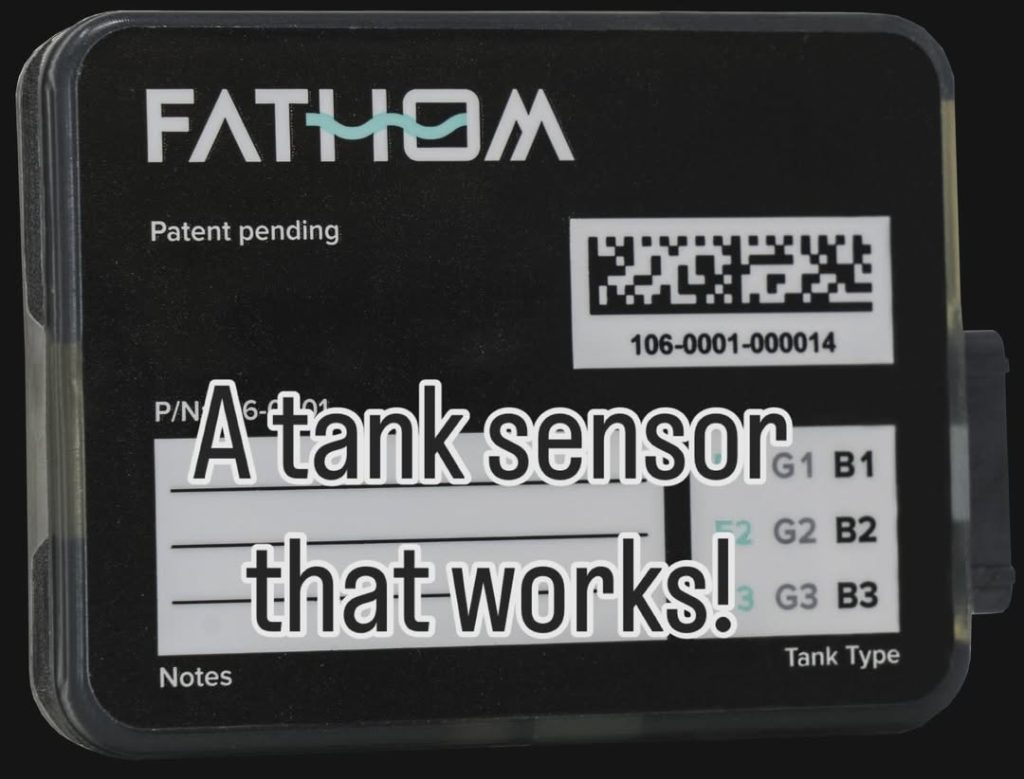
That’s exactly why we’re paying close attention to the upcoming Fathom Radar Tank Sensor.
This isn’t just another version of the same old probe-based system. Fathom is bringing radar-based tank-level sensing to the RV world, technology that’s already proven in industrial and commercial applications but hasn’t been realistically available to RV owners until now.
And while this product has not been officially released yet, it’s already creating buzz in the RV manufacturing space for one simple reason:
It aims to solve a problem RVers have complained about for decades.
From what’s been publicly shared so far, Fathom’s approach could represent a real shift away from unreliable internal tank sensors and toward something far more accurate, durable, and maintenance-free. That alone makes it worth watching.
In this article, we’re breaking down:
- What the Fathom Tank Sensor is
- How the technology works (in plain English)
- Why this matters for real RV owners
- And why this is a product we’re genuinely excited about as it moves closer to release
This is not a review, yet.
This is an early look at a product that could raise the bar for RV tank monitoring as it hits the market.
Why RV Tank Sensors Are Still a Problem
The Reality of Traditional RV Tank Sensors

RV tank sensors haven’t changed much in decades, and it shows.
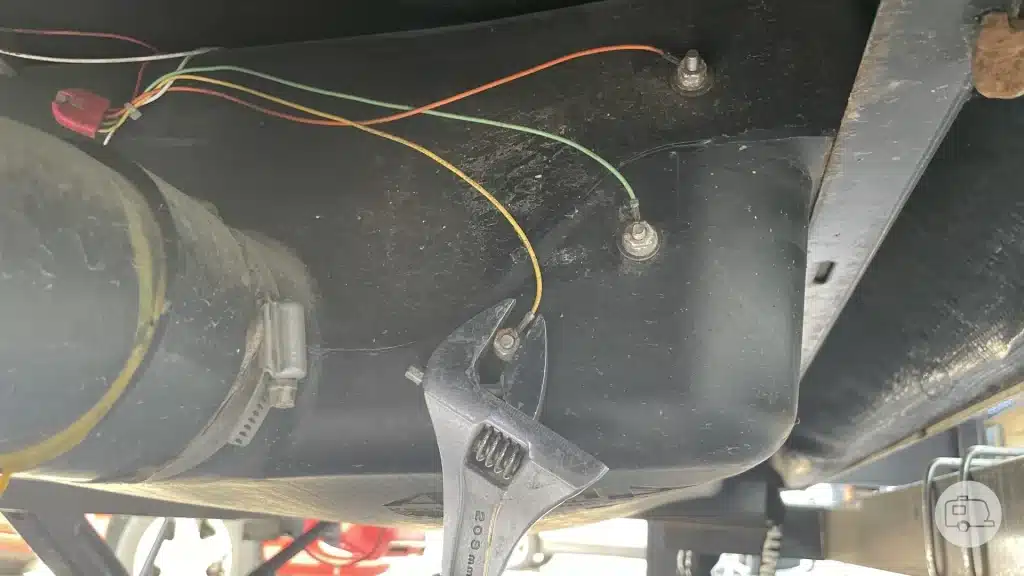
Most RVs still rely on internal probe-style sensors mounted inside the tank walls. These probes are meant to detect fluid at preset levels (empty, ⅓, ⅔, full), but in real-world use, they tend to break down quickly.
Here’s why they fail so often:
- Buildup happens quickly
Waste, toilet paper, soap residue, and grease coat the probes, causing false readings, especially in black and gray tanks. - Accuracy is limited by design
Even when working “correctly,” most systems only show rough levels, not real-time or precise data. - They degrade over time
Moisture, corrosion, vibration, and constant exposure to tank contents eventually lead to sensor failure. - RVers stop trusting them
Many owners ignore the panel altogether and rely on guesswork, experience, or unpleasant trial-and-error instead.
This isn’t a user error problem. It’s a technology problem.
And despite smart RV systems, touchscreens, and app-based controls becoming more common, tank monitoring has largely been left behind.
That’s what makes the Fathom Tank Sensor interesting.
Instead of trying to improve an outdated approach, it appears to replace it entirely by moving the sensor outside the tank and using radar to measure the actual fluid level.
That shift alone is why we think this product deserves attention as it approaches release.
How the Fathom Tank Sensor Works (Without the Tech Jargon)
A Different Approach: Measuring From Outside the Tank

The biggest difference with the Fathom Tank Sensor is where it measures from.
Instead of putting probes inside the tank, Fathom mounts on the outside, typically on the top surface. From there, it uses radar to determine the liquid level inside.
Here’s the simple version of how it works:
- The sensor sends a low-power radar signal through the plastic tank wall
- That signal reflects off the surface of the liquid inside the tank
- The sensor measures how long it takes for the signal to return
- That distance translates into an accurate fluid level reading
Because the sensor never comes into contact with the tank contents, it avoids the biggest failure points of traditional systems.
No probes to get coated.
No floats to stick.
No buildup interfering with readings.
Why Radar Matters in an RV
Radar isn’t new technology, but using it this way in RV tank monitoring is.
This type of sensing has already been used in industrial storage tanks and other commercial applications where accuracy and reliability matter. What’s new is that the technology has finally become compact and affordable enough to make sense in an RV.
From what’s been shared publicly, the Fathom sensor can measure tank levels with much higher precision than standard RV sensors, avoiding the jumpiness of vague level indicators.
That opens the door to:
- More accurate tank percentage readings
- Better planning for dumping and refilling
- Fewer surprises on the road
And just as important, it removes one of the most maintenance-heavy components from RV ownership.
Why This Matters for RV Owners (and Why We’re Excited)

Fewer Guessing Games, More Confidence
If you’ve RVed long enough, you’ve probably had at least one moment where a tank sensor told you everything was fine… and it wasn’t.
That’s the core problem Fathom is trying to solve.
By measuring tank levels from outside the tank, the Fathom sensor eliminates the most common causes of failure RV owners face today. That alone could change how much trust people place in their tank monitoring systems.
What excites us most isn’t just the technology, it’s the practical impact:
- Accurate readings you can actually rely on
Instead of rough “thirds,” radar-based sensing provides more precise, real-time tank-level data. - Less maintenance over time
No internal probes means no flushing tanks just to fix a sensor reading. - Better trip planning
Knowing your real tank levels makes it easier to plan dump stops, conserve water when needed, and avoid surprises. - Fits modern RV systems
Because Fathom is designed to work with RV-C networks, it’s built to integrate into today’s touchscreen panels and control systems, not outdated LED gauges.
For full-time RVers, extended travelers, and anyone who dry camps regularly, this kind of reliability matters more than people realize, until something goes wrong.
Why We’re Watching This Early
This product isn’t released yet, and that’s actually part of why we’re paying attention now.
Tank sensors are one of those “boring” RV components that don’t get much innovation, but when they do, it can quietly improve daily RV life in a big way.
If Fathom delivers on what’s been shared so far, it could:
- Raise expectations for tank monitoring in new RVs
- Push manufacturers away from outdated sensor designs
- Give RV owners a reason to trust their tank readings again
That’s why we think this is a product worth watching as it moves closer to market.
You can find more RV tips and tricks for beginners on our lifestyle blog.
Release Status, Pricing, and What We Know So Far
Not Released Yet, But Moving in That Direction
As of now, the Fathom Tank Sensor has not been publicly released for general consumer purchase.
Based on what’s been shared by the company and RV industry coverage, Fathom appears to be in the OEM and early-adopter phase, working with RV manufacturers and industry partners before openingup more broadly.
That approach makes sense.
Tank sensors are deeply tied into RV electrical systems, and getting them right at the manufacturer level helps ensure proper integration with modern RV control panels and RV-C networks.
Pricing: Still Unknown
There is no official retail price available yet.
That’s not unusual for a product at this stage, especially one initially targeting RV manufacturers rather than direct-to-consumer sales.
What we do know is that radar-based sensing has traditionally been expensive, but recent advancements have made this type of technology more viable for RV use.
Where pricing eventually lands will likely depend on:
- Whether it’s sold as an OEM-installed component
- Aftermarket retrofit availability
- Integration requirements with existing RV systems
Once pricing becomes public, that will be a key factor in determining how quickly this technology is adopted across different RV segments.
What RV Owners Should Expect Next
If this follows the typical rollout path:
- Newer RV models may begin shipping with Fathom sensors pre-installed
- Aftermarket options may follow once integration and support are finalized
- Compatibility with RV-C systems will likely be a requirement
For now, this is a watch list product, not an impulse buy, and that’s okay.
We’d rather see a tank monitoring solution done right than rushed to market.
Why This Is a Product We’re Watching Long-Term
A Small Upgrade That Could Make a Big Difference
Tank sensors aren’t flashy. They don’t sell RVs the way floorplans or finishes do.
But they affect daily RV life more than most people realize.
That’s why the Fathom Tank Sensor stands out to us.
It’s not trying to slightly improve an old design; it’s approaching the problem from a completely different angle. External mounting, radar-based measurement, and native RV-C integration all point toward a system built for how RVs are actually used, not how they’ve been built for decades.
If this technology performs in the real world the way it’s designed to on paper, it could quietly become one of those upgrades RV owners don’t want to go without once they experience it.
We’ll be watching closely as:
- Release details become public
- Pricing is announced
- RV manufacturers begin integrating it
- Aftermarket options become available
And once it’s available to consumers, we’ll be especially interested in how it holds up over time in real RV conditions.
Frequently Asked Questions About the Fathom Tank Sensor
What is the Fathom Tank Sensor?
The Fathom Tank Sensor is an upcoming radar-based RV tank monitoring system designed to measure fresh, gray, and black tank levels from outside the tank, rather than using internal probes.
How is this different from traditional RV tank sensors?
Most RV tank sensors rely on probes inside the tank, which often fail due to buildup and corrosion. Fathom uses external radar sensing, which avoids direct contact with tank contents and allows for more accurate readings.
Does the Fathom Tank Sensor work with black tanks?
Yes. Because it measures from outside the tank and reads the liquid surface directly, it is designed to work with black, gray, and fresh water tanks, as long as the tank is plastic.
Is the Fathom Tank Sensor available to buy yet?
No. As of now, the Fathom Tank Sensor has not been released for general consumer purchase. It appears to be in the OEM and early industry adoption phase.
How much will the Fathom Tank Sensor cost?
Pricing has not been publicly announced. More details are expected as the product approaches release.
Will this work as an aftermarket upgrade?
That has not been officially confirmed yet. Based on its RV-C integration, compatibility will likely depend on an RV’s existing electrical and control systems.

Lauren Gamble is a wife, mother, and seasoned entrepreneur with a background in digital, affiliate marketing, and content creation. She and her husband run multiple remote businesses that give their family the freedom to live and travel full-time in their RV. As a homeschooling mom, Lauren is passionate about creating a life rich in experiences and connection. Through Time to RV, she shares her family’s journey, along with practical insights, travel tips, and resources to help others explore the road less traveled, without sacrificing stability or success. Lauren and her family have been full-time RVing since November 2024.
How We Review: At Time to RV, we only recommend products and places we have personally used or visited. Our reviews are based on real-life testing during our full-time travels. We never accept payment for a positive review; our goal is to give you the honest truth so you can hit the road with confidence.